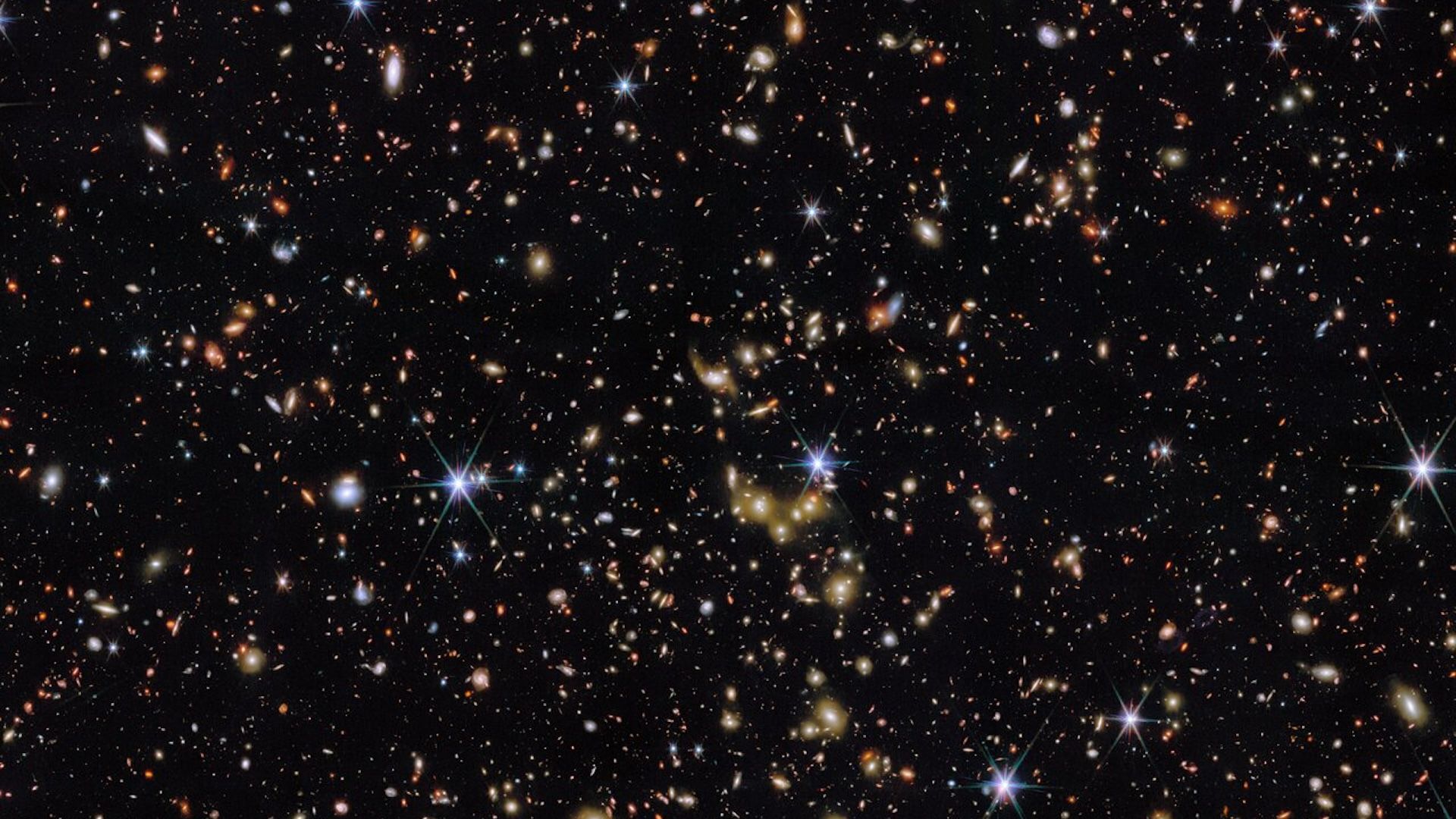
The mysterious force that cleared the cosmic fog at the dawn of the universe may not be what we thought, a new study suggests. The results hint that astronomers may need to rethink a major aspect of cosmological evolution, which led to the universe we clearly see today. Around 400,000 years after the Big Bang, the fledgling universe finally cooled enough to form atoms — mostly hydrogen. But these neutral, non-electrically charged hydrogen atoms shrouded the cosmos in a fog that made it opaque to ultraviolet (UV) light. Then, after the first stars flickered to life and gathered into galaxies, bursts of radiation ionized the neutral hydrogen. This turned the impenetrable fog of atoms into elec...
Astronomers may have been wrong about what ended the 'Cosmic Dark Age'
Original Source
This article was collected from: Live Science
Gabeshana News automatically collects article information
from external RSS/Atom sources. The original article remains
available at the source website. Please visit the original
source for the complete article and the latest information.