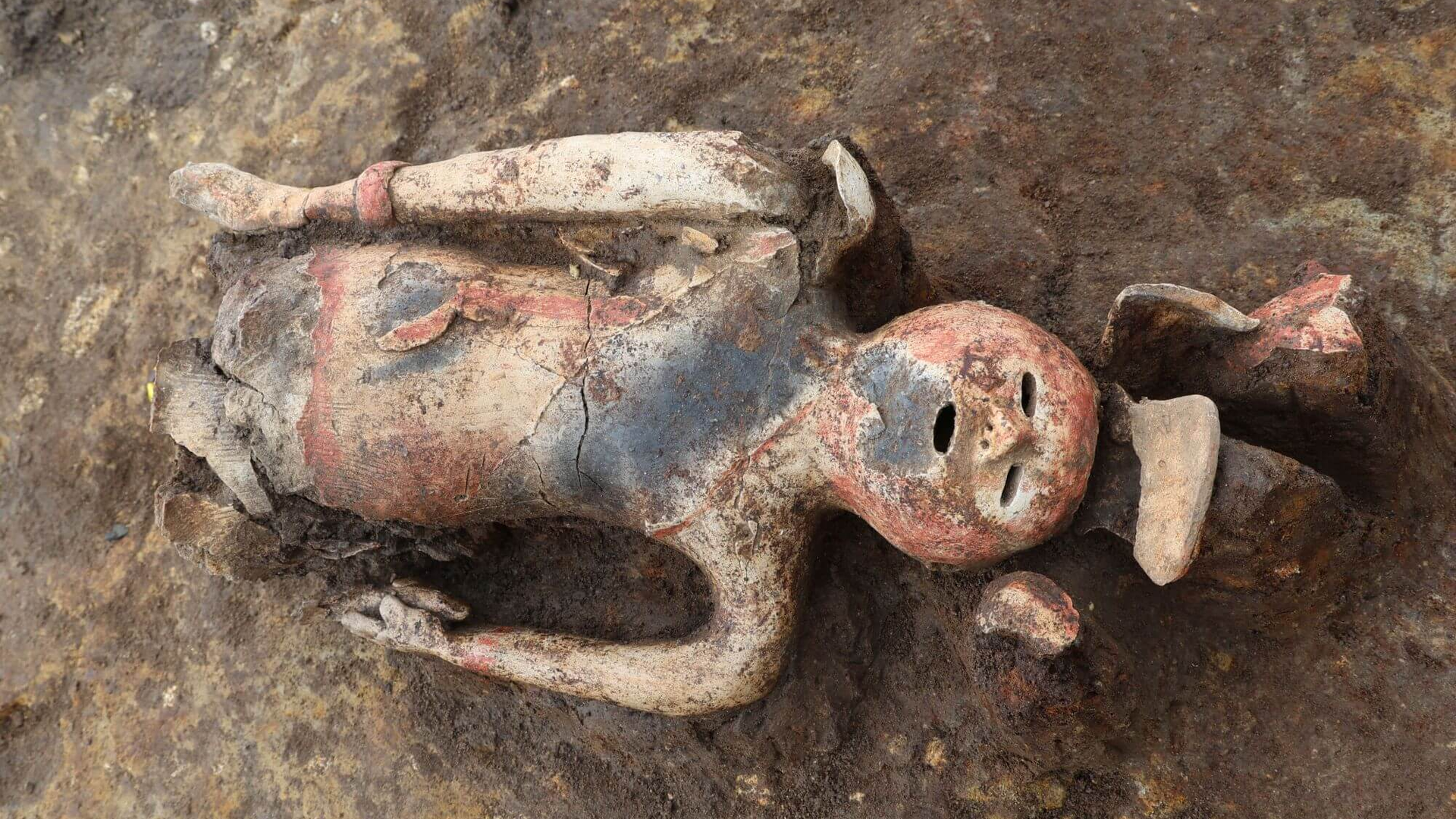
Archaeologists have discovered a ghostly human-shaped artifact at a fifth-century burial mound in Japan. The clay figurine's appearance suggests it represents a female shaman who once guarded a tomb.The artifact was unearthed at the archaeological site of Nishikaminomiya, northwest of Tokyo, according to a translated statement from Japan's Gunma prefectural government. At the site, archaeologists found nearly a dozen burial mounds known as "kofun" dated to the fifth and sixth centuries. This time period in Japanese history, which lasted from about A.D. 300 to 710, is called the Kofun period. Many tombs in this period had cylindrical clay sculptures called "haniwa" that were used as offerings...
Ghostly statue of 'shrine maiden' discovered at 1,500-year-old burial mound in Japan
Original Source
This article was collected from: Live Science
Gabeshana News automatically collects article information
from external RSS/Atom sources. The original article remains
available at the source website. Please visit the original
source for the complete article and the latest information.