Science News

Latest science news, discoveries and scientific developments.

Imperial woodpecker returns to life as a detailed digital specimen
Science News

Imperial woodpecker returns to life as a detailed digital specimen

Researchers have created a detailed, animated 3D model of the imperial woodpecker (Campephilus imperialis), a spectacular bird that has not been confirmed in the wild since 1956. The model, built from a museum specimen and the only known film footage of the living bird, is freely available to scientists, educators and the public.

📅 2026-10-15 23:20:04    •    Phys.org
Food, fear and physics help explain group behavior from plankton to whales
Science News

Food, fear and physics help explain group behavior from plankton to whales

The open ocean is a dynamic environment, where food is patchy, predators are plentiful, and oceanographic conditions change constantly. Life in the pelagic environment—the offshore waters that extend from the sunlit surface through the twilight zone—requires unique adaptations for survival.

📅 2026-10-15 23:00:09    •    Phys.org
New spectroscopy method enables direct comparisons of nuclear sizes across heavy elements
Science News

New spectroscopy method enables direct comparisons of nuclear sizes across heavy elements

The size of a nucleus (nuclear charge radius) is an important physical quantity that reflects the arrangement of protons and neutrons within the nucleus. Particularly in deformed nuclei, such as those of rare-earth elements, examining changes in the charge radius can deepen our understanding of nuclear structure and nuclear deformation.

📅 2026-10-15 23:00:01    •    Phys.org
Lunar fault maps reveal how much the moon is shrinking
Science News

Lunar fault maps reveal how much the moon is shrinking

A new study of young tectonic landforms on the moon offers the most detailed estimate yet of how much the moon has contracted as its interior gradually cooled over time.

📅 2026-10-15 22:40:08    •    Phys.org
Measuring deep-ocean oxygen with microscopic magnetic fossils
Science News

Measuring deep-ocean oxygen with microscopic magnetic fossils

Humanity's ongoing disruption of atmospheric carbon dioxide (CO₂) concentrations, temperatures, and global nutrient cycles is starving the oceans of oxygen. Although we can measure ongoing changes to ocean circulation and marine life, we still don't know how far the oxygen loss and the damage to ocean ecosystems could go. One way to foresee the oceans' future is to look back at how our seas and their inhabitants responded to higher CO₂ levels and warmer climates in the past.

📅 2026-10-15 21:40:06    •    Phys.org
Retail research shifted in five ways, study finds
Science News

Retail research shifted in five ways, study finds

Retail research has changed during the last couple of decades, according to an analysis of almost 5,200 papers covering business practices, consumer behavior and technology. The study, published in the International Journal of Electronic Marketing and Retailing, considered papers from the four leading specialist journals in this area.

📅 2026-10-15 21:40:01    •    Phys.org
Silicon qubits surpass 99.99% gate fidelity while operating three at once
Science News

Silicon qubits surpass 99.99% gate fidelity while operating three at once

Silicon spin qubits are a promising platform for building scalable quantum computers as they are compatible with the semiconductor manufacturing technologies used to produce today's computer chips. However, they have an important weakness: silicon spin qubits typically lose accuracy when several qubits are under parallel control. To be useful, quantum computers will need to operate many qubits simultaneously without compromising the accuracy of their operations.

📅 2026-10-15 21:20:05    •    Phys.org
Building trust in governments through digital platforms
Science News

Building trust in governments through digital platforms

Around the world, many people report distrusting their government. In some places, such as Latin America, North America and Africa, trust in government has declined in recent decades. How can governments rebuild this trust?

📅 2026-10-15 21:00:11    •    Phys.org
Molecular snapshots reveal how viral enzymes switch between inserting and removing DNA
Science News

Molecular snapshots reveal how viral enzymes switch between inserting and removing DNA

Bacteriophages, or viruses that infect bacteria, have a fiendishly simple purpose in life: attach to a bacterial cell, inject their DNA and then use the host's genetic machinery to reproduce. In doing so, they may have evolved some of the most efficient gene-editing tools ever seen in nature.

📅 2026-10-15 21:00:01    •    Phys.org
Single 2D crystal transforms into transistor with built-in insulation and electrical contacts
Science News

Single 2D crystal transforms into transistor with built-in insulation and electrical contacts

A transistor normally requires several fundamentally different materials—a semiconductor to carry current, an insulating dielectric to control it and metallic contacts through which current enters and leaves. Integrating all of these components becomes increasingly difficult as semiconductor devices approach the atomic scale.

📅 2026-10-15 20:40:06    •    Phys.org
AI turns scrap impurities into useful ingredients for stronger recycled iron
Science News

AI turns scrap impurities into useful ingredients for stronger recycled iron

About 2 billion metric tons of metal are produced worldwide every year to meet the demands of industry, infrastructure and the energy sector. Much of this production still relies on primary raw materials, contributing to an estimated 40% of industrial greenhouse gas emissions and 10% of global energy consumption. Increasing the use of recycled metals could significantly reduce the environmental impact of metal production while also lowering dependence on imports of scarce and strategically critical raw materials.

📅 2026-10-15 20:20:18    •    Phys.org
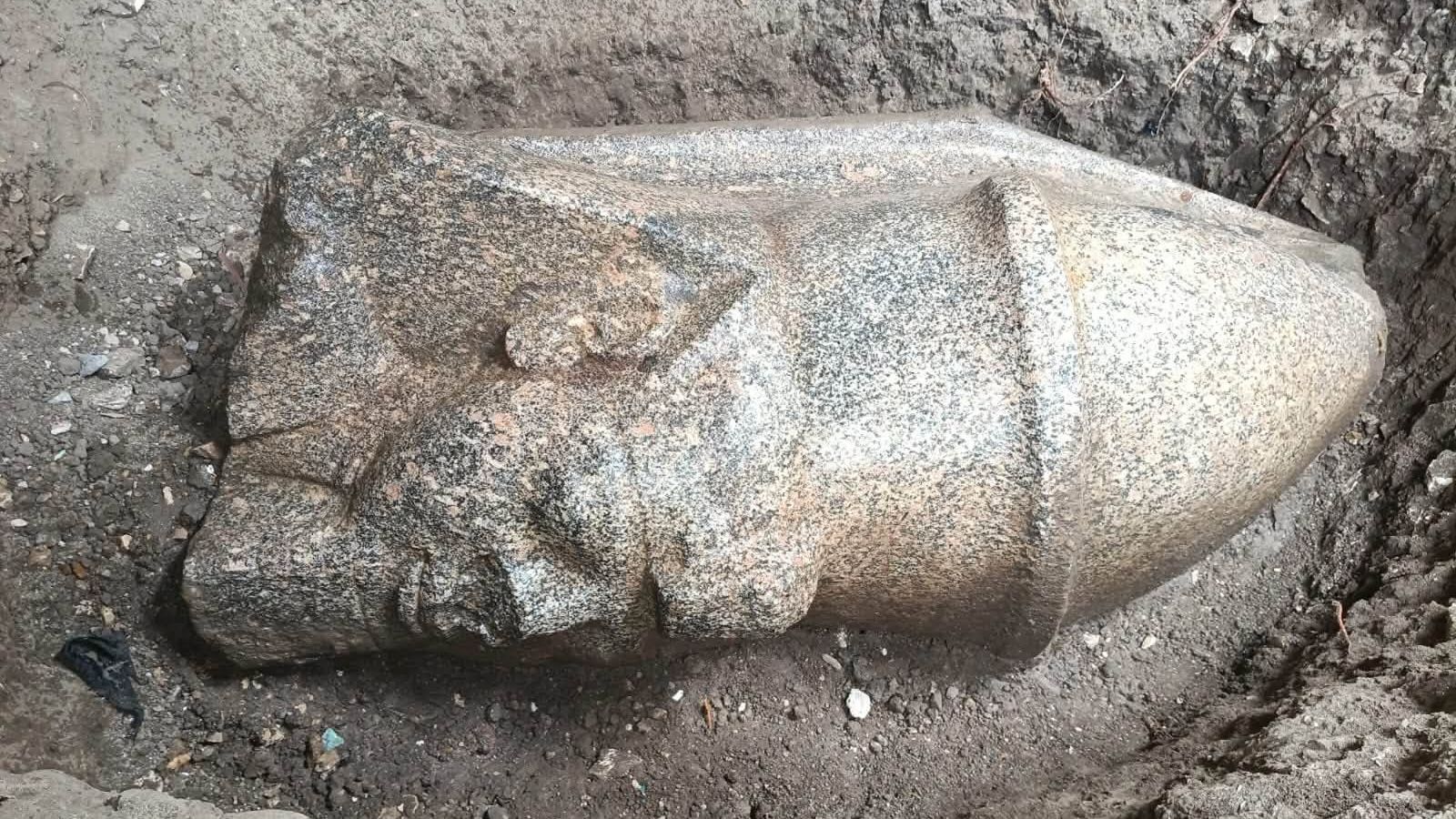
2 giant Ramesses II statues, one wearing a double crown, discovered by man in Egypt
Science News

2 giant Ramesses II statues, one wearing a double crown, discovered by man in Egypt

While working on his land in a village in northern Egypt, a man made an astonishing discovery: the remains of two massive statues of Ramesses II.The man, Khaled el-Shahat, immediately notified the Egyptian Ministry of Tourism and Antiquities, which sent a team to the village of Behbeit El Hagar to excavate and study the statues, the ministry said in a translated statement.Ramesses II had one of the longest reigns in Egypt's history, ruling from around 1279 to 1213 B.C. During his 66 years in power, Egypt controlled an empire that stretched as far northeast as modern-day Syria. He initiated many building projects throughout the empire, and numerous Ramesses II statues have been found througho...

📅 2026-10-15 20:01:18    •    Live Science