Science News

Latest science news, discoveries and scientific developments.

Scientists may have overlooked a hidden Alzheimer's culprit for decades
Science News

Scientists may have overlooked a hidden Alzheimer's culprit for decades

For decades, scientists have focused on amyloid beta as a major culprit behind Alzheimer’s disease, spending billions of dollars developing treatments that have often delivered disappointing results. Now, researchers at UC Santa Cruz are drawing attention to a largely overlooked peptide called P3 that could also play a role in the disease. Previously believed to be harmless, P3 can form harmful-looking protein clumps even faster than amyloid beta and may also damage brain cells.

📅 2026-10-14 11:06:19    •    ScienceDaily
Study finds overlooked 'forever chemicals' widespread in New Jersey tap water and bottled beverages
Science News

Study finds overlooked 'forever chemicals' widespread in New Jersey tap water and bottled beverages

Researchers at New Jersey Institute of Technology (NJIT) have found that a largely overlooked class of "forever chemicals" is widespread in New Jersey drinking water and commercially available bottled beverages, raising new questions about how these persistent contaminants are monitored and potentially introduced into everyday products.

📅 2026-10-14 11:00:06    •    Phys.org
Scientists may have finally solved the mystery of the Moon’s two faces
Science News

Scientists may have finally solved the mystery of the Moon’s two faces

Scientists may have solved a long-standing mystery about why the Moon’s two sides are so different, using samples collected from its farside for the first time. Their findings suggest that uneven heating from Earth's gravitational pull drove enormous flows of ancient magma, creating the dramatically different lunar landscapes we see today.

📅 2026-10-14 10:38:46    •    ScienceDaily
Scientists discover how harmful “zombie cells” hide from the immune system
Science News

Scientists discover how harmful “zombie cells” hide from the immune system

Scientists have discovered a protein that may help harmful aging cells hide from the immune system, allowing them to accumulate and fuel age-related health problems. Blocking the protein in mice reduced these cells and inflammation while improving blood sugar regulation and strength, offering a promising new direction for anti-aging research.

📅 2026-10-14 10:17:58    •    ScienceDaily
Teenager's rare autoimmune disorder caused her to hallucinate a flying green dinosaur
Science News

Teenager's rare autoimmune disorder caused her to hallucinate a flying green dinosaur

The patient: A 16-year-old girl in CaliforniaThe symptoms: The teenager was referred to an emergency department because she was having hallucinations, including seeing a flying green dinosaur and hearing voices telling her to hurt others. She also had a sense that she was being followed.In the emergency room, she was trembling and sweating and had a racing pulse and shallow, fast breathing. She did not have a fever, although she did have one at the hospital that had referred her.During her conversations with ER clinicians, the teen reacted to the vision of the dinosaur as though the creature were present in the room. She reported that she had experienced these hallucinations since seventh gr...

📅 2026-10-14 10:00:00    •    Live Science
Global deforestation slowed in 2025 but surged in Congo basin: Study
Science News

Global deforestation slowed in 2025 but surged in Congo basin: Study

Deforestation slowed worldwide last year, but the improvement is unlikely to last as the situation deteriorates in Central Africa and an exceptionally strong El Niño weather pattern intensifies, a new study said on Wednesday.

📅 2026-10-14 09:10:01    •    Phys.org
Ancient climate shifts may explain why today's flowering plants are so diverse
Science News

Ancient climate shifts may explain why today's flowering plants are so diverse

The two warmest time periods on Earth in the past 140 million years drove both mass extinctions and explosions in plant diversity, according to researchers in Australia and Austria who say this could explain how flowering plants became dominant among land plants. The study, published in Nature Plants, examined fossilized pollen and spores to show that the mid-Cretaceous and early Cenozoic periods of extreme global warmth were central to plant evolution. This applies not only to flowering plants, but also to the other main land plant groups.

📅 2026-10-14 09:00:06    •    Phys.org
Hundreds of whale calves have mysteriously died in Patagonia — and scientists are racing to find out why
Science News

Hundreds of whale calves have mysteriously died in Patagonia — and scientists are racing to find out why

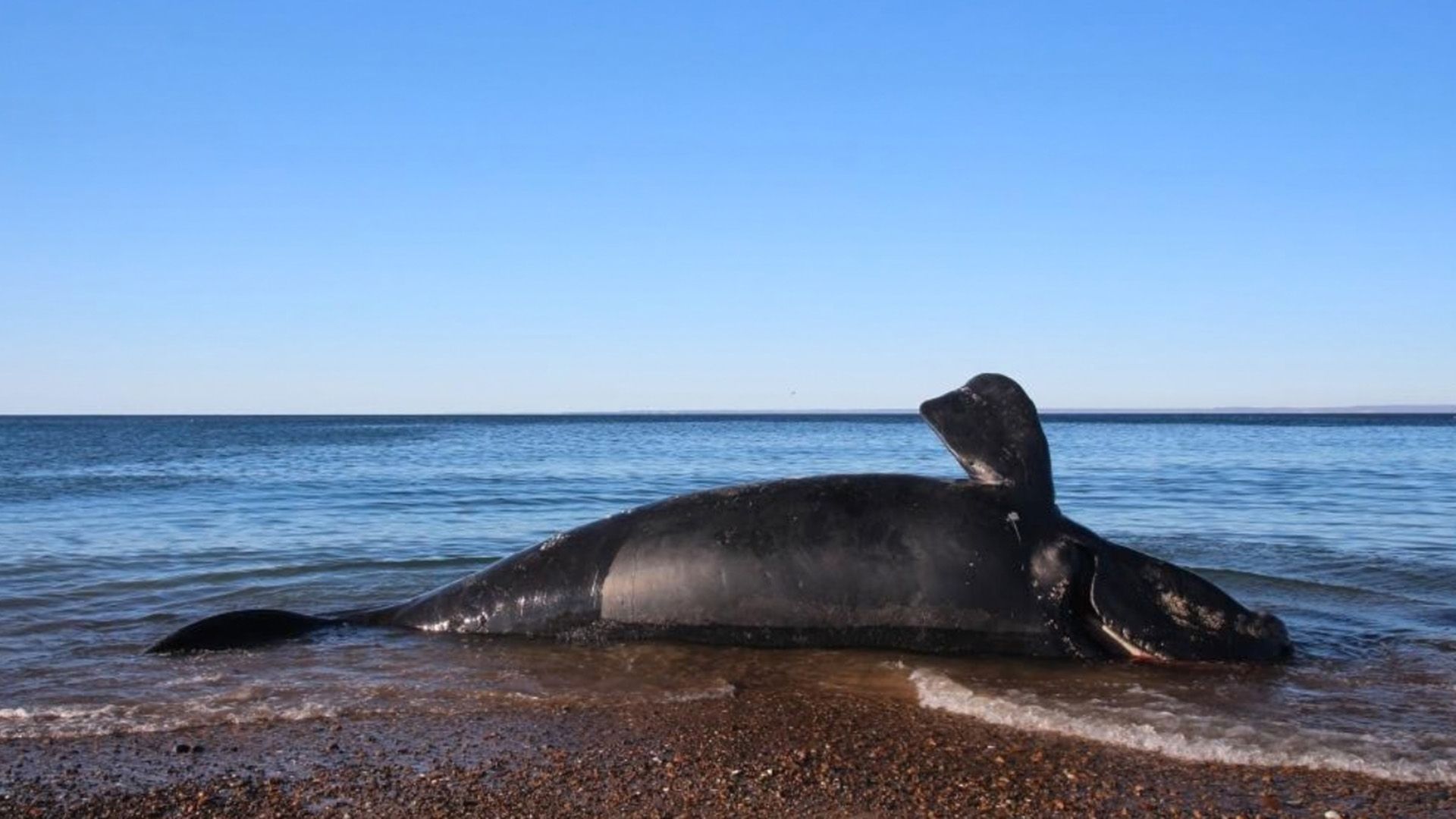
Since June, more than 300 southern right whale (Eubalaena australis) calves have died in Argentine Patagonia, in what scientists describe as an "exceptional" die-off. The preliminary figure already far exceeds the previous annual record set in 2012, when 113 southern right whale calves died — the highest number ever documented for the species, both locally and globally.Now, scientists are racing to figure out exactly what's causing the record-breaking die-off. Laboratory analyses of specimens that died this year tested positive for the pathogenic bacterium Erysipelothrix rhusiopathiae, environmental authorities in Chubut province told Live Science. E. rhusiopathiae was first identified in so...

📅 2026-10-14 09:00:00    •    Live Science
Gigantic prehistoric snake discovered in India may have been one of the largest ever
Science News

Gigantic prehistoric snake discovered in India may have been one of the largest ever

A massive prehistoric snake discovered in India may have rivaled the largest snake ever known. Called Vasuki indicus, the 47-million-year-old giant could have reached up to 50 feet long, making it comparable to the legendary Titanoboa. Scientists believe its enormous body made it a slow-moving ambush predator, similar to a modern anaconda.

📅 2026-10-14 05:44:39    •    ScienceDaily
New knee arthritis treatment delivers lasting pain relief without surgery
Science News

New knee arthritis treatment delivers lasting pain relief without surgery

A promising new treatment for knee arthritis uses tiny, dissolvable particles to block abnormal blood vessels, easing inflammation and pain without joint replacement surgery. In a study of 194 patients, 80% experienced clinically meaningful pain relief lasting at least 12 months.

📅 2026-10-14 04:39:11    •    ScienceDaily
Wild bobwhite quail spotted after habitat restoration project
Science News

Wild bobwhite quail spotted after habitat restoration project

Multiple coveys of wild bobwhite quail were recently sighted at the University of Tennessee's Ames AgResearch and Education Center, marking an encouraging milestone in an ongoing effort to restore habitat for the species at this historic bird dog field trial destination.

📅 2026-10-14 03:20:08    •    Phys.org
AI can act exactly like a human, but we still don't think it's conscious
Science News

AI can act exactly like a human, but we still don't think it's conscious

A new study reveals that people draw a surprisingly sharp line between human consciousness and artificial intelligence, even when both behave identically. Researchers found that participants considered even the most responsive AI less conscious than the least responsive human. Yet when asked about "awareness" instead, people judged humans and AI much more similarly.

📅 2026-10-14 01:41:55    •    ScienceDaily
Black women in food industries face systemic roadblocks
Science News

Black women in food industries face systemic roadblocks

Lilly Jan was perplexed and a little annoyed. Last year, Jan, an assistant teaching professor in the Cornell Nolan School of Hotel Administration in the Cornell SC Johnson College of Business, was trying to collect information on food industry businesses owned by Black women.

📅 2026-10-14 01:40:01    •    Phys.org
A planet 320 light-years away confirms what scientists long suspected
Science News

A planet 320 light-years away confirms what scientists long suspected

Astronomers have discovered that a scorching-hot planet 320 light-years away shares a striking chemical similarity with its host star, providing the first direct evidence for a fundamental assumption about planet formation. The breakthrough could help scientists predict what distant rocky planets are made of and identify worlds with conditions favorable for life.

📅 2026-10-14 00:24:40    •    ScienceDaily