
Science News
These Super Mario levels are mathematically unsolvable
In math and Mario Land, there are questions that are algorithmically undecidable, meaning they will demonstrably never have an answer
Latest science news, discoveries and scientific developments.
In math and Mario Land, there are questions that are algorithmically undecidable, meaning they will demonstrably never have an answer
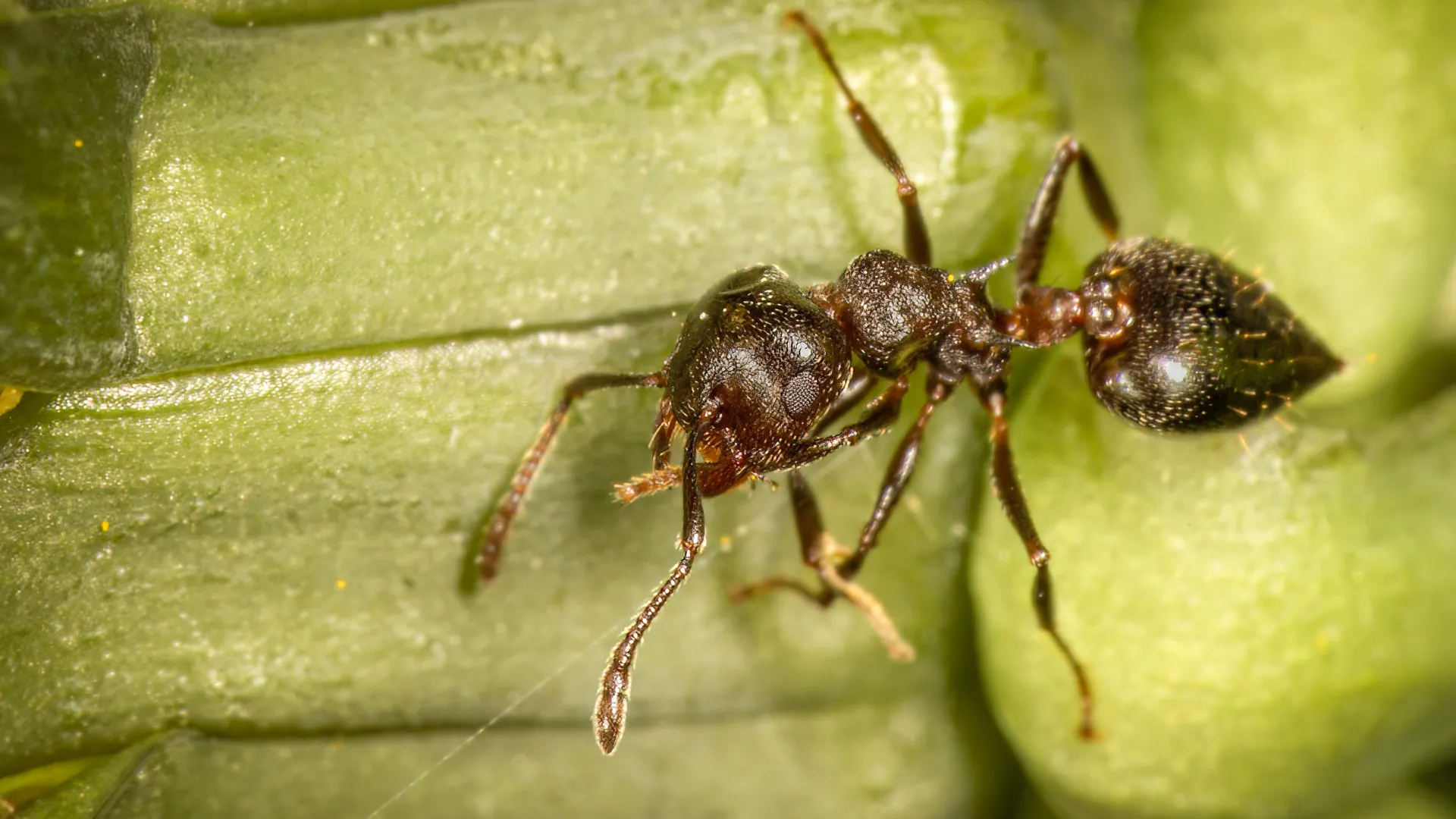
Predatory wasps are hijacking shelters built by tropical trees for their ant defenders, potentially disrupting an ancient partnership that protects the plants from hungry insects. The takeover is far more common in disturbed landscapes such as oil palm plantations and could have lasting consequences for forest recovery and evolution.

Research involving Durham University Business School reveals how retailers target customers most likely to spend more. Shoppers who take a more carefree approach to spending are more likely to receive personalized discount codes from retailers, according to the research.

Much of the field of sociology treats systemic racism as its default explanation for racial disparities rather than as an open question that requires further investigation and evidence, according to a recent position paper. The assumptions and moralization surrounding the origins of race-based disparities have undermined the discipline and made it difficult—and professionally costly—to challenge the concept, says author Ilana Redstone, a professor of sociology at the University of Illinois Urbana-Champaign.

For decades, fisheries managers have struggled to restore recruitment in wild lake trout populations across the Great Lakes region, with limited success. Returning this species to its former abundance is hampered by overfishing, sea lamprey predation, invasive species and habitat alterations.

A new global review of observed climate change impacts on plant communities reveals major gaps in where and how we monitor some of the world's most climate-vulnerable ecosystems.

Galactic black holes are cosmic mitochondria, powerhouses of the universe. Most of the energy these supermassive black holes produce comes from the material surrounding them: superheated plasma in their accretion disks interacting with tremendous magnetic fields. But there is a more direct way to extract energy from a black hole. It's known as the Penrose process, and a new study asks whether we could discover a signature of this process.

A ketogenic diet increased small-intestinal tumors in cancer-prone mice while reducing tumors in the colon, revealing a strikingly different response within neighboring parts of the gut. Researchers traced the increased risk not to ketones, but to the way intestinal stem cells processed the diet’s high levels of fat. That fat-burning activity pushed the cells to multiply more rapidly, potentially raising the chance of cancerous changes.

More than half of the Ecuadorian Amazon has been marked for oil drilling, overlapping with Indigenous territories and areas of high biodiversity. The ecological and cultural impacts of oil extraction are well documented and have fueled some of Latin America's most prominent environmental movements. Yet at the local level, extraction is not always met with resistance.

Isaac Larsen, an associate professor in the College of Natural Sciences' Department of Earth, Geographic, and Climate Sciences, is a lead author of "Status of the World's Soil Resources 2026," a new report produced by the Food and Agriculture Organization of the United Nations (FAO) that draws on recent scientific literature and contributions from hundreds of experts around the world.

Why does the expansion of wind energy sometimes meet with local resistance, even though renewable energy generally enjoys broad support? RIFS researcher Jörg Radtke used a representative survey of 6,284 people in North Rhine-Westphalia to investigate which social characteristics are linked to the acceptance of wind energy.

In "Bloons Tower Defense," the goal is to stop balloons from reaching the end of a track by strategically placing towers along the route. These towers vary in cost, range and attack power, and they also take up valuable space. The game becomes increasingly difficult with each round. Where you place a tower therefore determines not only how effective it is now but also which options remain available later in the game.

In China, young people are encountering a myriad of challenges, from societal pressures around success to life in a highly surveilled society, that have led them to turn to the internet in search of a balm to soothe their pain. What has emerged is a host of content called "digital ibuprofen"—viewed as a way to numb the anxieties of modern living.

The funniest post you saw this week may not have come from a friend; it may have come from a brand. Whether it is Kohl's, Wendy's, or Netflix, brands are behaving more like internet users than traditional advertisers.

The Surinam toad is one of the strangest frogs on Earth. Flat-bodied, tiny-eyed and adapted to the murky waters of the Amazon basin, it hunts well despite having very poor vision. When a fish swims close, the frog suddenly opens its mouth and sucks the prey inside in a fraction of a second.

When you walk into a bakery and smell fresh cookies, the enticing smell draws you in. After you eat a handful of cookies, though, the same smell likely doesn't send you back for more. Researchers in the McKelvey School of Engineering at Washington University in St. Louis sought to determine the biological mechanisms in the brain that controllably alters odor-evoked behavior by using an unlikely model—a locust.

Moving large animals around is a seductive idea in conservation. If there are plenty of animals in one place and too few in another, moving some between the two seems an obvious solution. Sometimes it is. But with animals as large, mobile and socially complicated as elephants and rhinos, the move itself can turn out to be the straightforward part.

The universe may be trapped in its own comfort zone, and a researcher in the College of Engineering and Computer Science has helped explain why it cannot seem to leave. A new study suggests the universe could be locked into its current state by the same kinds of quantum effects that scientists study when trying to preserve fragile information inside a quantum computer.

Since Labor won the 2024 general election, policy focused on children in the early years—from birth to school age—and their parents has moved sharply up the political agenda.

A new study finds that coastal forest loss in North Carolina's Albemarle-Pamlico Peninsula began accelerating after 2010 and may still be speeding up. The study also found that North Carolina lost more than 20% of its coastal forest between 1985 and 2021.