Science News

Latest science news, discoveries and scientific developments.

Computer-designed protein targets immune receptor linked to inflammation at new 'undruggable' site
Science News

Computer-designed protein targets immune receptor linked to inflammation at new 'undruggable' site

To sense their environment and respond accordingly, cells enlist membrane proteins as communication hubs, receiving molecular messages from outside and triggering responses inside. One of these proteins is Toll-like receptor 4 (TLR4), an immune receptor that plays an essential role in protecting against infections. But overactivity of TLR4 has been linked to inflammatory disorders like sepsis, arthritis and inflammatory bowel disease, making it an attractive target for therapies. Despite its appeal, TLR4 is difficult to manipulate precisely, and no FDA-approved drugs specifically block it.

📅 2026-10-02 19:40:01    •    Phys.org
Small changes can have a big impact on sustainability transitions
Science News

Small changes can have a big impact on sustainability transitions

In her dissertation, Hanna Entsalo examines how public policies, such as policy strategies and legislation, influence transitions toward the circular economy and sustainability. Entsalo works as a researcher in the Circular Economy Solutions Unit at the Finnish Environment Institute. Her work focuses on circular economy policy instruments, sustainability transitions and innovation policy, particularly at the national and EU levels.

📅 2026-10-02 19:20:13    •    Phys.org
Black holes may grow quietly alongside galaxies even without violent mergers
Science News

Black holes may grow quietly alongside galaxies even without violent mergers

Astronomers analyzed 2,435 galaxies hosting actively feeding black holes using data from the Dark Energy Spectroscopic Instrument (DESI). Among them, they identified 546 "bulgeless" galaxies—systems with little or no central stellar bulge. Their paper, published in Monthly Notices of the Royal Astronomical Society, suggests that galaxies without a central bulge grow black holes just as effectively as galaxies that have one—a surprising sign that black holes don't need galaxy mergers to grow normally.

📅 2026-10-02 19:20:02    •    Phys.org
How does interdisciplinary collaboration work in practice? Three takeaways for teachers
Science News

How does interdisciplinary collaboration work in practice? Three takeaways for teachers

When we speak with Luyao Huang, her Ph.D. project at Leiden University is in full swing. Two papers—a systematic literature review and a case study on an interdisciplinary course—are already behind her. Next year, she will carry out a study in which teachers react to various scenarios. Today, Huang tells us about her most recent study: a deep dive into student collaboration.

📅 2026-10-02 19:00:01    •    Phys.org
Mirror-image crystals reverse the direction of light-driven currents
Science News

Mirror-image crystals reverse the direction of light-driven currents

The circular photogalvanic effect (CPGE), a phenomenon that generates helicity-dependent photocurrents in noncentrosymmetric materials, can originate purely from a crystal's internal structure without a contribution from the surface, a study from Science Tokyo reveals.

📅 2026-10-02 18:40:12    •    Phys.org
Forestry experts author national guidance on disaster preparedness
Science News

Forestry experts author national guidance on disaster preparedness

John Daigle, professor of forest recreation management at the University of Maine, co-authored the first paper in a series designed to help communities nationwide prepare for future natural disasters and other extreme weather events.

📅 2026-10-02 18:40:07    •    Phys.org
Q&A: How will quantum computers change society?
Science News

Q&A: How will quantum computers change society?

Once called a "pipe dream," quantum computers are now approaching practical use. Companies and research institutes around the world are in fierce competition to develop this technology, which has the potential to rapidly perform some calculations that are extremely difficult even for conventional supercomputers.

📅 2026-10-02 18:20:08    •    Phys.org
Animals may have evolved vastly earlier than fossil evidence suggests
Science News

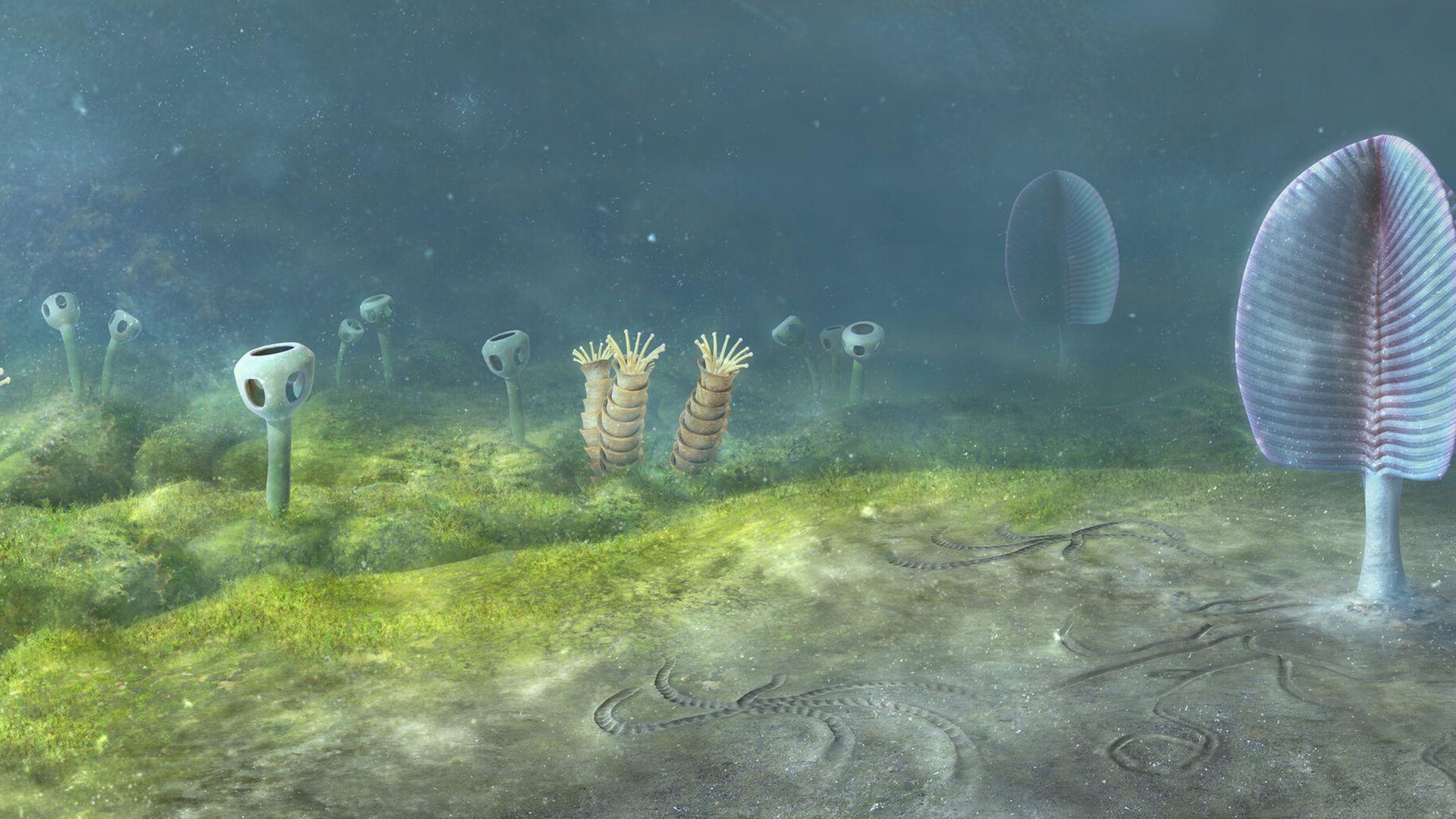
Animals may have evolved vastly earlier than fossil evidence suggests

The earliest animals may have evolved hundreds of millions of years before their first unmistakable fossils appear in the fossil record, according to a new study led by the University of Oxford. The findings, published in Science Advances, suggest animals may have originated deep in the Neoproterozoic Era, even before some of the most extreme ice ages in Earth's history.

📅 2026-10-02 18:00:13    •    Phys.org
Physicists who uncovered the first particle accelerator were honored with a Nobel Prize 75 years ago
Science News

Physicists who uncovered the first particle accelerator were honored with a Nobel Prize 75 years ago

While scientists are known for their dedication to their research, crawling on the floor to avoid electrocution for the sake of a measurement seems a little excessive. But this is what British physicist John Cockcroft and Irish physicist Ernest T.S. Walton had to do in the early 1930s while studying the structure of atomic nuclei. Luckily, their efforts led to their receiving the Nobel Prize in 1951.

📅 2026-10-02 18:00:01    •    Phys.org
Animals may have evolved 200 million years earlier than previously thought, new study suggests
Science News

Animals may have evolved 200 million years earlier than previously thought, new study suggests

The first animals may have appeared on Earth hundreds of millions years earlier than their fossils suggest, a new modeling study suggests. Previously, the earliest fossil evidence of animals dated to around 574 million years ago, during the Ediacaran period (635 million to 538 million years ago). In the new paper, a research team argues that we can't just rely on the spotty fossil record, and suggests that animals first appeared up to 200 million years earlier than the oldest known animal fossils. In the study, published Friday (Oct. 2) in the journal Science Advances, the researchers argue that the absence of animal fossils in some exceptionally well-preserved ancient rocks doesn't mean the...

📅 2026-10-02 18:00:00    •    Live Science
Want to use AI to improve your work? Have it disagree with you
Science News

Want to use AI to improve your work? Have it disagree with you

Knowledge workers such as scientists, teachers, lawyers and business leaders are increasingly using generative artificial intelligence applications for tasks that demand imagination, creativity and problem-solving. Ironically, perhaps, recent research shows that people who interact with generative AI for work tasks can end up not thinking critically. They can surrender to AI's quick and confident answers, which can lead to speedy but low-quality solutions.

📅 2026-10-02 17:40:01    •    Phys.org
Ancient sea levels reveal when the Earth's poles went wandering
Science News

Ancient sea levels reveal when the Earth's poles went wandering

Earth's poles do not always stay in the same place. For example, a region once near the North Pole can end up near the equator, and an area near the equator can shift up toward the pole. This is known as true polar wander (TPW), and it's when Earth's crust and mantle shift together relative to its spin axis.

📅 2026-10-02 17:20:03    •    Phys.org
Fluorescent test speeds screening of thousands of enzyme variants that modify plant compounds
Science News

Fluorescent test speeds screening of thousands of enzyme variants that modify plant compounds

Many natural plant compounds have promising health-related properties, but their poor water solubility can limit how effectively they are absorbed and used. In previous work, researchers discovered an enzyme from Bacillus subtilis, called phenolic phosphate synthetase (BsPPS), that can attach phosphate groups to a broad range of phenolic compounds. This modification can help make these compounds more water-soluble and support the development of improved nutraceuticals and related products.

📅 2026-10-02 17:20:01    •    Phys.org
Millions of years of evolution guide AI search for pollution-fighting enzymes
Science News

Millions of years of evolution guide AI search for pollution-fighting enzymes

Databases around the world contain information on millions upon millions of enzymes that have the potential to degrade pollutants like plastic. Scientists at Murdoch University's Bioplastics Innovation Hub are combining machine learning technology and biochemistry to identify which of these enzymes have the potential to break down plastic and other harmful pollutants.

📅 2026-10-02 17:00:18    •    Phys.org