Science News

Latest science news, discoveries and scientific developments.

Stem cells reverse stroke damage and restore movement in mice
Science News

Stem cells reverse stroke damage and restore movement in mice

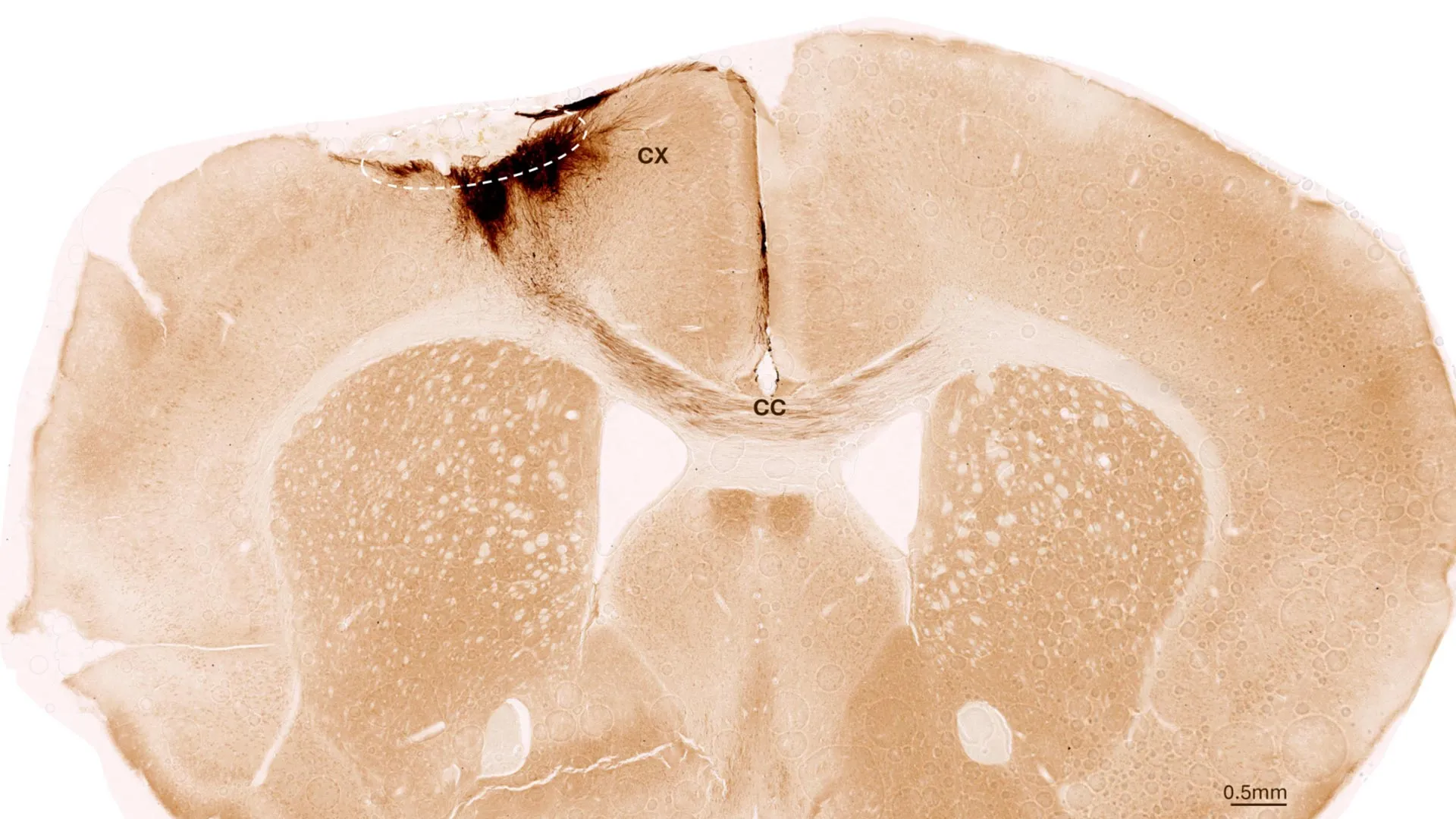
Stem cell transplants helped regenerate stroke-damaged brain tissue in mice, producing new neurons and restoring lost motor function. The treatment also improved blood vessels, inflammation, and the blood-brain barrier, raising hopes that a similar approach could eventually help repair the human brain after stroke.

πŸ“… 2026-09-22 01:49:32    β€’    ScienceDaily
Researcher studies mystical gemstones with a future in space exploration
Science News

Researcher studies mystical gemstones with a future in space exploration

Ph.D. candidate Natalia Seliutina has followed gemstones from the -30° temperatures of Siberia to the carving studios of Ōtepoti and the particle accelerators of Taiwan in her quest to discover why pounamu is one of the toughest natural materials on Earth. Fresh from the publication of Natalia's paper in the New Zealand Journal of Geology and Geophysics, Kathryn van Beek catches up with her to find out how understanding the properties of pounamu might one day help us explore space.

πŸ“… 2026-09-22 00:40:01    β€’    Phys.org
Fairness-based pathways shift emissions cuts while preserving global climate goals
Science News

Fairness-based pathways shift emissions cuts while preserving global climate goals

Who cuts emissions fastest, and who supports others in doing so, are central questions in global climate action. New IIASA-led research shows that building fairness into climate models from the start can inform deliberations without changing the overall climate goal.

πŸ“… 2026-09-22 00:20:01    β€’    Phys.org
Urban segregation study traces how history and ecology shape inequality in southern Chile
Science News

Urban segregation study traces how history and ecology shape inequality in southern Chile

Segregation is a multidimensional phenomenon deeply intertwined with historical, social and ecological contexts. Yet this more integrated perspective has received limited attention in the Global South. A recent study focusing on the city of Valdivia offers an exception, examining three key historical moments: colonization, the devastating 1960 earthquake and current struggles to protect urban wetlands.

πŸ“… 2026-09-22 00:00:01    β€’    Phys.org
Global cooperation under pressureβ€”new report on shaping reforms
Science News

Global cooperation under pressureβ€”new report on shaping reforms

Geopolitical rivalry, conflict, authoritarian nationalism and the systematic erosion of rules-based politics are reshaping the global order and putting cooperation under growing pressure. Yet the picture is more nuanced: While disruptive trends dominate the headlines, reforms are taking shape at the same time.

πŸ“… 2026-09-21 23:40:04    β€’    Phys.org
Cyanobacterium found in clean lakes shows little toxic potential
Science News

Cyanobacterium found in clean lakes shows little toxic potential

Gloeotrichia echinulata is a type of cyanobacterium that draws scrutiny because it tends to bloom in clear lakes, forming thick mats of visible green or white puffballs in otherwise clean water. Because of the slew of toxic compounds cyanobacteria can produce, blooms (historically called "blue-green algae") are of growing global concern. Yet, a new study by researchers at Bigelow Laboratory for Ocean Sciences and Oregon State University suggests this particular species might not deserve its maligned reputation.

πŸ“… 2026-09-21 23:20:04    β€’    Phys.org
Sydney cockatoos reveal how animal culture helps them adapt to city life
Science News

Sydney cockatoos reveal how animal culture helps them adapt to city life

Sulfur-crested cockatoos are surprisingly smart. In Australian cities such as Brisbane and Sydney, they've learned how to turn on drinking fountains by twisting the handle with their feet. In Sydney, they're even able to lift the lids of municipal garbage cans to get to the leftover food scraps inside.

πŸ“… 2026-09-21 23:20:01    β€’    Phys.org
Eat, prey, love: Nurse shark mating and Northeast angler conflicts offer conservation insights
Science News

Eat, prey, love: Nurse shark mating and Northeast angler conflicts offer conservation insights

While the Discovery Channel's annual Shark Week event has given the public greater familiarity with sharks, much about themβ€”from their mysterious love lives to how their eating habits bring them into conflict with recreational anglersβ€”remains a mystery to scientists. Now, two new studies led by researchers from the University of Massachusetts Amherst peer into these important aspects of shark biology to help guide real-world conservation strategies.

πŸ“… 2026-09-21 23:00:01    β€’    Phys.org
Jupiter uses a surprisingly complex system to fend off particles from the sun
Science News

Jupiter uses a surprisingly complex system to fend off particles from the sun

A University of Iowa-led research team has reported in a new study the most detailed observations to date of the bow shock at Jupiter, our solar system's gas giant. The findings from NASA's Juno mission reveal key differences between Jupiter's bow shock and Earth's. They also may lead to a better understanding of the physics of how shocks function in even more powerful energy releases, such as those from dying stars. The research is published in Nature Communications.

πŸ“… 2026-09-21 22:40:05    β€’    Phys.org
Centenarian sea cucumbers at risk of overfishing
Science News

Centenarian sea cucumbers at risk of overfishing

Marine scientists have been amazed to discover an endangered sea cucumber can live for decades, with some animals living more than 100 years, in a first-of-its-kind genetic mark-recapture study. Australian Institute of Marine Science (AIMS) Senior Principal Research Scientist Dr. Sven Uthicke said the findings suggested black teatfish sea cucumber populations recover much more slowly than previously thought and that this had implications for commercial fishery catch limits.

πŸ“… 2026-09-21 22:40:02    β€’    Phys.org
What are you most excited for NASA's Roman Space Telescope to find?
Science News

What are you most excited for NASA's Roman Space Telescope to find?

Related storiesNewly confirmed 'baby planet' is the youngest alien world scientists have ever discovered60 million stars: Euclid space telescope snaps the most detailed photo of the Milky Way ever takenAn 'impossible' black hole merger may finally be solved thanks to Einstein's relativity β€” but it raises an even bigger mysteryNASA's latest space telescope has officially taken its first photos of our universe. Launched on Aug. 30, the Nancy Grace Roman Telescope is on its way to Lagrange point L2, a "parking spot" in space about a million miles (1.6 million kilometers) from Earth where it will begin scanning deep space. Using its 300-megapixel camera, Roman captured hundreds of stars as green...

πŸ“… 2026-09-21 22:20:36    β€’    Live Science
Archaeologists uncover centuries-old mystery of Tampa Bay's secret community of migrant potters
Science News

Archaeologists uncover centuries-old mystery of Tampa Bay's secret community of migrant potters

About 100 years ago, archaeologists unearthing pottery sherds in Tampa Bay found something unexpected. Some of the fragments they recovered had designs nearly identical to decorated pottery found hundreds of miles to the north. At least on the surface, the pottery appeared to be Mississippian, a culture that emerged more than 1,000 years ago and brought social, economic and political transformation across southeastern North America. For years, archaeologists excluded peninsular Florida from maps of its range, but the artifacts suggested a different story.

πŸ“… 2026-09-21 22:20:03    β€’    Phys.org
A new way to see inside a hurricane
Science News

A new way to see inside a hurricane

Researchers at The University of Texas at Arlington have created a mathematical model to identify and analyze vortices, the rotating structures at the heart of hurricanes. The National Oceanic and Atmospheric Administration is now using the model to monitor hurricane development worldwide.

πŸ“… 2026-09-21 22:20:01    β€’    Phys.org
From spider webs to mosaics: How nanosheets of graphene oxide control the patterns left by a drying droplet
Science News

From spider webs to mosaics: How nanosheets of graphene oxide control the patterns left by a drying droplet

A drop of coffee on a tabletop often leaves a dark ring behind. This everyday mark is a reminder that a drying droplet is not passive: As water evaporates, it can transport the particles suspended inside it toward the edge. Scientists call this the coffee-ring effect. For inkjet printing and surface coatings, however, a ring is often exactly what engineers do not want. They need the material to land in a controlled, predictable pattern.

πŸ“… 2026-09-21 22:00:05    β€’    Phys.org
Dads of daughters may be more attentive partners
Science News

Dads of daughters may be more attentive partners

Children can be hard on a relationship, but some kids can bring parents closer together. Research from Rutgers University has found that often, it is girls who inspire closer parental bonds. In a study published in Personality and Individual Differences, scholars at Rutgers Business School's Center for Women in Business report that fathers of daughters show higher levels of attachment, commitment, trust and intimacy toward the child's mother than fathers of sons.

πŸ“… 2026-09-21 22:00:02    β€’    Phys.org
New study reveals gaps in bison parasite management
Science News

New study reveals gaps in bison parasite management

Gastrointestinal parasites can cause serious health problems in North American bison, but the drugs producers rely on to control them can become less effective when used too frequently or without knowing which animals actually need treatment.

πŸ“… 2026-09-21 21:40:06    β€’    Phys.org
Two new large stick insect species discovered in Australia's backyards and rainforests
Science News

Two new large stick insect species discovered in Australia's backyards and rainforests

Insect "detectives" have discovered two new types of large stick insects, showing scientists are still uncovering new species in some of Australia's most well-studied landscapes. Researchers at the University of Sydney have revised the Australian representatives of the stick insect genus Anchiale, identifying two new species, one with unique "lidded" eggs. They also reinstated a third species that had been hidden in plain sight for decades.

πŸ“… 2026-09-21 21:40:01    β€’    Phys.org