Science News

Latest science news, discoveries and scientific developments.

Portland report maps complex journeys through homelessness
Science News

Portland report maps complex journeys through homelessness

A new report from Portland State University's Homelessness Research and Action Collaborative (HRAC) and the OHSU-PSU School of Public Health offers an in-depth examination of how individuals navigate, survive and attempt to exit homelessness in Multnomah County. Titled "Without a Map: A Lived Experience Study of the Paths People Create Through Homelessness," the publication serves as the second and final part of the Pathways study.

📅 2026-09-10 21:20:01    •    Phys.org
New genomic tool for clams boosts sustainable aquaculture
Science News

New genomic tool for clams boosts sustainable aquaculture

An international team of researchers, including CIIMAR, has developed a new tool that could help produce clams that are more resistant to disease and climate change while also strengthening the conservation of these species' genetic diversity. The study, published in the journal Aquaculture, represents a significant step forward for sustainable aquaculture and the management of two of the most economically important clam species: the Japanese clam (Ruditapes philippinarum) and the good clam (Ruditapes decussatus).

📅 2026-09-10 21:00:10    •    Phys.org
Global study reveals hidden nutritional value of shellfish and other aquatic invertebrates
Science News

Global study reveals hidden nutritional value of shellfish and other aquatic invertebrates

The nutritional value of aquatic invertebrates such as oysters, mussels and crabs has been significantly overlooked, according to a new study led by researchers at King Abdullah University of Science and Technology (KAUST). The findings provide one of the most comprehensive assessments to date of the nutritional contribution of aquatic invertebrates, along with new evidence to better understand their role in human nutrition and help inform more sustainable fisheries, aquaculture and food-system planning.

📅 2026-09-10 21:00:06    •    Phys.org
Unveiling how nanoparticles create iridescence in ancient ceramics
Science News

Unveiling how nanoparticles create iridescence in ancient ceramics

Scientists led by the Universitat Politècnica de Barcelona and the ESRF, the European Synchrotron, have revealed the chemical reactions in nanoparticles that created a unique, shimmering effect in the painting on ninth-century Islamic ceramics. The results are published in Science Advances.

📅 2026-09-10 20:50:01    •    Phys.org
How sex with multiple mates can help save species from extinction
Science News

How sex with multiple mates can help save species from extinction

Allowing females to mate with multiple males, rather than just one, could help make species more resistant to extinction, University of East Anglia research shows. A new study reveals that when females have multiple males to mate with, their offspring inherit significantly fewer harmful genetic mutations. This, in turn, makes the entire population healthier and less likely to die out.

📅 2026-09-10 20:40:07    •    Phys.org
Supercomputer simulations reveal how the molecular motor kinesin steers itself along tracks
Science News

Supercomputer simulations reveal how the molecular motor kinesin steers itself along tracks

Kinesin is a molecular motor responsible for hauling essential cargoes within cells by walking step by step along filamentous tracks known as microtubules. To move efficiently and avoid falling off, the motor's two feet must coordinate their stepping in a precise direction. Scientists have known that a connecting segment called the neck region is crucial for coordinating this motion. However, its exact three-dimensional structure and how it physically interacts with the microtubule track have remained a mystery because of the limitations of current imaging techniques.

📅 2026-09-10 20:40:05    •    Phys.org
Water isotopes reveal early drought signals in Central Amazon rainfall
Science News

Water isotopes reveal early drought signals in Central Amazon rainfall

The historic droughts of 2023 and 2024 in the Amazon reduced river flows and altered the region's rainfall composition. Daily monitoring in Manaus, the capital of the Brazilian state of Amazonas, revealed these changes through the use of isotopes, which act as a kind of water "fingerprint." This method demonstrated how El Niño and warming in the North Atlantic affected the origin of moisture and precipitation dynamics.

📅 2026-09-10 20:30:01    •    Phys.org
Ancient Swedish Goths had surprisingly accurate calendars
Science News

Ancient Swedish Goths had surprisingly accurate calendars

On a mostly flat plain an hour north of Stockholm lies a collection of large burial mounds dating from an ancient culture at least 2,500 years old. These people were not Vikings; they were northern Germanic Goths, pagan polytheists worshiping the precursors of Odin, Freyr and Thor.

📅 2026-09-10 20:20:06    •    Phys.org
An unusual bacterium that penetrates and lives inside human cells may offer a new drug target
Science News

An unusual bacterium that penetrates and lives inside human cells may offer a new drug target

Research underway in the lab of Rebecca Alexander, a professor in Wake Forest University's Department of Chemistry, is shedding light on an unusual human bacterium, Mycoplasma penetrans. Alexander's work to understand how and why this unique pathogen acts as it does could one day lead to new classes of drugs that better target illnesses associated with this particular pathogen, as well as others that act similarly.

📅 2026-09-10 20:20:01    •    Phys.org
Infectious diseases will seed new ground as the planet warms — here's where they'll spread
Science News

Infectious diseases will seed new ground as the planet warms — here's where they'll spread

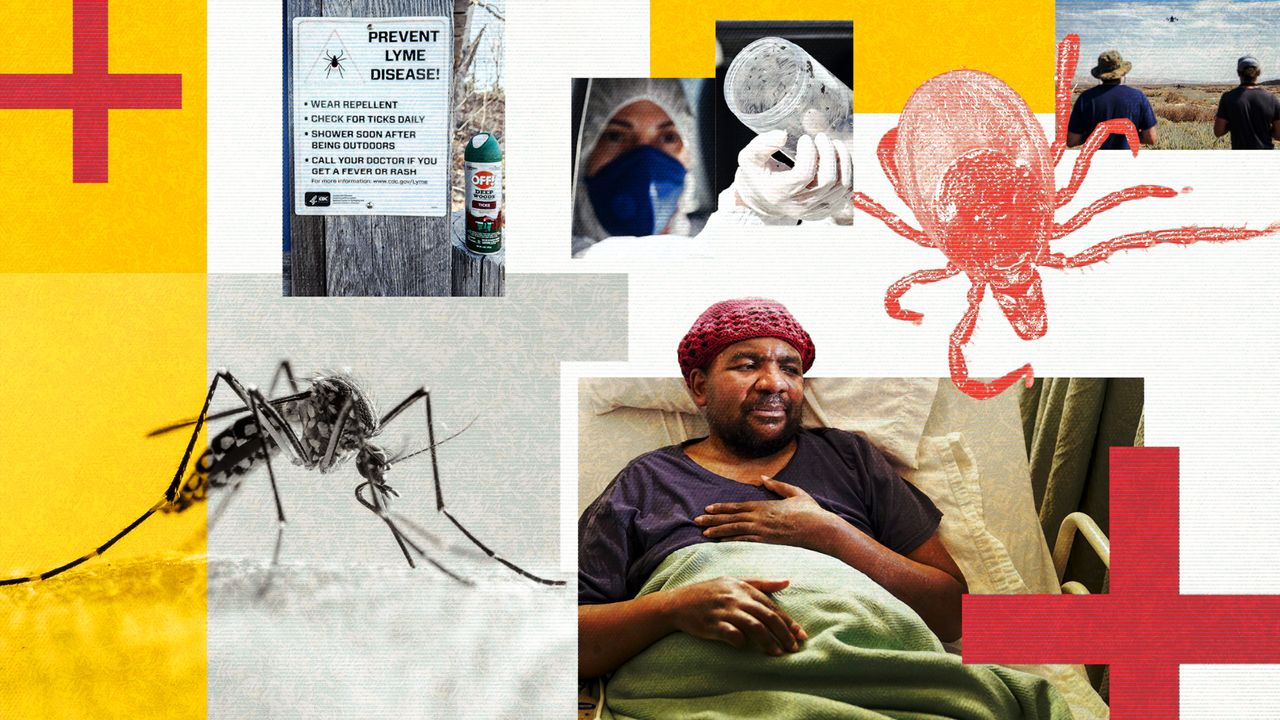
Burning UpAs the planet warms, our environment will be transformed, but so will our bodies. In this series, 'Burning up,' we investigate the health impacts of climate change, focusing on heat, air quality, food and infection risk. We also evaluate the promising solutions that could help us adapt to our warmer future.To the untrained eye, Xiaoyu Shan's lab bench looked like a home gardening experiment gone bad: dishes filled with dirt — some that looked like mud pies and others that were bone-dry — and not a plant to be seen. But those dishes held a warning. The dirt that Shan, a postdoctoral research associate in biology and biological engineering at Caltech, was studying contained soil micr...

📅 2026-09-10 17:00:15    •    Live Science
Gamma ray burst may have been two supernovae in one
Science News

Gamma ray burst may have been two supernovae in one

A group of astronomers proposes that a series of events in a distant galaxy formed both a black hole and a pulsar, but other experts say the conclusion is premature

📅 2026-09-10 16:00:00    •    New Scientist
Exquisite 66-million-year-old bird feather preserved in dinosaur dropping
Science News

Exquisite 66-million-year-old bird feather preserved in dinosaur dropping

A feather preserved in a dinosaur dropping, found in 2016 in north-eastern Montana’s Hell Creek FormationO'Connor et al. A bird that was eaten and partially excreted by a dinosaur 66 million years ago has left behind the best-preserved feathers ever recovered by scientists from dinosaur-age rock. This pushes the evolution of feathers, like the ones on modern birds, back by 10 million years and may tell us more about why most birds didn’t survive the post-asteroid mass extinction. “This is the best feather we’ve ever seen in a Mesozoic [252 million to 66 million years ago] deposit,” says Jingmai O’Connor at the Field Museum in Chicago. “[It’s] like a feather you could pick up off the ground.”...

📅 2026-09-10 15:00:00    •    New Scientist
Scientists capture two DNA strands zipping together for the first time
Science News

Scientists capture two DNA strands zipping together for the first time

Scientists have directly observed how two negatively charged DNA molecules can pair up despite normally repelling each other. Positively charged metal ions appear to bridge the gap, helping matching DNA helices align groove for groove like a molecular zipper. The discovery confirms a theory proposed two decades ago and could help researchers understand DNA interactions involved in cancer and other cellular processes.

📅 2026-09-10 14:33:06    •    ScienceDaily