
Science News
There are just five perfect shapes in math—here's why
The five Platonic solids are the epitome of perfection—at least in mathematics. Topology explains why there are only five of them
Latest science news, discoveries and scientific developments.
The five Platonic solids are the epitome of perfection—at least in mathematics. Topology explains why there are only five of them

One of the trickiest problems in mathematics has now fallen to AI after just days of work. The groundbreaking result was announced amid rumour after similar, but less complete work, also created with AI, was announced just hours before

This summer, you may have wondered why you are seeing so few insects squished on your car's windshield compared with a road trip several years ago.

Bear baiting in England became more popular after the Norman Conquest in 1066, new research shows. The study by Cardiff University and the University of Nottingham brings together archaeological analysis of bear bones and archival records to show the prevalence of the animals in England and northern France during medieval times. The study is published in the journal Society & Animals.

A new study shows that measures to stop AI's claims of consciousness have unintended consequences for non-human entities

Women's faces are rated as more attractive than men's across cultures, age groups and sexual orientations. This effect, known as the "Gender Attractiveness Gap" (GAP), was recently demonstrated in a large-scale study led by the Max Planck Institute for Empirical Aesthetics (MPIEA) in Frankfurt am Main, Germany. A new article in Current Opinion in Psychology takes a closer look at the underlying data.

How will global access to food, water and energy evolve in coming decades? A new study coauthored by MIT researchers suggests the answers could be very different depending on region, resource and income.

Drylands are defined as regions where rainfall is low relative to the atmosphere's ability to draw water from soil and plants. Expanding boundaries of these regions are frequent concerns in climate change considerations. While they can support large populations and ecosystems, dryland expansion can worsen water scarcity, land degradation and desertification.

Extreme heat waves disrupt life in soil. Soil bacteria that produce and resist antibiotics switch into survival mode, temporarily reducing the number of resistance genes. At the same time, heat and drought are causing significant damage to soils and ecosystems, especially in cold, wet regions such as the Netherlands. This is evident from a large-scale European study by soil ecologist Franciska de Vries (University of Amsterdam) and colleagues. The findings are published in the journal Proceedings of the National Academy of Sciences.

Arthropods are small, but they could play an outsized role in tackling some of the world's biggest challenges.
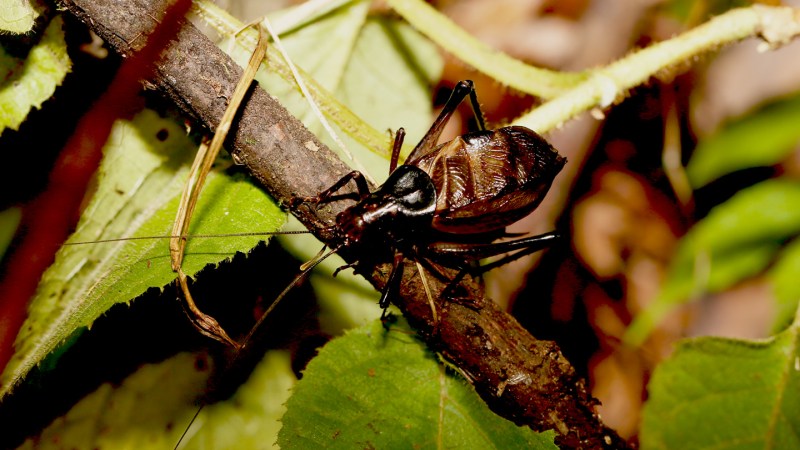
An analysis of sound-making structures on preserved wings reveals the mating calls of ancient Jurassic insects, re-creating part of an ancient soundscape.

Some have claimed cultivating seaweed could remove hundreds of millions of tonnes of CO2. But as warming waters kill off kelp, we need to refocus on preserving what we have, a study argues

Bursts of electrical stimulation to a nerve in the face seem to improve signalling between neurons and people's performance on a memory test

Trade routes and ports have shaped the history of human civilization, with the Mediterranean network among the most prominent and influential. Yet our understanding of its past is shaped largely by what remains visible on land rather than by the sea itself. Stone-built structures such as docks, quays and breakwaters give us important clues, but they do not always reveal the full picture.

The world's most endangered tigers have started a family in Greece, offering hope for a predator rapidly vanishing from the wild.
Prior to the announcement, rumors were circulating online among mathematicians over the proof’s origins—OpenAI has denied all allegations

University of Missouri researchers have discovered a new way to harness one of the body's natural defenses: copper. While copper is essential for life and helps power important biological processes, having too much of it can be toxic. To keep copper levels in balance, cells rely on specialized proteins that regulate where it goes and how much is present.

Active black holes are easy to detect. Their superheated accretion disks emit bright X-rays, and the jets streaming from their poles are easily seen at visible and radio wavelengths. But most stellar-mass black holes are inactive. They either drift through the galaxy alone or orbit a companion star without consuming its material. We can't observe inactive black holes directly. We can only observe their effects on nearby objects. We currently know of three such black holes thanks to the Gaia spacecraft.

For the first time, scientists used the combined power of NASA's Hubble and James Webb Space Telescopes to study some of the most far-flung bodies in our solar system, trans-Neptunian objects (TNOs). Some are the smallest and faintest ever directly seen. The researchers unexpectedly found fewer small TNOs than expected and that the colors of these bodies followed the same relationships as those of their larger family members.

The scent of fresh laundry in a store encourages people to spend more on secondhand clothes than the scent of citrus or the typical scent of secondhand clothes does. This is according to research by psychologists Matteo Perini and Jasper de Groot of Radboud University. The researchers suggest that this effect is linked to people's tendency to avoid pathogens.