Science News

Latest science news, discoveries and scientific developments.

This oddball reflective lava world is challenging to understand
Science News

This oddball reflective lava world is challenging to understand

Among Kepler and TESS's many surprising exoplanet discoveries are the ultra-short-period (USP) planets. These planets move very quickly and complete an orbit in less than 24 hours. Ancient astronomers thought that Mercury was so fast—it goes around the sun every 88 days—that they named it after the Roman god Mercury, who was the fast-traveling messenger of the gods. They couldn't have known how sluggish Mercury is compared to the USPs.

📅 2026-11-01 00:30:01    •    Phys.org
Looking for bats after dark can help science—and change how we see them
Science News

Looking for bats after dark can help science—and change how we see them

What's that chirping sound coming through the detector? Did you feel something whiz past? Those are just some ways people react when they encounter microbats for the first time. Microbats are small, mostly nocturnal mammals that use ultrasonic sounds to navigate and hunt at night. They do this through echolocation, producing calls and listening to the echoes that bounce back from objects and prey.

📅 2026-10-31 22:30:01    •    Phys.org
Giant virus yields potassium channel gene that illuminates complex protein evolution
Science News

Giant virus yields potassium channel gene that illuminates complex protein evolution

Researchers have discovered a gene for a tandem potassium channel in an algal virus. The finding supports the view that giant viruses may have contributed significantly to the evolution of complex proteins. The study is published in the journal Proceedings of the National Academy of Sciences.

📅 2026-10-31 21:00:05    •    Phys.org
Chemists develop AI tool to convert human ingenuity into life-enhancing enzymes
Science News

Chemists develop AI tool to convert human ingenuity into life-enhancing enzymes

Many have voiced concerns that artificial intelligence will take jobs away from humans. But assistant professor of chemistry Zhongyue (John) Yang, along with his former doctoral student Qianzhen Shao (now a postdoc at Stanford) and other team members, has created an AI tool that aims to elevate the work that scientists do—not replace them.

📅 2026-10-31 19:00:01    •    Phys.org
Ultracold atoms simulate hard-to-observe matter-antimatter pair production
Science News

Ultracold atoms simulate hard-to-observe matter-antimatter pair production

According to quantum electrodynamics, the theory describing interactions between light and electrically charged particles, a sufficiently strong electric field can, in principle, convert some of its energy into particles and their antimatter partners. A particle's antimatter partner has the same mass and, for electrically charged particles, the opposite electric charge.

📅 2026-10-31 17:00:01    •    Phys.org
Four superconducting cables link two large quantum processors into one
Science News

Four superconducting cables link two large quantum processors into one

As quantum computers grow more ambitious, many researchers believe the best way forward is to build them in multiple interconnected parts. In these modular designs, separate quantum processors are linked so they can work together as one larger machine. For this to happen, however, connections must carry fragile quantum information without destroying it.

📅 2026-10-31 16:00:02    •    Phys.org
Rare Iron Age Celtic helmet discovered in northeastern Poland far from its homeland
Science News

Rare Iron Age Celtic helmet discovered in northeastern Poland far from its homeland

Around 2,400 years ago, at Łysa Góra in Poland, a group of people took a bronze helmet, crushed it, broke it into pieces and threw it into a pit with iron adzes and a scythe. Such helmets are sometimes found in lavish graves of the Celtic warrior elite, from Champagne, France, to Dürrnberg, Austria.

📅 2026-10-31 15:00:06    •    Phys.org
Astronomers may have been wrong about what ended the 'Cosmic Dark Age'
Science News

Astronomers may have been wrong about what ended the 'Cosmic Dark Age'

The mysterious force that cleared the cosmic fog at the dawn of the universe may not be what we thought, a new study suggests. The results hint that astronomers may need to rethink a major aspect of cosmological evolution, which led to the universe we clearly see today. Around 400,000 years after the Big Bang, the fledgling universe finally cooled enough to form atoms — mostly hydrogen. But these neutral, non-electrically charged hydrogen atoms shrouded the cosmos in a fog that made it opaque to ultraviolet (UV) light. Then, after the first stars flickered to life and gathered into galaxies, bursts of radiation ionized the neutral hydrogen. This turned the impenetrable fog of atoms into elec...

📅 2026-10-31 15:00:00    •    Live Science
Scientists finally discover how a common gut bacterium can trigger colon cancer
Science News

Scientists finally discover how a common gut bacterium can trigger colon cancer

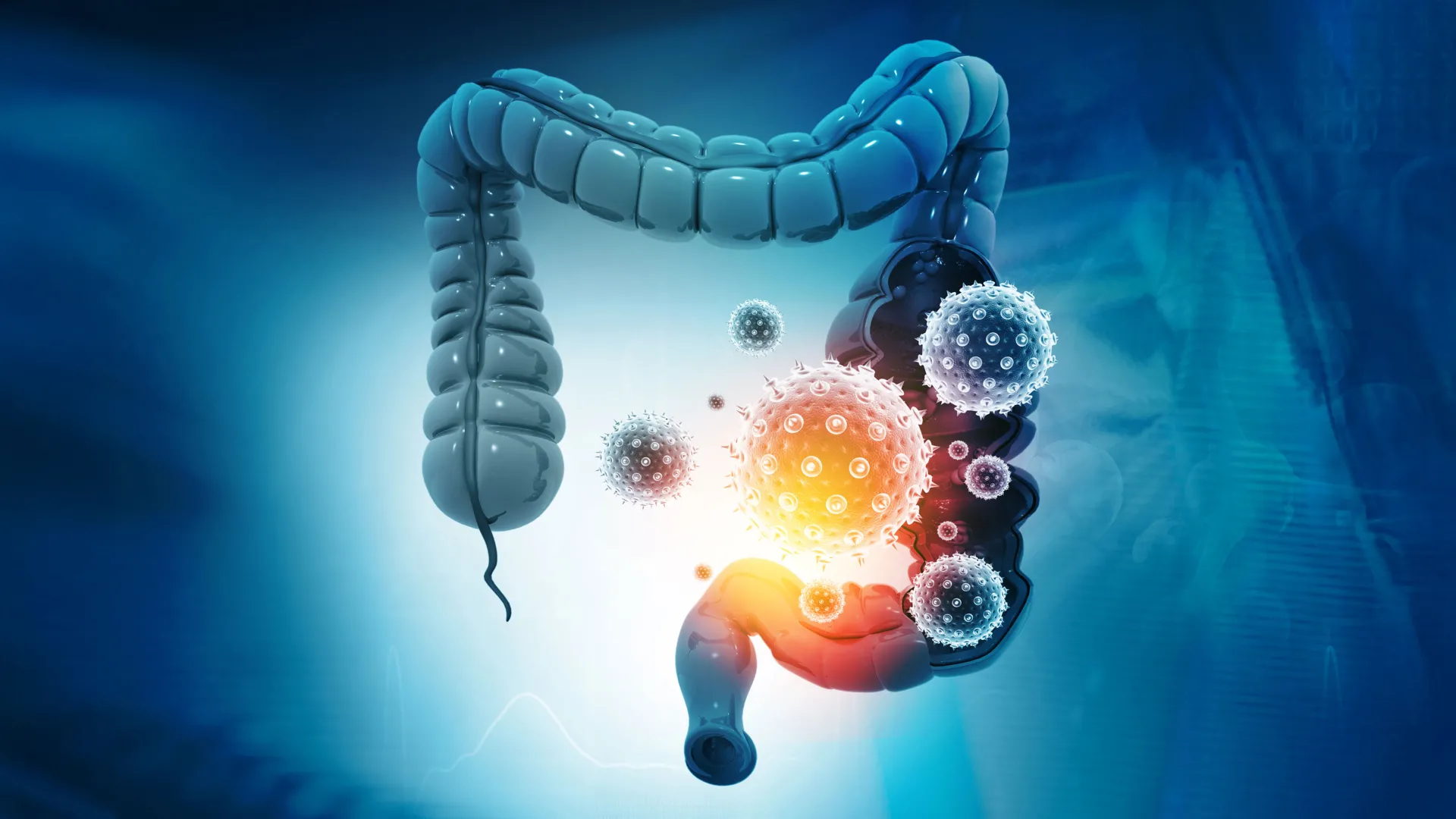
Scientists at Johns Hopkins have uncovered a crucial missing link between a common gut bacterium and colorectal cancer, solving a mystery that has puzzled researchers for nearly two decades. The bacterium, Bacteroides fragilis, produces a toxin that damages the colon’s protective lining, triggers chronic inflammation, and promotes tumor formation.

📅 2026-10-31 13:49:23    •    ScienceDaily
A mysterious 4,000-year-old wall is rewriting North Africa’s history
Science News

A mysterious 4,000-year-old wall is rewriting North Africa’s history

A remarkable 4,000-year-old defensive structure discovered in Morocco is rewriting what scientists thought they knew about ancient North African civilizations. The massive fortifications reveal unexpectedly sophisticated prehistoric societies and suggest that the region played a much greater role in Mediterranean history than previously recognized.

📅 2026-10-31 13:09:49    •    ScienceDaily
Rare fossil discovery reveals new dinosaur species that specialized in eating fruit
Science News

Rare fossil discovery reveals new dinosaur species that specialized in eating fruit

Among the ravenous carnivores and lumbering herbivores that roamed the Cretaceous landscape, another kind of dinosaur was evolving that started to eat something else: the plants that began to flower and produce fruit. The discovery by paleontologists from Stony Brook University, Royal Ontario Museum (ROM) and the North Dakota Geological Survey reveals that a new species, Infernogallus jamesi—a type of small oviraptorosaur—had chewing muscles for mashing soft food, making it the first known dinosaur that specifically ate fruit.

📅 2026-10-31 13:00:02    •    Phys.org
Ghostly statue of 'shrine maiden' discovered at 1,500-year-old burial mound in Japan
Science News

Ghostly statue of 'shrine maiden' discovered at 1,500-year-old burial mound in Japan

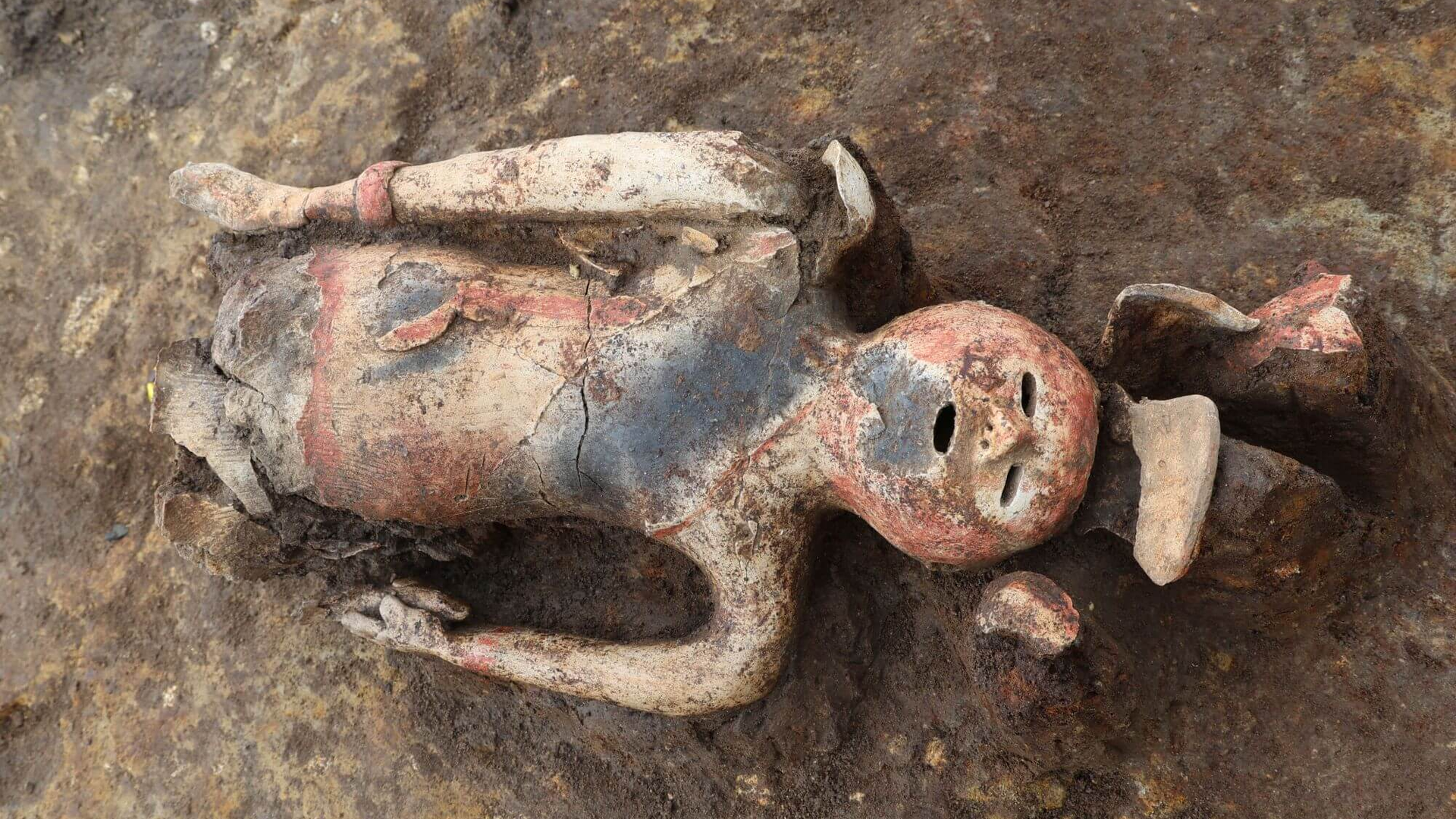
Archaeologists have discovered a ghostly human-shaped artifact at a fifth-century burial mound in Japan. The clay figurine's appearance suggests it represents a female shaman who once guarded a tomb.The artifact was unearthed at the archaeological site of Nishikaminomiya, northwest of Tokyo, according to a translated statement from Japan's Gunma prefectural government. At the site, archaeologists found nearly a dozen burial mounds known as "kofun" dated to the fifth and sixth centuries. This time period in Japanese history, which lasted from about A.D. 300 to 710, is called the Kofun period. Many tombs in this period had cylindrical clay sculptures called "haniwa" that were used as offerings...

📅 2026-10-31 13:00:00    •    Live Science
Scientists discover metals that defy the deep freeze at -424°F
Science News

Scientists discover metals that defy the deep freeze at -424°F

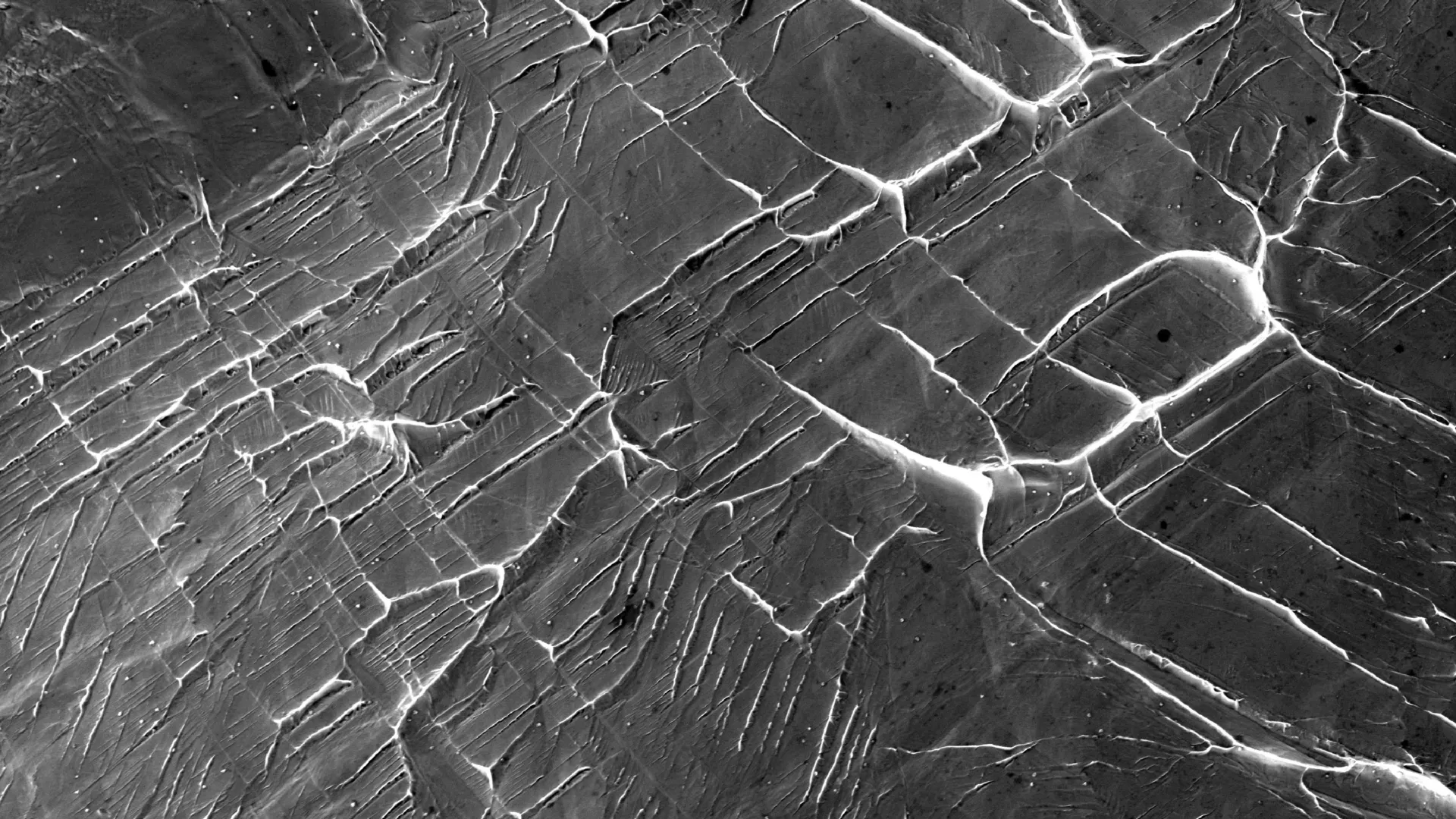
Scientists have discovered a surprising mechanism that allows certain metals to resist cracking at temperatures as low as -253°C (-424°F), when similar materials typically become dangerously brittle. Instead of breaking, two experimental alloys reorganize their internal structures, creating new ways to absorb stress and remain flexible.

📅 2026-10-31 12:45:59    •    ScienceDaily
75,000-year-old Neanderthal may have been killed by a spear aimed at the heart
Science News

75,000-year-old Neanderthal may have been killed by a spear aimed at the heart

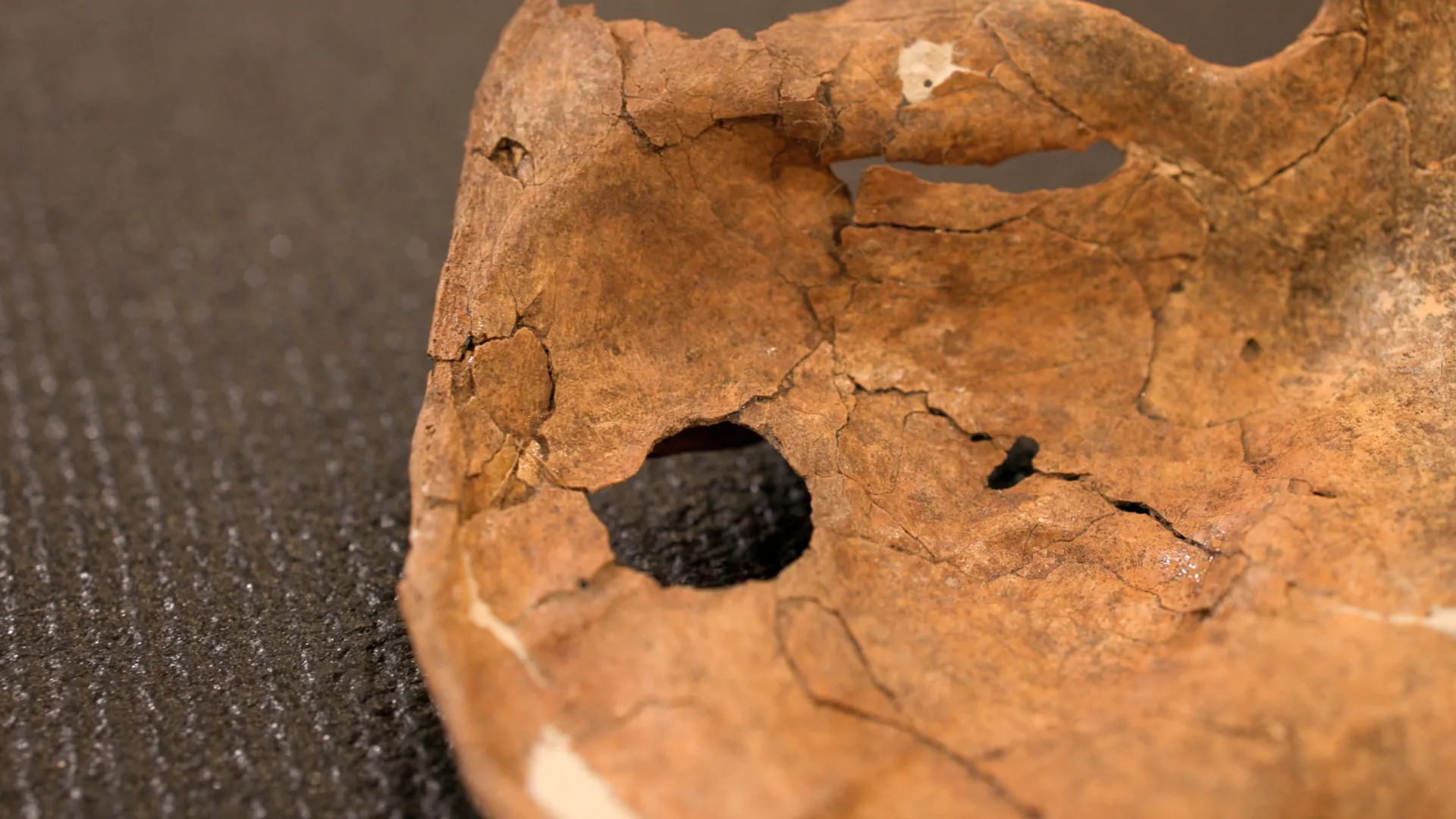
A Neanderthal who died 75,000 years ago may have been killed by a wooden spear deliberately aimed at the heart, revealing rare evidence of prehistoric violence. A circular hole in the shoulder blade suggests the weapon pierced the chest and caused a rapidly fatal injury. Surprisingly, the same individual had survived an earlier devastating facial injury, suggesting other Neanderthals provided care and support.

📅 2026-10-31 11:05:20    •    ScienceDaily
Young Canadians focus on mental health at key climate trial
Science News

Young Canadians focus on mental health at key climate trial

At a landmark Canadian trial focused on the government's obligations to fight climate change, the young plaintiffs suing Ottawa over alleged policy failures have sought to focus attention on their mental health.

📅 2026-10-31 11:00:07    •    Phys.org