Science News

Latest science news, discoveries and scientific developments.

Physicists created a tiny universe and watched time emerge without a clock
Science News

Physicists created a tiny universe and watched time emerge without a clock

Scientists have created a miniature universe in the laboratory that could help answer one of the biggest mysteries in physics: What is time, and where does it come from? Using 24,000 ultracold atoms, a University of Birmingham researcher built an isolated quantum system that repeatedly expands and contracts, mimicking the Big Bang and a possible Big Crunch. Remarkably, the experiment showed that time could emerge from changes happening inside the system, without relying on an external clock.
📅 2026-10-30 11:42:36    •    ScienceDaily
The asteroid killed the dinosaurs. Why did crocodiles survive?
Science News

The asteroid killed the dinosaurs. Why did crocodiles survive?

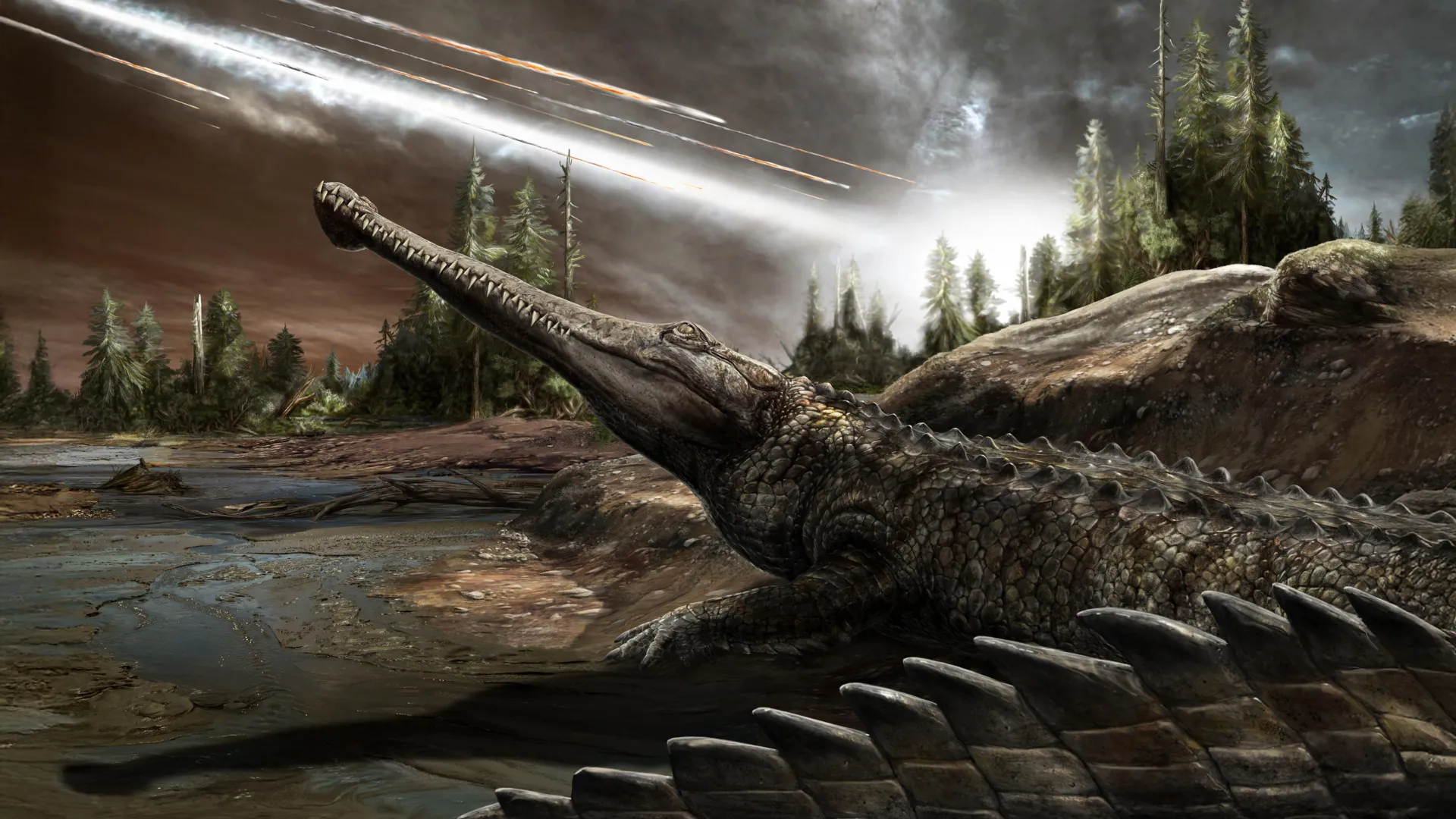
Scientists may have solved a 66-million-year-old mystery: how crocodiles survived the asteroid that wiped out the dinosaurs. A sweeping analysis of fossils and ancient climates suggests that their preference for warm environments placed them in tropical refuges that remained habitable even after the catastrophic impact.

📅 2026-10-30 11:34:16    •    ScienceDaily
A computer scientist breaks through a limit that stood since 1996
Science News

A computer scientist breaks through a limit that stood since 1996

A computer scientist has achieved a breakthrough in a nearly 25-year-old problem involving how computers calculate distances across enormous networks. The new algorithm delivers more reliable estimates for closely connected points without sacrificing speed, overcoming a longstanding limitation of earlier methods. Its secret lies in a smarter way of sampling network connections at multiple scales.

📅 2026-10-30 11:08:52    •    ScienceDaily
Hubble reveals a stunning twist in how the universe emerged from darkness
Science News

Hubble reveals a stunning twist in how the universe emerged from darkness

A surprising discovery by astronomers using the Hubble Space Telescope is challenging a leading explanation for how the early universe emerged from a dense fog of hydrogen roughly 13 billion years ago. Scientists once believed powerful winds from exploding stars helped radiation escape galaxies and clear that cosmic fog, but new observations reveal that these winds actually block radiation instead.

📅 2026-10-30 10:50:22    •    ScienceDaily
Scientists reveal a hidden snakebite crisis killing up to 513,000 people a year
Science News

Scientists reveal a hidden snakebite crisis killing up to 513,000 people a year

A startling new study suggests that venomous snakebites are killing far more people worldwide than official statistics indicate, with an estimated 274,000 to 513,000 deaths every year. Researchers found that as many as 7 million people could suffer snake envenoming annually, while more than 800,000 survivors are left with long-term disabilities.

📅 2026-10-30 10:37:00    •    ScienceDaily
Why some “lower-risk” childhood cancers turn deadly
Science News

Why some “lower-risk” childhood cancers turn deadly

Scientists have uncovered hidden aggressive cancer cells in children whose tumors were previously considered lower risk, revealing why some cases of rhabdomyosarcoma become unexpectedly deadly. The discovery could help doctors identify dangerous tumors earlier and develop personalized treatments that improve survival while reducing unnecessary chemotherapy.

📅 2026-10-30 10:15:28    •    ScienceDaily
Could AI ever build itself? Scientists map the road to the 'last AI built by humans.'
Science News

Could AI ever build itself? Scientists map the road to the 'last AI built by humans.'

Scientists in China are exploring what it would take to develop "the last AI built by humans" — a powerful, self-improving artificial intelligence (AI) system capable of creating its own successors.In a new paper, researchers examine how approaches to recursive self-improvement (RSI) could help tackle the rising financial and computational costs of developing ever-more advanced AI models.RSI refers to the idea that future AI models could direct their own training and development, using what they learn from each round of improvements to guide subsequent rounds of development.This recursive feedback loop could eventually enable AI systems to develop newer, more powerful generations of models w...

📅 2026-10-30 10:00:00    •    Live Science
Scientists confirm fruit and vegetable skin really is good for you
Science News

Scientists confirm fruit and vegetable skin really is good for you

Fruit and vegetable skin is often rich in fibreEkaterina Vasileva-Bagler/Getty Images Some people are convinced that fruit and vegetable skin is particularly nutritious, and now scientists have confirmed the idea. They have discovered that these parts of fruits and vegetables often contain far more fibre than the flesh we normally consume. The finding suggests cooks are unwittingly discarding fibre-rich food by chucking out the seeds, skins and stems of fruits and vegetables when preparing a meal. Home cooks and caterers should adopt “root to tip” eating and start cooking with squash peel, watermelon rind and pepper stalks to improve the public’s intake of dietary fibre, the team says. Adver...

📅 2026-10-30 09:49:57    •    New Scientist
Read an extract from Dark Eden by Chris Beckett
Science News

Read an extract from Dark Eden by Chris Beckett

The New Scientist Book Club is reading Dark Eden by Chris Beckett We went out by a path that led through a big clump of flickering starflowers and then into Batwing. A whole bunch of Batwing grownups and newhairs were in their clearing banging away at a giant redlantern tree with their blackglass axes, working in the pink light of its flowers. We walked round the edge of their clearing to Family Fence, dragged away the branches at the opening, and went out into open forest. No more shelters and campfires ahead of us now: nothing but shining trees. Hmmmph, hmmmph, hmmmph, went the trees. Hmmmmmm, went forest. We walked for a waking under the light of the treelanterns, slashing down whatever b...

📅 2026-10-30 09:30:00    •    New Scientist
In Dark Eden, I imagined how life might exist on a sunless planet
Science News

In Dark Eden, I imagined how life might exist on a sunless planet

Eden, the planet in Chris Beckett’s Dark Eden, drifts outside the Milky WayMcCarthy's PhotoWorks/Shutterstock I came up with the idea of the planet Eden in 1992 for a short story called The Circle of Stones. At that time, I had no idea that there really were such things as planets without suns, but it seemed likely to me. It also seemed possible to me that life might arise on such a planet, since, even here on Earth, whole ecologies thrive without sunlight around thermal vents in the deep ocean. Life on Earth may have even have begun in such places. Quite often, if something seems likely, it does indeed happen. (In another book, I predicted that a US president would one day seek to take over...

📅 2026-10-30 09:30:00    •    New Scientist
The 12 strangest science stories we can’t stop thinking about
Science News

The 12 strangest science stories we can’t stop thinking about

A male Amazon river dolphin (Inia geoffrensis) urinating into the air There are some stories that stay with you forever, the big scientific moments that change the course of history. These are not those moments – but we can’t stop thinking about them anyway. Push my button Surgeon Stuart Meloy was performing a pain-relief operation on a woman’s spine when she started exclaiming emphatically. “You’re going to have to teach my husband to do that,” the woman said. This inspired Meloy to invent an implant to help women who are unable to achieve orgasms in the usual way. New Scientist broke the news in 2001, sparking a frenzy of worldwide media excitement. But 13 years later, Meloy was still stru...

📅 2026-10-30 07:00:00    •    New Scientist
Astronauts just gave the International Space Station a powerful upgrade
Science News

Astronauts just gave the International Space Station a powerful upgrade

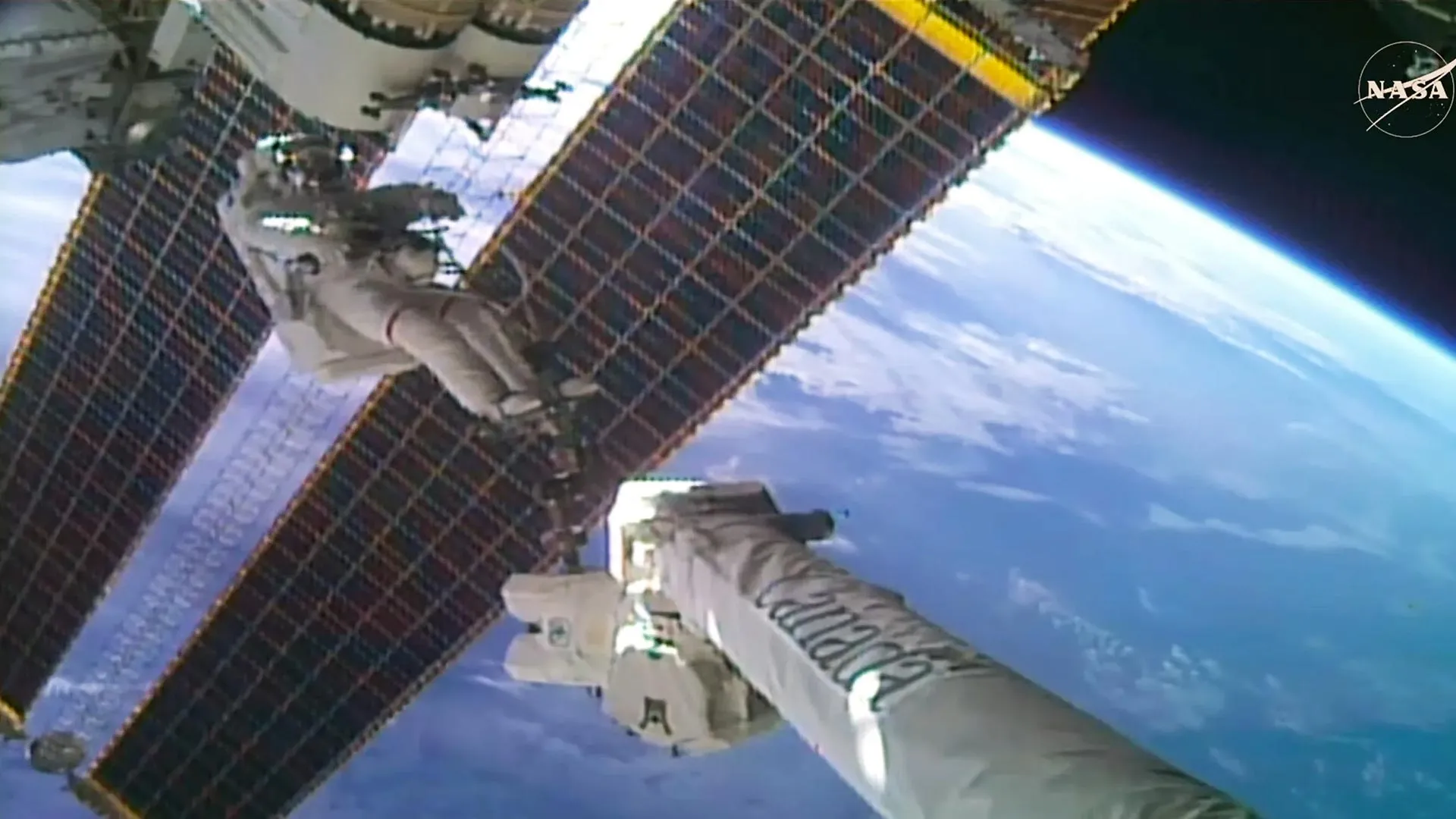
Two astronauts completed a 7-hour, 11-minute spacewalk to install a new solar array on the International Space Station, bringing NASA one step closer to a major power upgrade. Once the final array is installed on November 5, the station will have up to 30% more available power, supporting critical operations and its eventual controlled deorbit.

📅 2026-10-30 06:12:55    •    ScienceDaily
Small molecular twists may strengthen nature's magnetic compass
Science News

Small molecular twists may strengthen nature's magnetic compass

A collaborative research team led by Yasuhiro Kobori at Kobe University, together with researchers from Toho University, Saitama University, Nagoya Institute of Technology and the University of Freiburg, has identified a potential molecular mechanism that could enhance magnetic compass responses in cryptochrome, a blue-light-sensitive protein implicated in magnetoreception.

📅 2026-10-30 05:00:01    •    Phys.org
Scientists confirm global warming is accelerating faster than ever recorded
Science News

Scientists confirm global warming is accelerating faster than ever recorded

Earth is warming faster than ever recorded, with scientists detecting a major acceleration in global temperatures since around 2015. A new study reveals that the warming rate has surged to approximately 0.35°C per decade, nearly double the average pace observed from 1970 to 2015. After removing natural climate fluctuations, researchers confirmed the acceleration with more than 98% statistical confidence.

📅 2026-10-30 03:50:51    •    ScienceDaily
A mysterious star system just 16 light-years away may be hiding habitable planets
Science News

A mysterious star system just 16 light-years away may be hiding habitable planets

Astronomers have solved a 170-year-old planetary mystery in a nearby two-star system, discovering that a mysterious wobble was caused by stellar activity rather than a giant planet. Although Jupiter-sized worlds have been ruled out in key regions, smaller, potentially habitable planets could still be waiting to be discovered just 16 light-years from Earth.

📅 2026-10-30 03:17:17    •    ScienceDaily