Science News
Latest science news, discoveries and scientific developments.
Science News
A surprising vitamin A discovery is changing what scientists know about vision
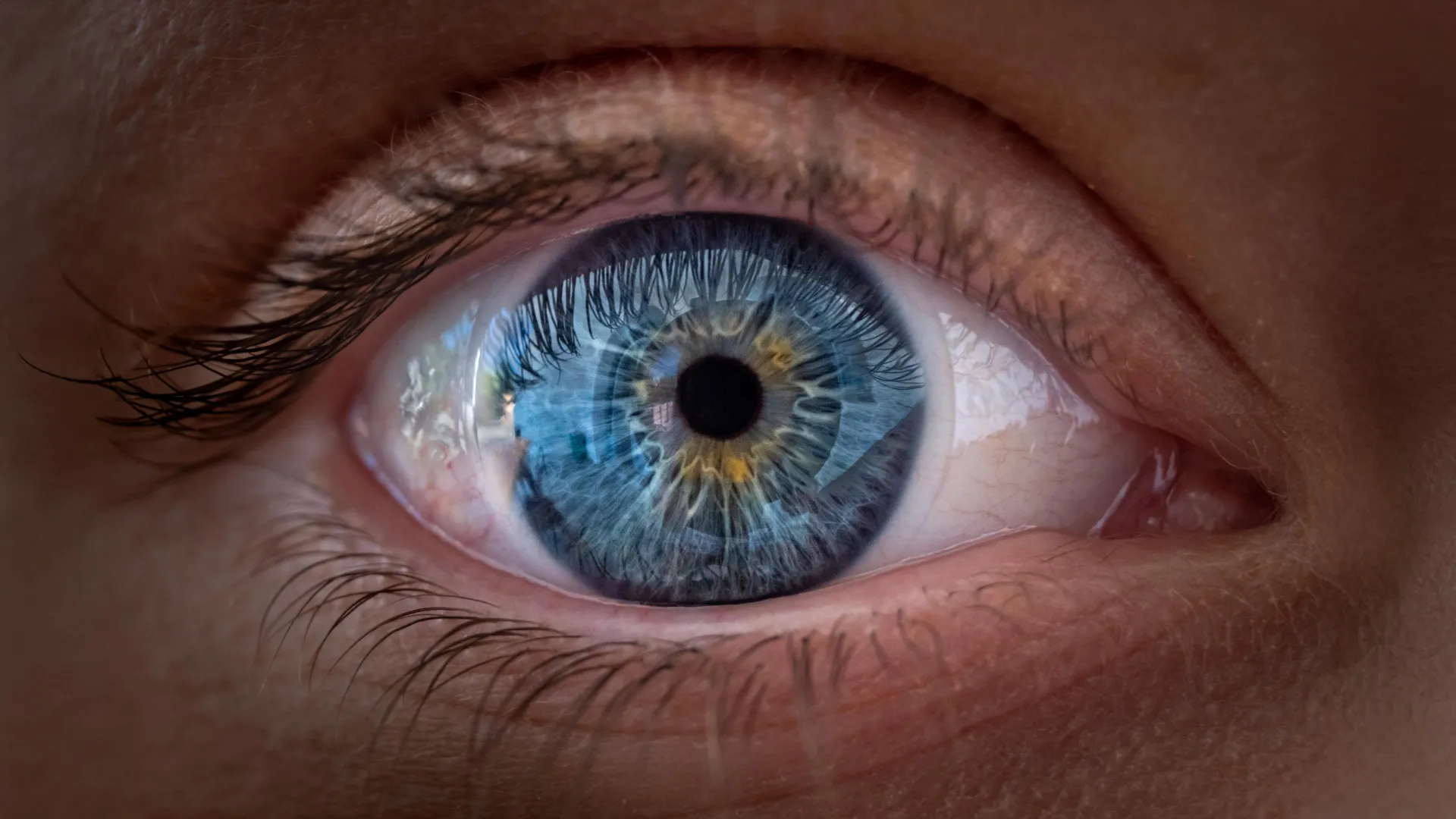
Scientists at Johns Hopkins University have uncovered a surprising process that helps humans develop sharp vision before birth, challenging decades of assumptions about how the eye forms. Using miniature human retinas grown in the lab, researchers discovered that a vitamin A derivative and thyroid hormones work together to shape the foveola, the tiny region at the center of the retina responsible for our sharpest vision.

Science News
Spatial mapping reveals how human urogenital organs codevelop during organogenesis
A new study has mapped human urogenital development in its native spatial context, revealing how neighboring organs coordinate their development through cellular communication and molecular signaling during embryogenesis.
Science News
Scientists smash oxygen nuclei to recreate matter from the Big Bang
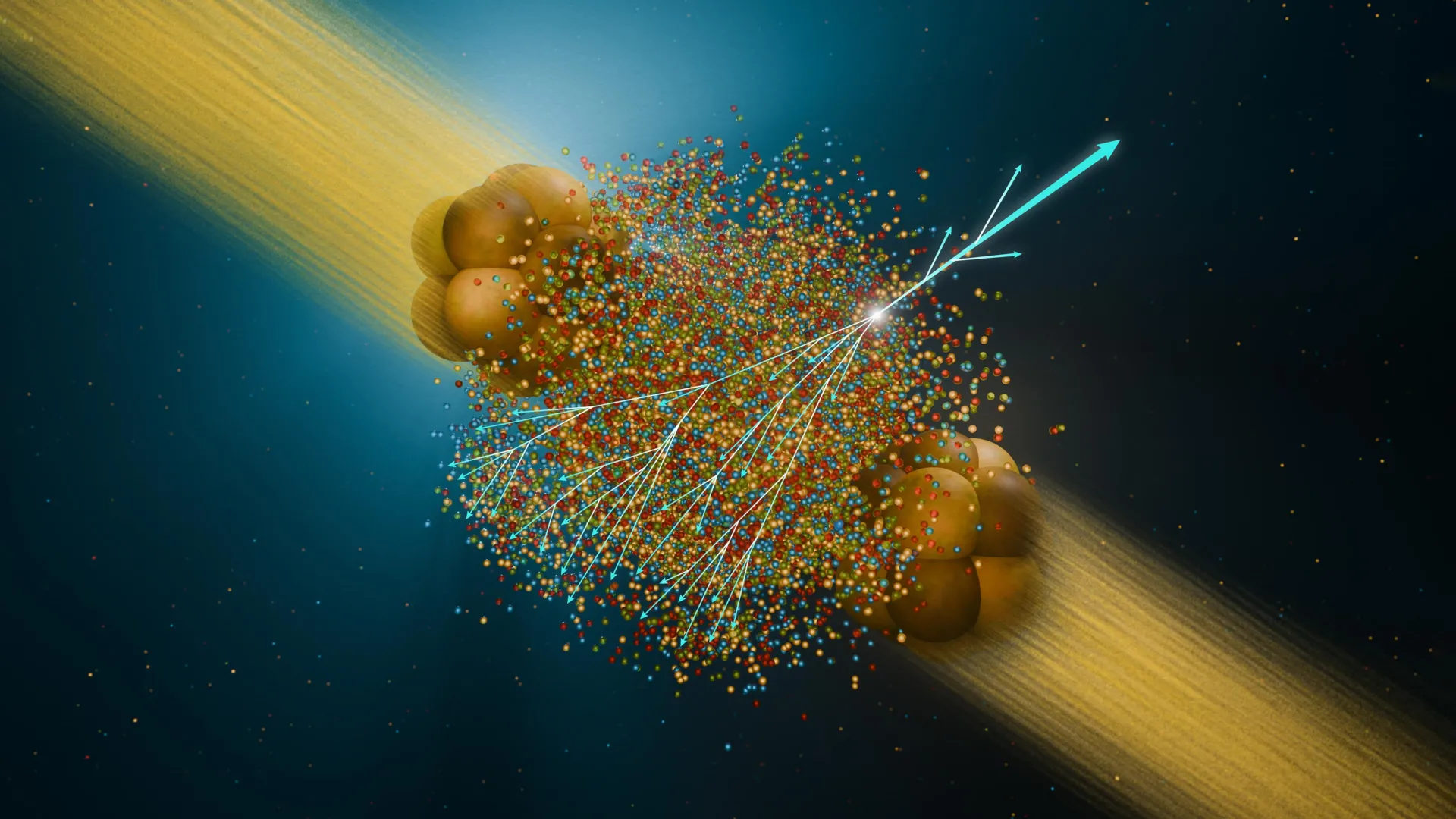
Scientists have recreated a primordial state of matter from the dawn of the universe by colliding oxygen nuclei at nearly the speed of light. The surprising results show that this exotic substance can form in smaller, lower-energy collisions than previously demonstrated, challenging the known boundaries of early-universe physics.

Science News
Scientists develop new system to boost prime editing in dicot plants
A new gene-editing system could make it easier for researchers to introduce precise genetic changes into crops such as tomatoes, soybeans and rapeseed. Developed by researchers in China, SmartPE improves prime editing efficiency in several dicot plants, addressing a major limitation of the technique.

Science News
A simple blood test could reveal Alzheimer’s risk 10 years before symptoms
A major international study found that a simple blood test could help predict Alzheimer’s-related cognitive decline years before symptoms appear, with the highest-risk individuals facing a 38% chance of impairment within five years and an estimated 78% chance within 10 years. Scientists believe the discovery could pave the way for earlier intervention and future treatments designed to prevent Alzheimer’s before memory problems begin.

Science News
Figuring out where cosmic neutrinos come from is tricky—radio telescopes could help find 'ghost particles' origin
Neutrinos are funny little particles that weigh almost nothing, making them one of the universe's most elusive building blocks. They can come from objects as mundane as bananas and as exotic as supernovas—the exploding death throes of massive stars. Most neutrinos stream through space and pass through the Earth without interacting with anything.

Science News
Livestock guardian dogs enlisted in efforts to conserve Texas' smallest fox
In the Texas Panhandle, two livestock guardian dogs patrol a herd of cattle grazing the Rita Blanca National Grasslands. Although their singular focus is protecting the herd from would-be predators, their presence may make them wildlife conservation allies.

Science News
New home for orangutans rescued from Indonesia's burning forests
Deep in a forest in Indonesian Borneo, conservationists open a cage. A female orangutan and her baby waste little time, clambering up the towering trees and disappearing into the canopy, safe at last.

Science News
For many, striped bass fishing is a way of life. But the iconic species could face collapse
Striped bass fishing has been Bill Jakob's passion for more than 60 years, and he remembers an era when he'd spend all night casting his line into the crashing waves off Montauk and get eight or nine fish ranging up to 40 pounds (18 kilograms), a big catch by anyone's standards.

Science News
Chemists create disappearing tattoos: Here's the science behind how they work
How handy would it be if you could make your tattoos invisible for a job interview in the morning, and reveal them again for a party in the evening? This sounds like science fiction, but it may soon be reality.

Science News
Are narcissists multiplying or is the social media algorithm making them bolder? The answer in five stages
Social media doesn't necessarily reflect who you are, but it may intensify particular personality traits and confirm or even persuade you that your worst behavior is justified.

Science News
Hidden erosion: Study reveals soft mountain rock erodes three times faster than hard rock—with climate implications
A University of Massachusetts Amherst-led research team has discovered that weaker rock in mountain landscapes erodes three times faster than harder rock—even on gentler slopes—and is one of the main attributes governing mountain erosion. The finding also challenges our current understanding of the relationship between erosion and the release of carbon dioxide, and suggests that geologists and atmospheric scientists may be underestimating the CO₂ contributions coming from the Earth's rocky places.

Science News
Tiny photonic chip links telescopes together to view the universe in 'astonishing' detail
A tiny glass chip developed by researchers at Heriot-Watt University has linked two telescopes together to enable them to act as a single powerful instrument, marking an important step toward a new generation of astronomical technology.

Science News
What the Cornell 7 sexual assault allegations reveal about how parents talk to their kids about rape
There is approximately 60 years of research on campus sexual assault and shelves full of books on young people's sexual experiences and behaviors, including their experiences with assault.

Science News
Why it could be a bad idea to get AI to flirt for you
You finally started an online conversation with a stranger you find attractive, yet you don't really know what to say. They seem happy to talk, but you struggle to find the correct responses. You worry that their patience is growing thin. You pray for some guidance. Luckily, the solution could be just a few clicks away.

Science News
Four new frog species reveal more of Peru's biodiversity
Science can't study a species—or unlock its potential to change the world—until people actually know it exists. Four new species of frogs have now been given names, thanks to the efforts of FIU biologist Alessandro Catenazzi.

Science News
Hauntology examines how what happened in the past—and what didn't—informs the present
The spooky is a hugely popular phenomenon in British culture, demonstrated in what now seems like a month-long Halloween celebration, a rich tradition of horror cinema and a growing interest in the uncanny. But there are other manifestations of haunting.

Science News
How a 'tropical' shortcut could help particle collider experiments
Particle accelerators are expensive. Not just to build or to run, but also to predict the outcome of measurements obtained from them.

Science News
Novel chemical reaction expands options for building DNA-encoded libraries
Finding new drugs requires screening vast numbers of compounds to identify those that interact with a biological target. DNA-encoded libraries (DELs) help researchers explore these large collections by attaching a short DNA sequence to each molecule, acting as a molecular barcode that allows compounds with promising properties to be identified.