Science News

Latest science news, discoveries and scientific developments.

Pulling the strings: How stem cells in the developing fruit fly brain organize their DNA from outside the nucleus
Science News

Pulling the strings: How stem cells in the developing fruit fly brain organize their DNA from outside the nucleus

Cells are very particular about the proper locations of their contents. For example, DNA is packaged in the nucleus in a highly specific way, but researchers are still trying to understand how this happens. For stem cells in the brain of a larval fruit fly—a model organism used to study processes such as early development—the DNA is organized so that the center of each strand, called the centromere, is at the top of the nucleus.

📅 2026-10-30 16:40:05    •    Phys.org
Jupiter, Saturn, Uranus and Neptune could destroy each other sooner than we thought, simulations hint
Science News

Jupiter, Saturn, Uranus and Neptune could destroy each other sooner than we thought, simulations hint

When the sun inevitably dies, not even the outer solar system will be safe from the resulting chaos, new research hints.Scientists have long thought the outer solar system ‪—‬ which comprises the four giant planets Jupiter, Saturn, Uranus and Neptune — would mostly retain its present-day appearance for hundreds of billions of years to come. But a new study suggests that the outer giants may develop weirdly shaped orbits as the sun runs out of fuel, causing the planets to cross paths and destroy themselves through collisions within three billion years of the sun's transformation into a red giant. The findings, published Sept. 21 in The Astrophysical Journal Letters, could change our understan...

📅 2026-10-30 16:10:14    •    Live Science
'It isn't under control at all': Live Science readers respond to whether AI is making them lazy
Science News

'It isn't under control at all': Live Science readers respond to whether AI is making them lazy

While people use artificial intelligence (AI) tools to help with tasks like learning new skills or answering questions, a new study suggests that these benefits may come with a downside. The findings, presented at the 2026 Conference on Language Modeling in San Francisco earlier this month, revealed that people who used AI assistance for reading comprehension or math problems were more likely to struggle or give up when the AI assistance was removed. The results suggest that relying too much on AI could lower people's motivations to overcome challenging situations. In the wake of this study, Live Science recently polled its readers on whether they felt AI was making them less motivated after...

📅 2026-10-30 15:46:06    •    Live Science
Nearly 30% of US adults admit to lying about or exaggerating their symptoms to get antibiotics from doctors, survey finds
Science News

Nearly 30% of US adults admit to lying about or exaggerating their symptoms to get antibiotics from doctors, survey finds

Nearly 30% of U.S. adults have lied to doctors in an effort to obtain antibiotics, either by exaggerating their actual symptoms or by fabricating symptoms, the results of a new national survey suggest. Additionally, in a second survey, about one-quarter of children's caregivers reported lying about their kids' symptoms to get antibiotics on their behalf."As clinicians, we know that patients lie to us sometimes," Dr. Jeffrey Linder, a general internist and primary care clinician-investigator at Northwestern Medicine, wrote in a commentary about the survey findings. However, the results are still important because the inappropriate use of antibiotics can contribute to the mounting problem of a...

📅 2026-10-30 15:00:00    •    Live Science
Rusty crust made Mars warm and wet
Science News

Rusty crust made Mars warm and wet

It's unclear how and why Mars once became warm enough to allow water to flow on its surface, but a new idea suggests it comes down to rust below the surface

📅 2026-10-30 15:00:00    •    New Scientist
How did the biggest crypto heist in history just happen?
Science News

How did the biggest crypto heist in history just happen?

Binance is the biggest cryptocurrency exchangeZUMA Press Wire/Shutterstock The world’s largest cryptocurrency exchange Binance has been hit with the biggest ever cryptocurrency heist, in which billions of dollars of reserves were drained in just 20 minutes. From 8:05pm on 29 October, $6.36 billion in cryptocurrencies were shifted from wallets in a coordinated attack believed to have originated from a North Korean-linked hacking unit called TraderTraitor. This group was also behind a $1.5 billion hack of the Bybit crypto exchange in February 2025. The US Treasury has previously said that such stolen funds are used to finance North Korea’s nuclear missile programme. Advertisement if( window?.a...

📅 2026-10-30 12:40:12    •    New Scientist
Type 2 diabetes breakthrough as 54% achieve remission in just 6 months
Science News

Type 2 diabetes breakthrough as 54% achieve remission in just 6 months

A promising new study suggests that more than half of younger adults with type 2 diabetes could achieve remission in just six months through a combination of a low-calorie diet and structured exercise. Researchers found that 54% of participants under age 45 who followed an intensive diet and exercise program achieved remission, compared with just 4% receiving usual care.

📅 2026-10-30 12:12:46    •    ScienceDaily
Physicists created a tiny universe and watched time emerge without a clock
Science News

Physicists created a tiny universe and watched time emerge without a clock

Scientists have created a miniature universe in the laboratory that could help answer one of the biggest mysteries in physics: What is time, and where does it come from? Using 24,000 ultracold atoms, a University of Birmingham researcher built an isolated quantum system that repeatedly expands and contracts, mimicking the Big Bang and a possible Big Crunch. Remarkably, the experiment showed that time could emerge from changes happening inside the system, without relying on an external clock.

📅 2026-10-30 11:42:36    •    ScienceDaily
The asteroid killed the dinosaurs. Why did crocodiles survive?
Science News

The asteroid killed the dinosaurs. Why did crocodiles survive?

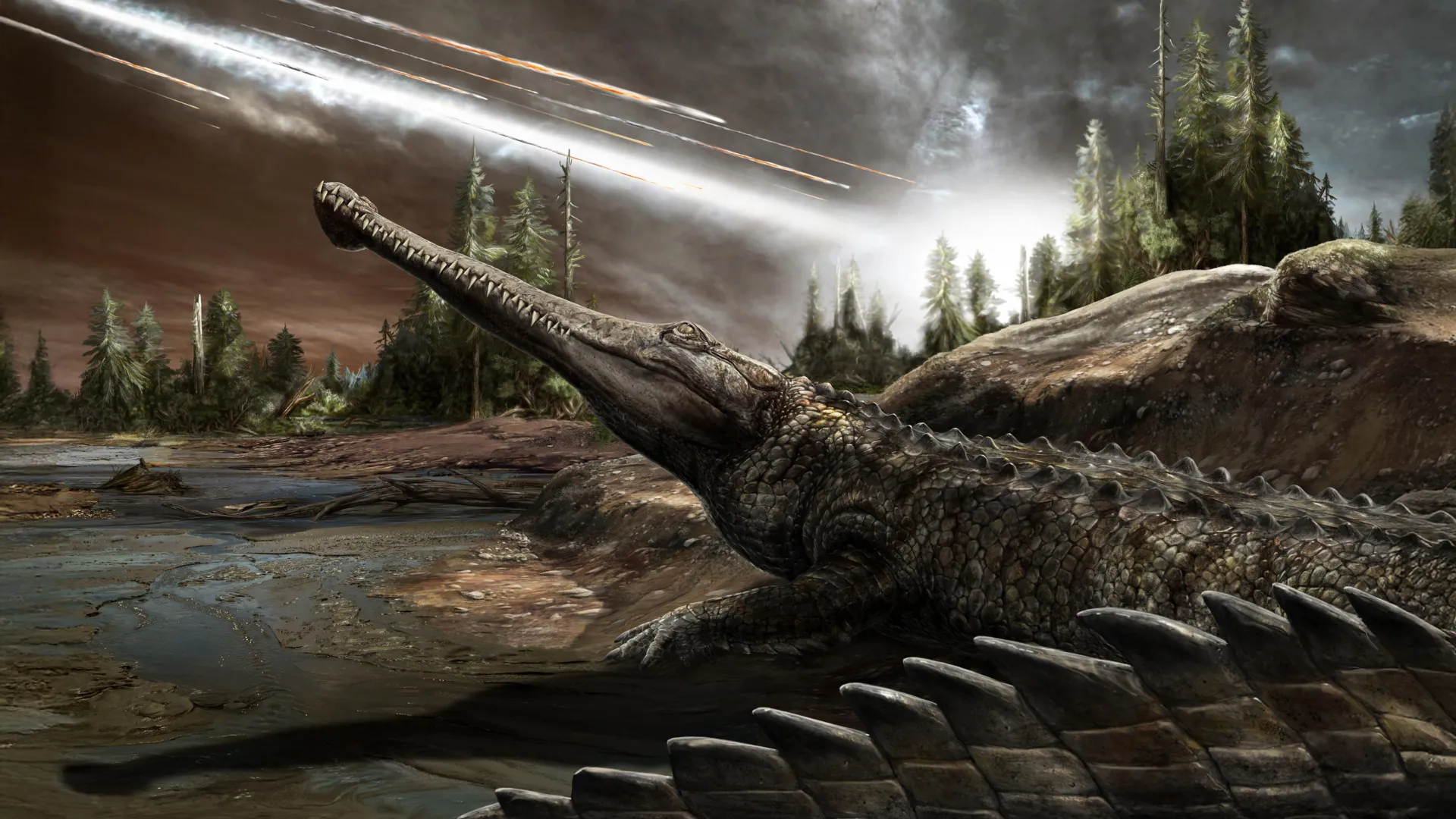
Scientists may have solved a 66-million-year-old mystery: how crocodiles survived the asteroid that wiped out the dinosaurs. A sweeping analysis of fossils and ancient climates suggests that their preference for warm environments placed them in tropical refuges that remained habitable even after the catastrophic impact.

📅 2026-10-30 11:34:16    •    ScienceDaily
A computer scientist breaks through a limit that stood since 1996
Science News

A computer scientist breaks through a limit that stood since 1996

A computer scientist has achieved a breakthrough in a nearly 25-year-old problem involving how computers calculate distances across enormous networks. The new algorithm delivers more reliable estimates for closely connected points without sacrificing speed, overcoming a longstanding limitation of earlier methods. Its secret lies in a smarter way of sampling network connections at multiple scales.

📅 2026-10-30 11:08:52    •    ScienceDaily
Hubble reveals a stunning twist in how the universe emerged from darkness
Science News

Hubble reveals a stunning twist in how the universe emerged from darkness

A surprising discovery by astronomers using the Hubble Space Telescope is challenging a leading explanation for how the early universe emerged from a dense fog of hydrogen roughly 13 billion years ago. Scientists once believed powerful winds from exploding stars helped radiation escape galaxies and clear that cosmic fog, but new observations reveal that these winds actually block radiation instead.

📅 2026-10-30 10:50:22    •    ScienceDaily
Scientists reveal a hidden snakebite crisis killing up to 513,000 people a year
Science News

Scientists reveal a hidden snakebite crisis killing up to 513,000 people a year

A startling new study suggests that venomous snakebites are killing far more people worldwide than official statistics indicate, with an estimated 274,000 to 513,000 deaths every year. Researchers found that as many as 7 million people could suffer snake envenoming annually, while more than 800,000 survivors are left with long-term disabilities.

📅 2026-10-30 10:37:00    •    ScienceDaily
Why some “lower-risk” childhood cancers turn deadly
Science News

Why some “lower-risk” childhood cancers turn deadly

Scientists have uncovered hidden aggressive cancer cells in children whose tumors were previously considered lower risk, revealing why some cases of rhabdomyosarcoma become unexpectedly deadly. The discovery could help doctors identify dangerous tumors earlier and develop personalized treatments that improve survival while reducing unnecessary chemotherapy.

📅 2026-10-30 10:15:28    •    ScienceDaily
Could AI ever build itself? Scientists map the road to the 'last AI built by humans.'
Science News

Could AI ever build itself? Scientists map the road to the 'last AI built by humans.'

Scientists in China are exploring what it would take to develop "the last AI built by humans" — a powerful, self-improving artificial intelligence (AI) system capable of creating its own successors.In a new paper, researchers examine how approaches to recursive self-improvement (RSI) could help tackle the rising financial and computational costs of developing ever-more advanced AI models.RSI refers to the idea that future AI models could direct their own training and development, using what they learn from each round of improvements to guide subsequent rounds of development.This recursive feedback loop could eventually enable AI systems to develop newer, more powerful generations of models w...

📅 2026-10-30 10:00:00    •    Live Science