Science News

Latest science news, discoveries and scientific developments.

Successful restoration of fish migration requires more than fish passes
Science News

Successful restoration of fish migration requires more than fish passes

The Netherlands is constructing fish passes to make rivers and streams accessible to fish again. But how effective are these structures? New Ph.D. research by Panos Panagiotopoulos of Wageningen University shows that successful fish migration requires more than making individual barriers passable. Maintenance and water management are also crucial.

📅 2026-11-06 02:00:01    •    Phys.org
An anti-aging drug may help protect the brain before Alzheimer's symptoms begin
Science News

An anti-aging drug may help protect the brain before Alzheimer's symptoms begin

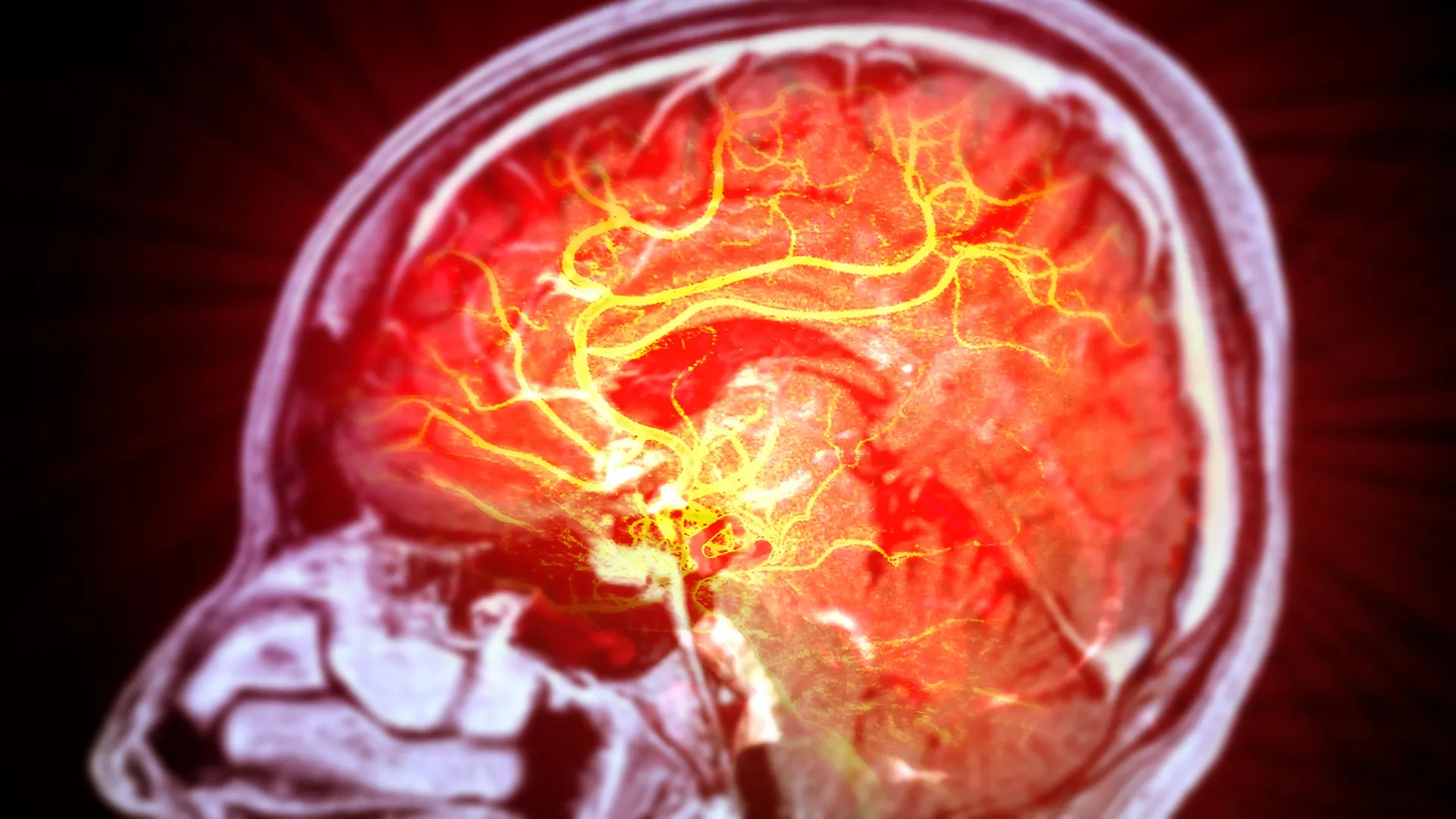
A surprising new study suggests that an anti-aging drug could help protect people genetically predisposed to Alzheimer's disease. Researchers found that just four weeks of low-dose rapamycin improved brain blood flow in healthy middle-aged adults carrying the high-risk APOE4 gene variant, with women showing the strongest benefits. Because declining blood flow can occur years before Alzheimer's symptoms appear, the discovery raises hopes for preventing or delaying the disease before memory loss begins.

📅 2026-11-06 01:11:19    •    ScienceDaily
Astronomers deliver the sharpest and deepest view yet of the low-frequency radio sky
Science News

Astronomers deliver the sharpest and deepest view yet of the low-frequency radio sky

Using the Low Frequency Array (LOFAR), an international team led by Leiden University has produced the sharpest and most sensitive radio image of the sky ever made at low radio frequencies. The image reveals almost 63,000 radio sources, such as active galactic nuclei and star-forming galaxies, across a patch of sky about 25 times the area of the full moon. The results have been accepted for publication in Astronomy & Astrophysics. The paper is currently available on the arXiv preprint server.

📅 2026-11-06 00:40:06    •    Phys.org
Twisted atomic layers slide spontaneously at room temperature in simulations
Science News

Twisted atomic layers slide spontaneously at room temperature in simulations

Researchers revealed an ultralow-barrier collective sliding mechanism mediated by domain walls, as well as defect-induced pinning of the sliding motion. They found that twisted bilayer MoS₂ moiré superlattices can undergo spontaneous long-range interlayer sliding at room temperature, while a sulfur-vacancy concentration of only about 0.1% can turn the motion into localized oscillations.

📅 2026-11-06 00:20:08    •    Phys.org
Climate shapes microbial nitrogen pump in forests, not in farmlands
Science News

Climate shapes microbial nitrogen pump in forests, not in farmlands

Microbes build a long-lived nitrogen reservoir in soil from the remains of dead bacteria and fungi, which cling to minerals and resist decay. The microbial nitrogen pump turns nitrogen taken up by living microbes into this persistent pool, and microbial nitrogen use efficiency (NUE) has long been assumed to regulate this process.

📅 2026-11-06 00:20:02    •    Phys.org
Laser-plasma accelerator could generate bright X-rays for biological imaging, simulations show
Science News

Laser-plasma accelerator could generate bright X-rays for biological imaging, simulations show

X-rays with wavelengths between approximately 2.3 and 4.4 nanometers, i.e., in the so-called water window, are particularly well suited to examining biological samples in their natural, aqueous environment. To date, however, it has been technically difficult to access this type of radiation at an appropriate quality and intensity, as only free-electron lasers in large-scale accelerator systems are capable of generating it.

📅 2026-11-06 00:00:02    •    Phys.org
Land plants' closest algal relatives evolved multicellular growth repeatedly, genetic analysis suggests
Science News

Land plants' closest algal relatives evolved multicellular growth repeatedly, genetic analysis suggests

What did the algae that gave rise to the first land plants look like? A research team led by the University of Göttingen and including the universities of Maastricht and Innsbruck and Museo Nacional de Ciencias Naturales has now taken a detailed look at one of the most important groups for answering this question: the Zygnematophyceae, the closest living algal relatives of land plants. These include familiar-looking filamentous algae such as Spirogyra, as well as many that just consist of single cells. Despite their relatively simple appearance, they are particularly important for understanding plant evolution due to their close relationship with land plants.

📅 2026-11-05 23:50:01    •    Phys.org
Paired DNA strands recognize shape, not just sequence, in new small-molecule sensing method
Science News

Paired DNA strands recognize shape, not just sequence, in new small-molecule sensing method

You have probably performed a sandwich assay before, even if you didn't know it. Sandwich assays are the molecular sensing technology behind lateral flow tests like the at-home COVID test. After a sample is dripped onto the test strip, it combines with detector antibodies attached to tiny gold particles, which bind to any viral proteins present. When the sample reaches the test line, a second antibody anchored to the strip binds to a different site on the viral protein, creating a molecular "sandwich." As the gold particles accumulate, the test line turns dark red, becoming visible to the naked eye.

📅 2026-11-05 23:40:04    •    Phys.org
New placenta-on-a-chip model allows engineers to study effects of environmental toxins
Science News

New placenta-on-a-chip model allows engineers to study effects of environmental toxins

Exposure to toxic metals like cadmium has been associated with adverse pregnancy outcomes such as miscarriage, preterm birth and low birth weight. Because these effects are difficult and ethically challenging to study directly in pregnant women, how such exposures affect pregnancy has remained poorly understood.

📅 2026-11-05 23:30:01    •    Phys.org
France's shorter workweek hit lower-skilled workers harder
Science News

France's shorter workweek hit lower-skilled workers harder

Doing more with less has become standard operating procedure for many in the current economic climate. And for some in the wake of France's 1998 workweek reduction, it was in response to a reform that's still being debated today.

📅 2026-11-05 23:20:04    •    Phys.org
Antibiotic pollution may be key factor in honeybee colony collapses
Science News

Antibiotic pollution may be key factor in honeybee colony collapses

High losses of honeybee colonies, which play a crucial role in global food production, have caused concern around the world. Many potential factors for the population declines have been cited, but a potentially significant threat to pollinator health—environmental antibiotic pollution from agricultural sources—has been largely overlooked, according to a new article published in the Journal of the American Veterinary Medical Association.

📅 2026-11-05 23:20:01    •    Phys.org
Pinning down the structure of quark-gluon plasma, the universe's first fluid
Science News

Pinning down the structure of quark-gluon plasma, the universe's first fluid

In the first fraction of a second following the Big Bang, matter existed as a trillion-degree plasma of quarks and gluons—subatomic particles that zinged around at close to the speed of light. This roiling soup lasted for just a few microseconds before the particles coalesced into more stable protons and neutrons.

📅 2026-11-05 23:10:01    •    Phys.org
What AI can lose when it makes Holocaust writings easier to read
Science News

What AI can lose when it makes Holocaust writings easier to read

In an Amsterdam prison during the Nazi occupation, Sal Bramson drew his cell on pieces of cotton cloth. He added handwritten explanations and sent these messages to his mother, concealed inside a shirt collar among the prison laundry. The cloth could travel because it passed as something ordinary. Its material was part of what made communication possible.

📅 2026-11-05 23:00:05    •    Phys.org