Science News

Latest science news, discoveries and scientific developments.

Light reshapes gelatin scaffolds to steer cell growth in three dimensions
Science News

Light reshapes gelatin scaffolds to steer cell growth in three dimensions

Soft, flexible hydrogels have enabled significant advancements in engineering biological tissue by mimicking the natural scaffolding that provides structure and support to cells. Existing engineered hydrogels, however, fall short in a significant way. Unlike in nature, they do not have the dynamic ability to change their structure or support depending on what the biological tissue needs. The answer may rest in shining a light on the problem—literally, according to a team led by researchers at Yokohama National University.

📅 2026-10-29 19:10:07    •    Phys.org
Political information increasingly comes from pop culture
Science News

Political information increasingly comes from pop culture

Research on political polarization points to how people's preferred news outlets and social media use create information silos, environments in which people primarily encounter views consistent with their own, further cementing those views.

📅 2026-10-29 19:10:01    •    Phys.org
Is it a boy or a girl? For alligators, it may come down to one degree
Science News

Is it a boy or a girl? For alligators, it may come down to one degree

The future of the alligator species could come down to a one- or two-degree temperature difference, according to new research from the University of Georgia. The findings are published in the Journal of Experimental Biology.

📅 2026-10-29 18:50:02    •    Phys.org
A blue laser for underwater communication and sensing
Science News

A blue laser for underwater communication and sensing

Researchers at EPFL have developed a chip-scale blue laser that combines stable light emission with rapid frequency control, opening possibilities for underwater communication, environmental sensing and quantum technologies.

📅 2026-10-29 18:40:08    •    Phys.org
Built to take the blast: Students test prototype landing pad to make moon landings safer
Science News

Built to take the blast: Students test prototype landing pad to make moon landings safer

As NASA works toward a sustained human presence on the moon, researchers at The University of Alabama in Huntsville (UAH), a part of The University of Alabama System, are helping solve one of the most pressing challenges facing future lunar missions: how to land spacecraft safely without damaging the landing vehicle or nearby infrastructure.

📅 2026-10-29 18:40:05    •    Phys.org
'This is so crazy!': Virginia college student looking for shark teeth finds rare Native American spearpoint
Science News

'This is so crazy!': Virginia college student looking for shark teeth finds rare Native American spearpoint

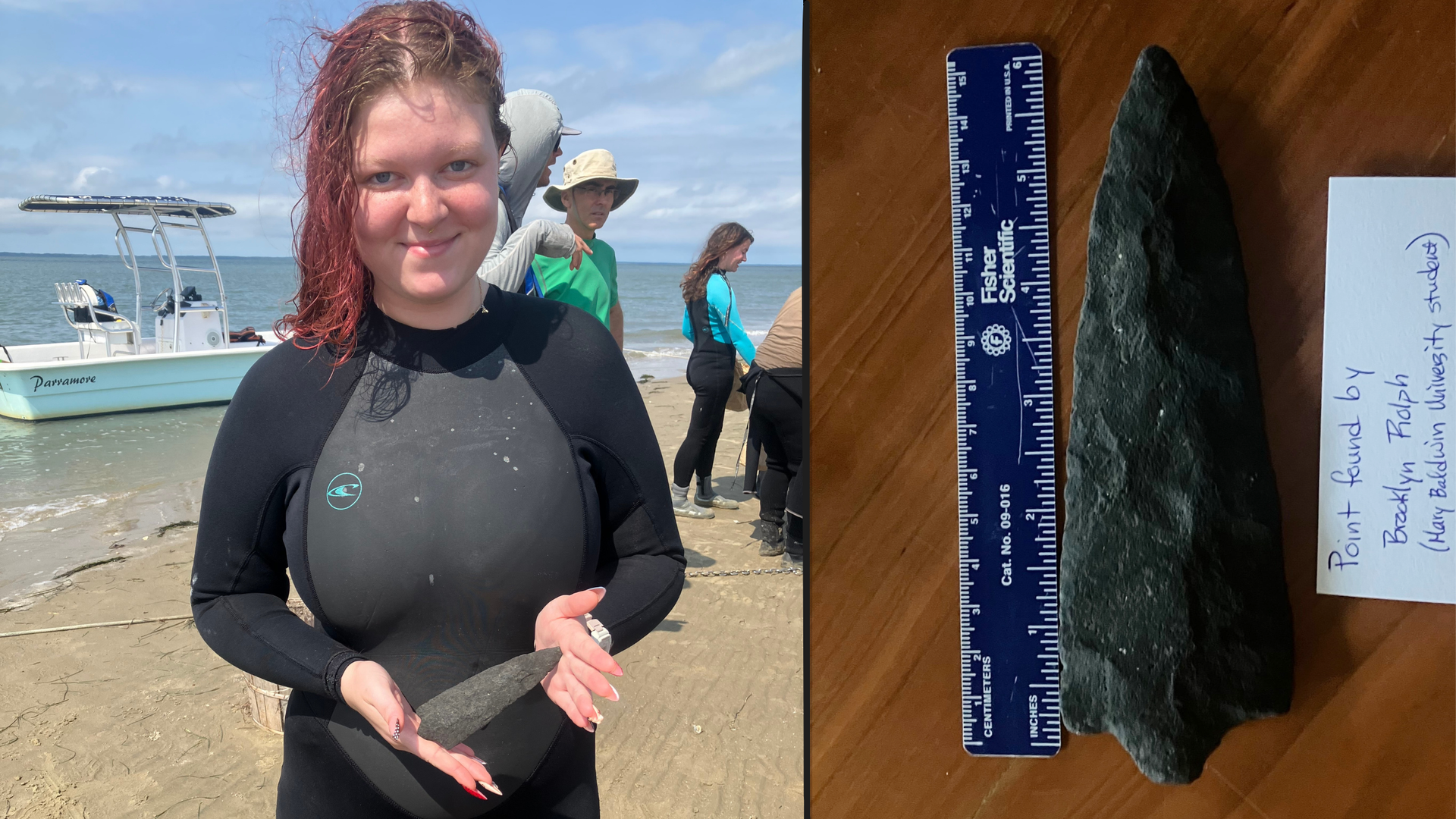
On the last day of an ecology field trip to Virginia's Eastern Shore, a biology undergraduate student discovered more than she expected. While searching for shark teeth, Brooklyn Rolph, a student at Mary Baldwin University in Virginia, stumbled upon a stone spearpoint estimated to be around 4,500 years old."Wow, this is so crazy," Rolph said in a statement. Already primed to look for pointy objects underwater, Rolph found a stone spear and immediately alerted the professors running the trip. "They were ecstatic," she recalled.The stone artifact is about 6 inches (15 centimeters) long and, according to local archaeologists, a type known as a Lehigh/Koens-Crispin point. This kind of stone tool...

📅 2026-10-29 18:35:00    •    Live Science
Famed oceanographer calls for ending krill catch near Antarctica as governments debate fishing quota
Science News

Famed oceanographer calls for ending krill catch near Antarctica as governments debate fishing quota

Renowned oceanographer Sylvia Earle is calling for an end to krill fishing near Antarctica as officials from the U.S., China, Russia and 24 other governments negotiate a possible deal to dramatically expand fishing for the crustacean that's a vital food source for whales in the international waters surrounding the ice-covered continent.

📅 2026-10-29 18:20:28    •    Phys.org
Researchers create first whole-body single-cell atlas of an adult vertebrate
Science News

Researchers create first whole-body single-cell atlas of an adult vertebrate

Viewed from above, Danionella cerebrum offers a rare sight in a vertebrate: its brain, visible through the top of its head. Since the species was adopted for neuroscience research in 2018 and formally described in 2021, the tiny, transparent fish has drawn rapidly growing interest for its unique biology.

📅 2026-10-29 18:00:44    •    Phys.org
Birds and humans share fundamental song and speech patterns, study finds
Science News

Birds and humans share fundamental song and speech patterns, study finds

McGill University researchers have identified "universal" vocal patterns across hundreds of bird species and found that many of the same patterns also appear in human song and speech from cultures around the world. The patterns include small pitch intervals, regular and predictable rhythms, and phrase-final elongation, in which the last utterance in a phrase tends to be longer than the others.

📅 2026-10-29 18:00:41    •    Phys.org
Long-distance flights can throw seabirds' internal clocks out of sync, causing navigation errors
Science News

Long-distance flights can throw seabirds' internal clocks out of sync, causing navigation errors

A study led by Oxford University has found that seabirds flying long distances across the Atlantic can experience a mismatch between their internal body clocks and local time (the same process that leads to jet lag in humans), causing them to make predictable errors when navigating by the sun. The results have been published in the journal Science.

📅 2026-10-29 18:00:37    •    Phys.org
AI helps uncover overlooked 2D materials and create 11 new ones
Science News

AI helps uncover overlooked 2D materials and create 11 new ones

With the help of artificial intelligence, researchers at Linköping University in Sweden have found previously overlooked occurrences of the 2D materials MXenes in older databases. The findings have inspired the researchers to create new materials using more sustainable synthesis methods.

📅 2026-10-29 18:00:18    •    Phys.org
Decapitated man buried near fort in Roman-era Scotland gets a new virtual face
Science News

Decapitated man buried near fort in Roman-era Scotland gets a new virtual face

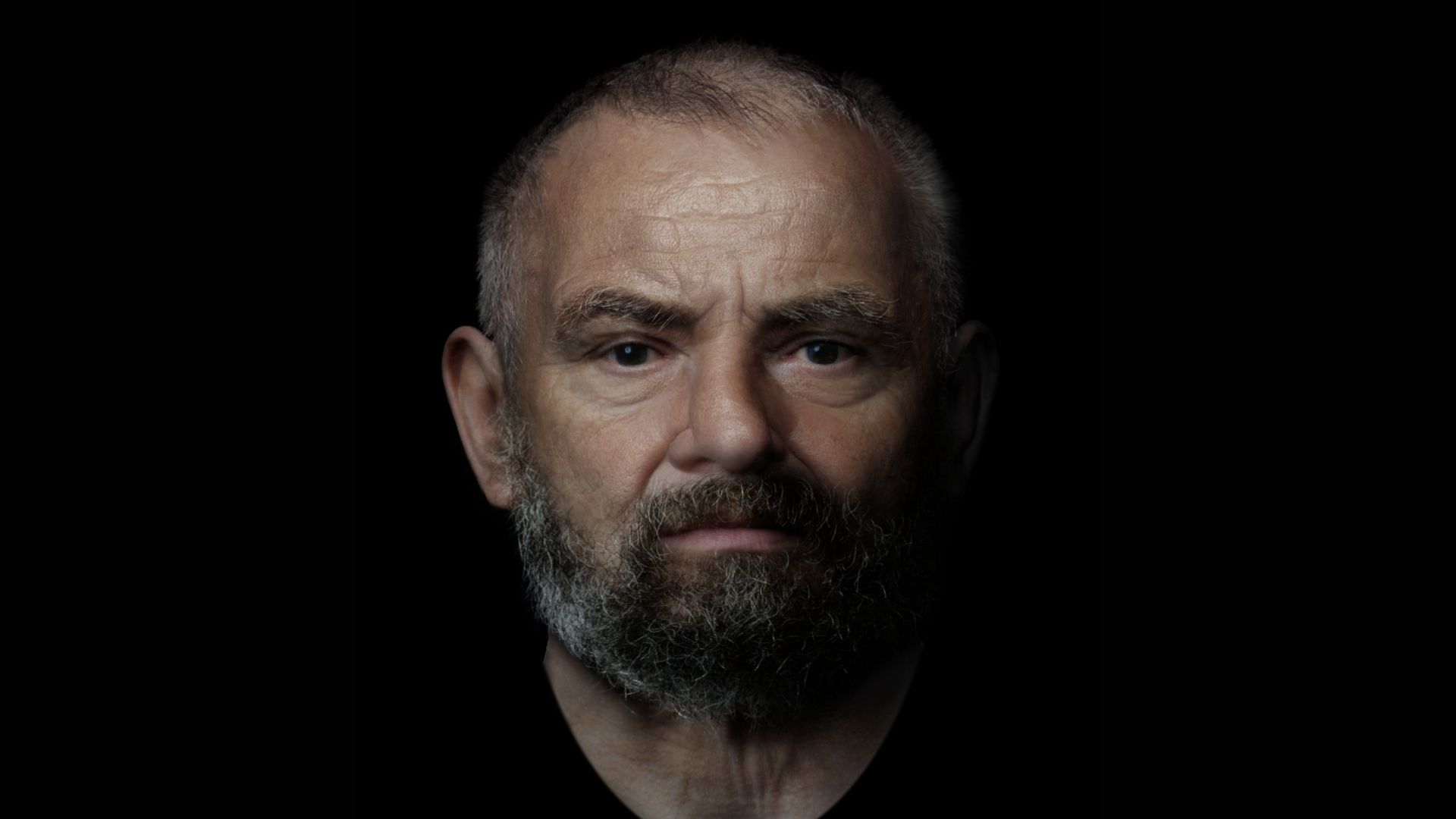
Researchers have virtually reconstructed the face of a man who was decapitated after his death almost 2,000 years ago and then buried near a Roman military fort in Scotland. While it's unclear why the man was beheaded, other burials hundreds of miles away may offer a clue. A chemical analysis of the man's remains suggests that he grew up in southern Britain. Beheading bodies may have been an obscure burial rite for some southern Britons, as other decapitated bodies from about the same time have been found in that region, John H. Reid, an archaeologist at the Trimontium Trust who was not involved in the excavations, told Live Science. Another mystery is why a southern Briton was on the Roman ...

📅 2026-10-29 18:00:13    •    Live Science
One molecule, many atoms: Platinum bonds respond to surface features up to 10 nanometers away
Science News

One molecule, many atoms: Platinum bonds respond to surface features up to 10 nanometers away

Many chemical processes that sustain modern society depend on molecules binding to metal surfaces. The production of synthetic fertilizer, for example, relies on heterogeneous catalysis, in which gases react on the surface of a solid catalyst. Yet, until now, an important question has remained unresolved: How much of the metal surface actually participates in determining the strength of a chemical bond on the surface?

📅 2026-10-29 18:00:01    •    Phys.org
Birds can get jet lag on long, fast flights and then fly off course
Science News

Birds can get jet lag on long, fast flights and then fly off course

A Manx shearwater in flight low over the sea, near WalesNature Picture Library / Alamy Stock Photo You don’t need a jet plane to get jet lag – even feathers will do. At least one species of bird gets jet lag, in the sense that its body clock can diverge from local time by more than an hour on fast flights across the Atlantic, as revealed by navigational errors. “We’ve slightly shied away from using the term jet lag itself, because people associate that with the health impacts of that clock shift, rather than the clock shift itself. But it’s exactly the same process that causes jet lag in people,” says Patrick Lewin at the University of Oxford. “It’s having these physiological and behavioural...

📅 2026-10-29 18:00:00    •    New Scientist