Science News

Latest science news, discoveries and scientific developments.

The phantom lighthouse: New research explains one of Australia's strangest illusions
Science News

The phantom lighthouse: New research explains one of Australia's strangest illusions

There are two lighthouses on Lady Elliot Island, at the southernmost tip of Australia's Great Barrier Reef. The first was built in 1873, but was decommissioned in 1995 when the second took over the job of warning ships off the reef. Visitors to the island, however, regularly report seeing signs of a third lighthouse. At night the beams of a nonexistent phantom lighthouse are seen far off, shining on the horizon.

πŸ“… 2026-10-28 23:40:01    β€’    Phys.org
Ultrathin metal layer boosts spin-related signals, opening a door to ultralow-power electronics
Science News

Ultrathin metal layer boosts spin-related signals, opening a door to ultralow-power electronics

Researchers at Kyushu University have found that an ultrathin layer of iridium manganese (IrMn) can improve two spin-related signals in a structure made of a magnetic insulator and a platinum film. By examining how spin currents are generated and absorbed, the team gained insights into how the intermediate layer improves spin transfer. The findings could inform the development of ultralow-power devices for computing and energy harvesting.

πŸ“… 2026-10-28 23:20:02    β€’    Phys.org
Atomic magnetism reveals why iron, but not chromium, can produce ammonia using sunlight
Science News

Atomic magnetism reveals why iron, but not chromium, can produce ammonia using sunlight

Two nearly identical materials have completely different chemical behavior. Research teams at the University of Vienna and TU Wien studied catalysts that use the energy of sunlight to produce ammonia. Surprisingly, when the three iron atoms that form tiny triangles in these catalysts are replaced by chromium atoms, the chemical reaction no longer takes place.

πŸ“… 2026-10-28 23:00:01    β€’    Phys.org
Macromolecular crowding could help build artificial cell systems
Science News

Macromolecular crowding could help build artificial cell systems

Macromolecular crowding can serve as a design tool for controlling the formation and organization of synthetic DNA droplets, a study from Science Tokyo reveals. Researchers investigated this strategy using DNA nanostars and polymeric crowding agents to mimic the crowded cellular environment. They found that crowding promoted droplet formation and enabled control over droplet size, interactions and organization. The findings could support the development of programmable artificial cell systems.

πŸ“… 2026-10-28 22:40:01    β€’    Phys.org
Molecular architecture determines tomato plant resistance to its main pest
Science News

Molecular architecture determines tomato plant resistance to its main pest

An international study investigating why wild tomatoes are more resistant to the tomato leafminer (Phthorimaea absoluta) than cultivated varieties revealed that the secret lies in the spatial structure of a plant defense molecule. The researchers mapped the biochemical origin of this difference and demonstrated that altering four amino acids in a single enzyme is sufficient to alter the structure of the substance and increase its toxicity against the pest. This finding paves the way for creating resistant tomatoes through gene editing.

πŸ“… 2026-10-28 22:20:06    β€’    Phys.org
Explaining the difference between brittle and ductile behavior in polymer glasses
Science News

Explaining the difference between brittle and ductile behavior in polymer glasses

Glasses are (mostly) brittle, metals can be ductile (plastic), and liquids flow easily. Polymers are interesting because they exhibit all three types of behavior, depending on their chemical nature, temperature, and deformation rate. If polymers are not able to crystallize, their low-temperature state is glassy, and they are hard and transparent. One example is poly(methylmethacrylate) [PMMA], which has been used as an artificial glass since the early 20th century.

πŸ“… 2026-10-28 22:00:01    β€’    Phys.org
Chornobyl dog population shows genetic signatures of directional selection
Science News

Chornobyl dog population shows genetic signatures of directional selection

The latest research on the wild population of dogs in Chornobyl reveals that the genetic differences between these dogs and other similarly isolated dog populations are likely evidence of directional selection, not mutation. The work suggests a potential association between genetic selection and environmental variables and could advance understanding of local adaptation and genomic resilience in contaminated environments. The study appears in Genes.

πŸ“… 2026-10-28 21:40:01    β€’    Phys.org
Could next-gen artificial intelligence help map out future space outposts?
Science News

Could next-gen artificial intelligence help map out future space outposts?

Planning a successful trip can be challenging, especially when your destination is in outer space. Even before liftoff, space missions require extraordinary amounts of scientific preparation and data analysis to succeed, which can take years to complete. However, as space agencies race to establish a permanent presence on the moon, using artificial intelligence to combine such information into a single system could make mission planning much more efficient.

πŸ“… 2026-10-28 21:30:01    β€’    Phys.org
Bronze Age sword discovered in an Italian lake is still sharp after 3,300 years
Science News

Bronze Age sword discovered in an Italian lake is still sharp after 3,300 years

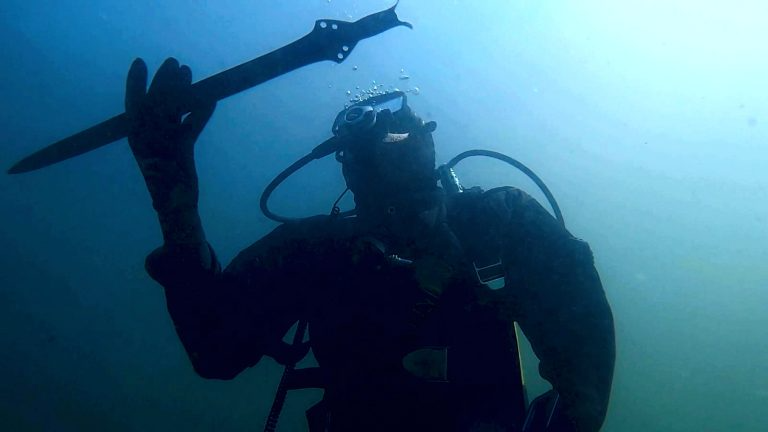
Archaeologists have recovered a well-preserved bronze sword from a volcanic lake in Italy. The 3,300-year-old weapon may have been deposited in the lake as an offering to a deity or for a high-status warrior who lived long before the rise of the Etruscans or the Romans.The sword was found in Lake Mezzano, which is located in the crater of an ancient volcano roughly 60 miles (100 kilometers) northwest of Rome, according to a translated statement from the Superintendence of Archaeology, Fine Arts and Landscape for the Province of Viterbo and Southern Etruria. Dating to the Late Bronze Age (14th to 13th centuries B.C.), the sword has maintained its sharp edge. It is the third such sword found i...

πŸ“… 2026-10-28 21:27:58    β€’    Live Science
Same radical, different paths: X-ray snapshots reveal how neighboring molecules shape its movement
Science News

Same radical, different paths: X-ray snapshots reveal how neighboring molecules shape its movement

Chemical reactions have their own "impatient molecules." Unable to stay still even for a moment, they latch onto other molecules indiscriminately. Researchers have now found that even these molecules change where they "sit" and how far they roam depending on who their neighbors are. The findings are expected to help scientists make better medicines and materials by directing reactions only to the desired sites.

πŸ“… 2026-10-28 21:20:13    β€’    Phys.org
Rarely seen deep-sea barreleye fish filmed in 4K
Science News

Rarely seen deep-sea barreleye fish filmed in 4K

During a recent expedition aboard the research vessel David Packard, MBARI scientists encountered a rarely seen barreleye fish (Macropinna microstoma). This sighting is MBARI's 11th observation of this unique deep-sea fish with a transparent head.

πŸ“… 2026-10-28 21:00:06    β€’    Phys.org
New tissue atlas aims to help AI understand cancer
Science News

New tissue atlas aims to help AI understand cancer

How cells are arranged within tissue can reveal as much about disease as the cells themselves. When doctors examine a cancer tumor, for example, they don't just look at which cells are present; they also want to know how those cells are arranged and how they interact with each other. That's because the way cancer cells interact with neighboring immune cells can offer important clues about how a disease develops or responds to treatment.

πŸ“… 2026-10-28 20:20:08    β€’    Phys.org
Sun's outer magnetic field mapped in 3D for the first time
Science News

Sun's outer magnetic field mapped in 3D for the first time

A team of researchers has produced the first global, three-dimensional estimates of the sun's magnetic field, including the area beyond the sun's visible edge. This marks a step toward more accurate models of solar activityβ€”and ultimately, better predictions of solar magnetic eruptions, which are the root cause of extreme space weather that can impact critical infrastructure technologies on Earth.

πŸ“… 2026-10-28 20:10:02    β€’    Phys.org