Latest Scientific Discoveries

All News →
Scientists say a forgotten particle may explain why the universe exists
Science News

Scientists say a forgotten particle may explain why the universe exists

A mysterious particle overlooked for decades may hold the key to why matter survived the Big Bang, allowing stars, planets, and life to exist. Scientists believe this forgotten neutrino reshaped the early universe and may have left detectable gravitational wave signals that could help unlock the cosmos’s deepest mysteries.

📅 2026-11-01 04:33:36    •    ScienceDaily

Scientists discover the hidden “muscles” trees use to straighten themselves
Science News

Scientists discover the hidden “muscles” trees use to straighten themselves

Scientists have discovered that trees can sense their own shape and straighten their trunks using specialized wood that acts like opposing muscles. This remarkable ability helps trees maintain their posture and could lead to stronger forests, better timber, and more resilient crops.

📅 2026-11-01 02:44:28    •    ScienceDaily
Scientists discover a hidden driver of high cholesterol and a way to stop it
Science News

Scientists discover a hidden driver of high cholesterol and a way to stop it

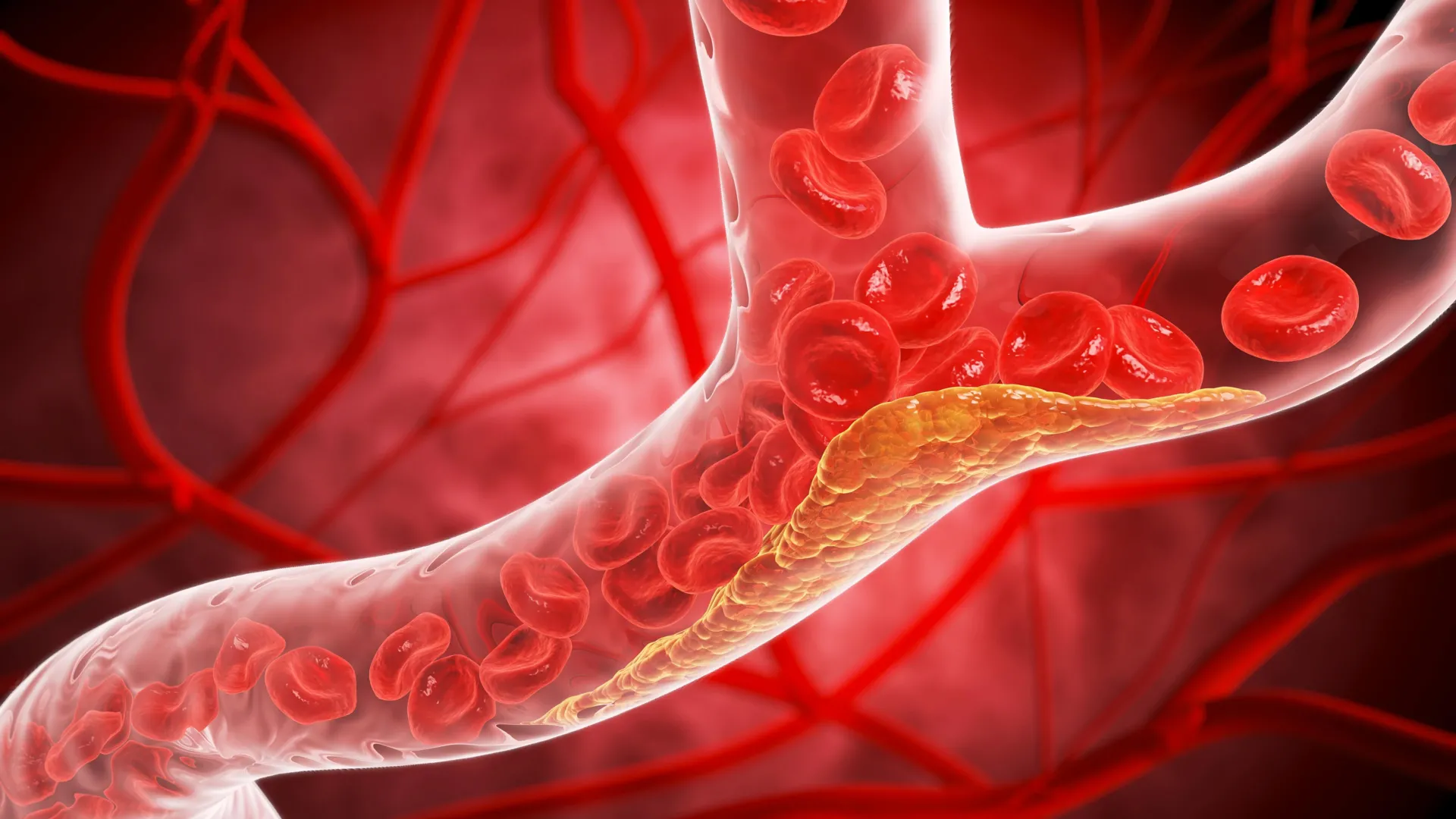
Scientists have uncovered a hidden mechanism that allows high-cholesterol diets to undermine the body's natural cholesterol defenses, and blocking it dramatically lowered harmful LDL cholesterol in mice. Even more promising, an experimental drug targeting this pathway has already passed an early human safety trial, potentially speeding the development of a new treatment for high cholesterol.

📅 2026-11-01 01:57:50    •    ScienceDaily
This oddball reflective lava world is challenging to understand
Science News

This oddball reflective lava world is challenging to understand

Among Kepler and TESS's many surprising exoplanet discoveries are the ultra-short-period (USP) planets. These planets move very quickly and complete an orbit in less than 24 hours. Ancient astronomers thought that Mercury was so fast—it goes around the sun every 88 days—that they named it after the Roman god Mercury, who was the fast-traveling messenger of the gods. They couldn't have known how sluggish Mercury is compared to the USPs.

📅 2026-11-01 00:30:01    •    Phys.org
Looking for bats after dark can help science—and change how we see them
Science News

Looking for bats after dark can help science—and change how we see them

What's that chirping sound coming through the detector? Did you feel something whiz past? Those are just some ways people react when they encounter microbats for the first time. Microbats are small, mostly nocturnal mammals that use ultrasonic sounds to navigate and hunt at night. They do this through echolocation, producing calls and listening to the echoes that bounce back from objects and prey.

📅 2026-10-31 22:30:01    •    Phys.org
Giant virus yields potassium channel gene that illuminates complex protein evolution
Science News

Giant virus yields potassium channel gene that illuminates complex protein evolution

Researchers have discovered a gene for a tandem potassium channel in an algal virus. The finding supports the view that giant viruses may have contributed significantly to the evolution of complex proteins. The study is published in the journal Proceedings of the National Academy of Sciences.

📅 2026-10-31 21:00:05    •    Phys.org
Chemists develop AI tool to convert human ingenuity into life-enhancing enzymes
Science News

Chemists develop AI tool to convert human ingenuity into life-enhancing enzymes

Many have voiced concerns that artificial intelligence will take jobs away from humans. But assistant professor of chemistry Zhongyue (John) Yang, along with his former doctoral student Qianzhen Shao (now a postdoc at Stanford) and other team members, has created an AI tool that aims to elevate the work that scientists do—not replace them.

📅 2026-10-31 19:00:01    •    Phys.org
Ultracold atoms simulate hard-to-observe matter-antimatter pair production
Science News

Ultracold atoms simulate hard-to-observe matter-antimatter pair production

According to quantum electrodynamics, the theory describing interactions between light and electrically charged particles, a sufficiently strong electric field can, in principle, convert some of its energy into particles and their antimatter partners. A particle's antimatter partner has the same mass and, for electrically charged particles, the opposite electric charge.

📅 2026-10-31 17:00:01    •    Phys.org
Four superconducting cables link two large quantum processors into one
Science News

Four superconducting cables link two large quantum processors into one

As quantum computers grow more ambitious, many researchers believe the best way forward is to build them in multiple interconnected parts. In these modular designs, separate quantum processors are linked so they can work together as one larger machine. For this to happen, however, connections must carry fragile quantum information without destroying it.

📅 2026-10-31 16:00:02    •    Phys.org