Latest Scientific Discoveries

All News →
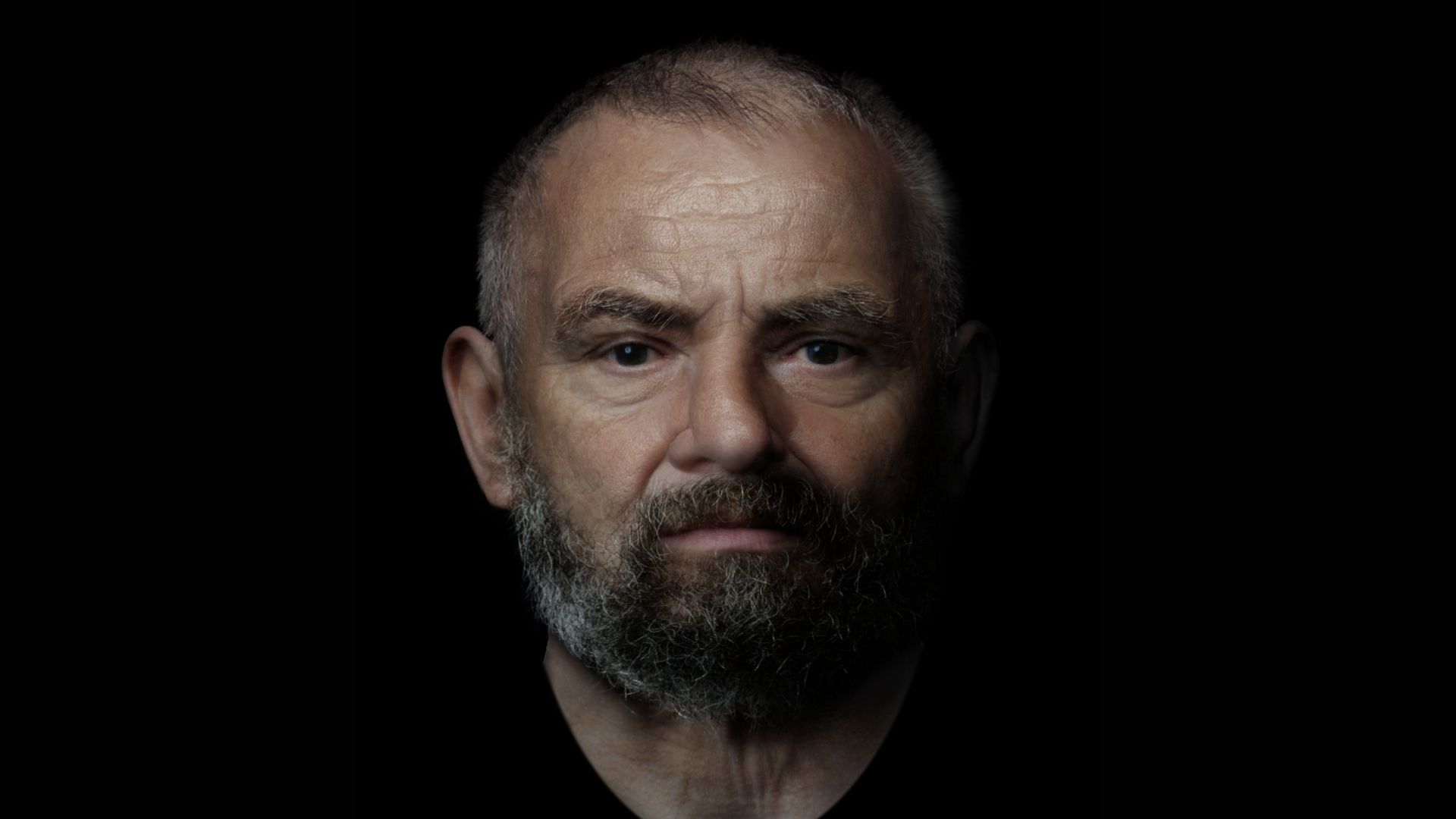
Decapitated man buried near fort in Roman-era Scotland gets a new virtual face
Science News

Decapitated man buried near fort in Roman-era Scotland gets a new virtual face

Researchers have virtually reconstructed the face of a man who was decapitated after his death almost 2,000 years ago and then buried near a Roman military fort in Scotland. While it's unclear why the man was beheaded, other burials hundreds of miles away may offer a clue. A chemical analysis of the man's remains suggests that he grew up in southern Britain. Beheading bodies may have been an obscure burial rite for some southern Britons, as other decapitated bodies from about the same time have been found in that region, John H. Reid, an archaeologist at the Trimontium Trust who was not involved in the excavations, told Live Science. Another mystery is why a southern Briton was on the Roman ...

📅 2026-10-29 18:00:13    •    Live Science
One molecule, many atoms: Platinum bonds respond to surface features up to 10 nanometers away
Science News

One molecule, many atoms: Platinum bonds respond to surface features up to 10 nanometers away

Many chemical processes that sustain modern society depend on molecules binding to metal surfaces. The production of synthetic fertilizer, for example, relies on heterogeneous catalysis, in which gases react on the surface of a solid catalyst. Yet, until now, an important question has remained unresolved: How much of the metal surface actually participates in determining the strength of a chemical bond on the surface?

📅 2026-10-29 18:00:01    •    Phys.org
Birds can get jet lag on long, fast flights and then fly off course
Science News

Birds can get jet lag on long, fast flights and then fly off course

A Manx shearwater in flight low over the sea, near WalesNature Picture Library / Alamy Stock Photo You don’t need a jet plane to get jet lag – even feathers will do. At least one species of bird gets jet lag, in the sense that its body clock can diverge from local time by more than an hour on fast flights across the Atlantic, as revealed by navigational errors. “We’ve slightly shied away from using the term jet lag itself, because people associate that with the health impacts of that clock shift, rather than the clock shift itself. But it’s exactly the same process that causes jet lag in people,” says Patrick Lewin at the University of Oxford. “It’s having these physiological and behavioural...

📅 2026-10-29 18:00:00    •    New Scientist
Rains bring relief to Indonesian city weary of fire haze
Science News

Rains bring relief to Indonesian city weary of fire haze

Residents and firefighters in an Indonesian city long shrouded in a toxic haze brought on by months of wildfires rushed outside dancing and chanting as rain this week brought a welcome respite.

📅 2026-10-29 17:41:40    •    Phys.org
Newly characterized Streptomyces strain yields previously unknown natural products
Science News

Newly characterized Streptomyces strain yields previously unknown natural products

In a collaboration, researchers from the Leibniz Institute DSMZ-German Collection of Microorganisms and Cell Cultures and the Helmholtz Center for Infection Research (HZI) have discovered two previously unknown natural products. Lavasamycin A and B are produced by the bacterium Streptomyces barkulensis subsp. lavasanensis, which was isolated from a soil sample collected in Lavasan, Iran, and characterized as a new subspecies at the DSMZ. The findings have been published in the Journal of Natural Products.

📅 2026-10-29 17:40:06    •    Phys.org
Shrinking bat populations can weaken ecosystem benefits even while species remain widespread
Science News

Shrinking bat populations can weaken ecosystem benefits even while species remain widespread

Bats promote the health of ecosystems in many ways. Insect-eating species help regulate insect populations, including agricultural and forest pests. In tropical and subtropical regions, nectar-feeding and fruit-eating bats pollinate plants and disperse seeds, supporting plant reproduction and forest regeneration.

📅 2026-10-29 17:20:10    •    Phys.org
Werewolf mice, ghostly frogs and cockroach zombies: The animal versions of our Halloween horrors
Science News

Werewolf mice, ghostly frogs and cockroach zombies: The animal versions of our Halloween horrors

Around this time of year, elaborate decorations featuring ghosts, vampires, zombies, witches and werewolves adorn front doors, gardens and store windows across the country. But you may be surprised to hear that in the animal world, there are many real-life creatures with tendencies similar to those of the fictional characters in our Halloween nightmares.

📅 2026-10-29 17:20:01    •    Phys.org
Africa's water availability sometimes goes untapped
Science News

Africa's water availability sometimes goes untapped

Water demand in Africa grew by around 26% between 2010 and 2020, yet around 717 million people lacked a piped water supply in 2020, according to research published in Nature. The findings indicate that water scarcity in some parts of Africa may be due to a lack of infrastructure, rather than a lack of available water. The work provides a comprehensive map for water demand in different sectors, highlighting issues that need to be addressed to increase the availability of water in Africa, which forms part of Sustainable Development Goal 6.

📅 2026-10-29 17:10:01    •    Phys.org
New catalyst builds proton highways to tackle a long-standing hurdle in green ammonia synthesis
Science News

New catalyst builds proton highways to tackle a long-standing hurdle in green ammonia synthesis

Over a century ago, the Haber-Bosch process, a two-step reaction for the synthesis of ammonia (NH₃), an irreplaceable chemical for the fertilizer industry, prevented the world from going into a serious food crisis. Today, however, the same method consumes about 1% of global energy and contributes more than 1% of annual anthropogenic CO₂ emissions.

📅 2026-10-29 17:00:08    •    Phys.org