Latest Scientific Discoveries

All News →
A compound hidden in broccoli could help fight a devastating genetic disease
Science News

A compound hidden in broccoli could help fight a devastating genetic disease

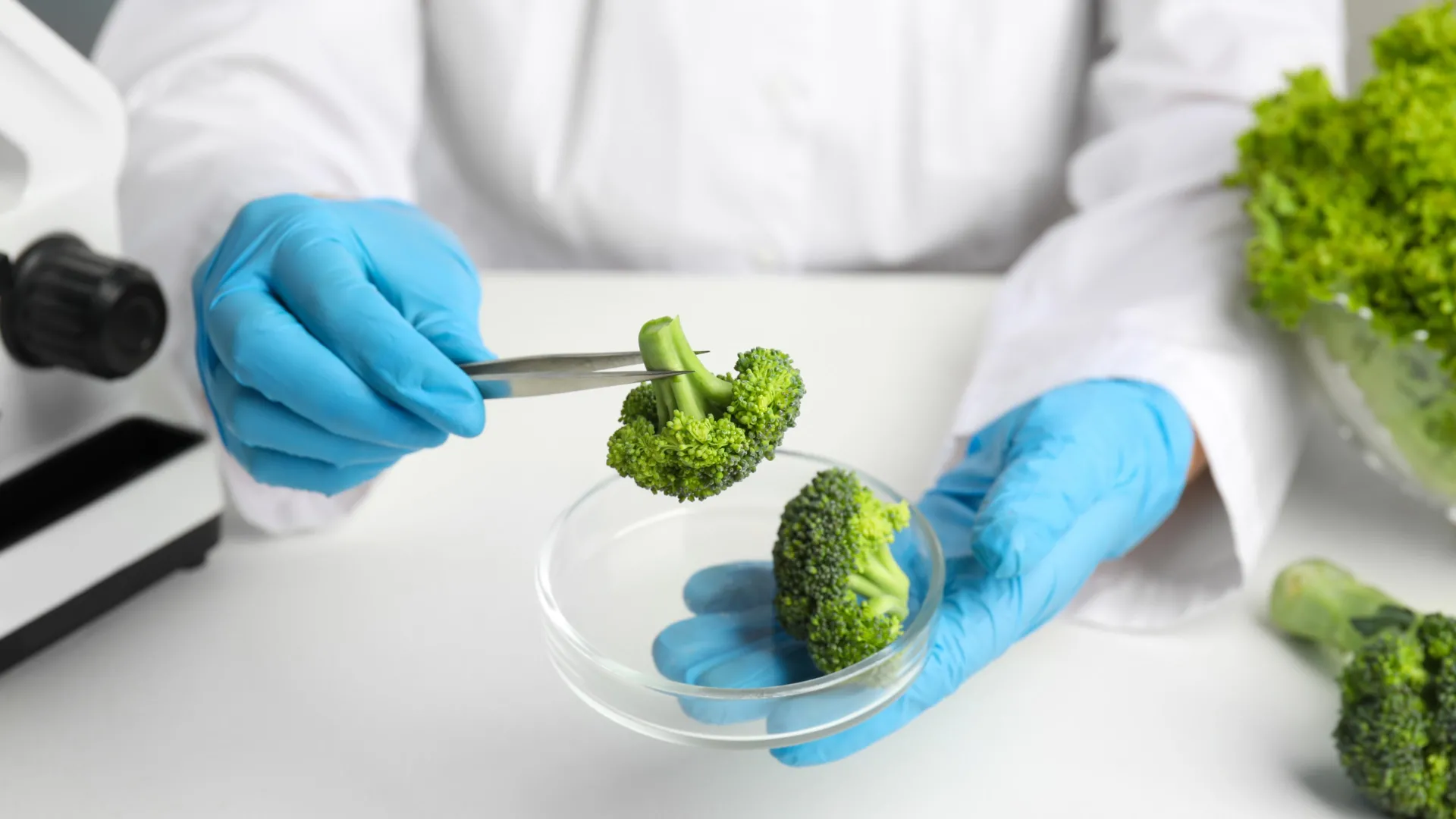
A compound naturally found in broccoli could help fight Friedreich ataxia, a devastating genetic disease that progressively damages the nervous system, by boosting a vital protein and protecting nerve cells. Scientists hope the discovery could lead to an affordable treatment, although clinical trials are still needed to establish its effectiveness in patients.

📅 2026-11-06 23:30:16    •    ScienceDaily
The wasps that horrified Darwin reveal evolution's one-way streets
Science News

The wasps that horrified Darwin reveal evolution's one-way streets

Few insects have a more gruesome lifestyle than Darwin wasps. Rather than simply hunting other animals, these parasitic wasps lay their eggs on or inside living hosts, including caterpillars, beetles and spiders. Their larvae then feed on their hosts, gradually consuming them and eventually killing them.

📅 2026-11-06 22:20:01    •    Phys.org
A dead star's mysterious rings reveal what could happen when our Sun dies
Science News

A dead star's mysterious rings reveal what could happen when our Sun dies

Astronomers have discovered a strange double ring of planetary wreckage around a dead star, revealing a possible preview of our Solar System's distant future. The two rings are separated by a mysterious gap that researchers believe is maintained by surviving planetary bodies, including one potentially as large as Pluto or the Moon. Their different chemical compositions suggest they may contain the remains of separate destroyed planets.

📅 2026-11-06 22:12:56    •    ScienceDaily
Air holes turn silicon wafers into flat ultraviolet focusing mirrors for compact optics
Science News

Air holes turn silicon wafers into flat ultraviolet focusing mirrors for compact optics

Traditional lenses and mirrors focus light using curved surfaces. Metasurfaces can achieve similar functions with a flat layer of nanoscale structures that locally control the phase of light. Extending these flat optics into the ultraviolet could support compact systems for high-resolution imaging, spectroscopy, and sensing, but it introduces a fundamental materials problem: many of the materials used to make metasurfaces strongly absorb UV light.

📅 2026-11-06 22:00:01    •    Phys.org
How a metabolite protects the enzyme that consumes it
Science News

How a metabolite protects the enzyme that consumes it

Metabolites are consumed by enzymes to produce other vital molecules as well as to control metabolite levels. But how do cells avoid consuming too much? Researchers from the MPI of Biochemistry, with the University of Nevada, Las Vegas, and the de Duve Institute in Brussels, have deciphered such molecular regulation in tryptophan metabolism. The essential amino acid tryptophan binds to a second site on the enzyme TDO2, distinct from where it is consumed. This sequesters a region needed by two effectors, the kinase CK2 and the ubiquitin ligase CUL1–β-TrCP, which act sequentially to signal TDO2 degradation. The findings are now published in Molecular Cell.

📅 2026-11-06 21:40:01    •    Phys.org
Scientists accidentally solve a chemistry mystery that lasted 60 years
Science News

Scientists accidentally solve a chemistry mystery that lasted 60 years

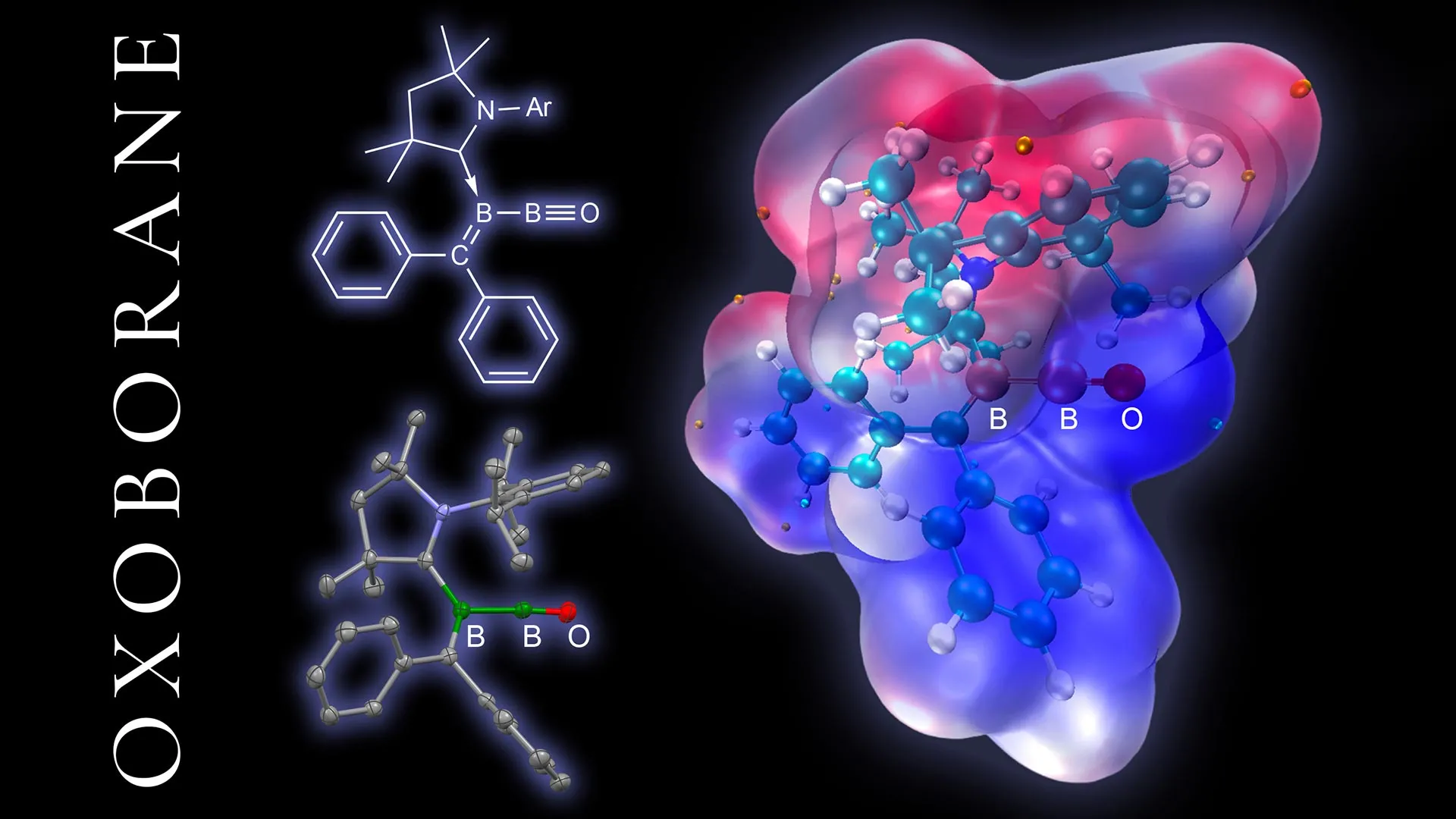
After more than 60 years of unsuccessful attempts, scientists have finally isolated stable examples of elusive boron-oxygen molecules once considered too unstable to capture. The surprising breakthrough, achieved using relatively simple chemical reactions, could pave the way for an entirely new class of exotic compounds.

📅 2026-11-06 21:28:04    •    ScienceDaily
New method measures microplastics in the air using an uncrewed aerial system
Science News

New method measures microplastics in the air using an uncrewed aerial system

Microplastics have been found in our bodies and the food we eat—and even in remote environments around the world, including seawater and ice in the Arctic. Despite their prevalence, little is known about how they move through the atmosphere. New CIRES-led research, which demonstrates a new method for sampling microplastics in the atmosphere using an uncrewed aerial system (UAS), aims to change that. The findings are published in the journal Scientific Reports.

📅 2026-11-06 21:20:04    •    Phys.org
Future warming events will outdo the extreme heat waves of the recent past, new study finds
Science News

Future warming events will outdo the extreme heat waves of the recent past, new study finds

The extreme heat waves we have seen over the last few years may only serve as a preview of what is to come as a result of climate change. A new study led by researcher Philipp Aglas-Leitner from Freie Universität Berlin, published in Nature Communications, finds that future heat waves could last longer, impact larger areas, and be much more severe.

📅 2026-11-06 21:00:01    •    Phys.org
Light-powered method resurrects 'dead-end' compounds for drug discovery
Science News

Light-powered method resurrects 'dead-end' compounds for drug discovery

Throughout the drug development process, which can take a decade or more, tens of thousands of chemical compounds are produced that never go on to become medicines. A Florida State University researcher is part of a team that has discovered a new way to give some of these "dead ends" a second chance at becoming the foundation for tomorrow's blockbuster drugs.

📅 2026-11-06 20:40:01    •    Phys.org
Quantum gas microscope reveals individual atoms in first tunable three-component Hubbard system
Science News

Quantum gas microscope reveals individual atoms in first tunable three-component Hubbard system

For the first time, an international team of researchers from Germany, Thailand, India, China and the United States has created a three-component Hubbard system with tunable interactions in the laboratory. In doing so, the team used a quantum gas microscope to make the individual atoms visible. The study, published in Science, provides an important foundation for future quantum simulations of nuclear physics and materials science.

📅 2026-11-06 20:20:01    •    Phys.org