
Science News
Why so many British pubs are closing down
British pubs are disappearing at an alarming rate. Last year, around eight closed down every week.
📅
2026-11-05 03:00:06
•
Phys.org
Explore the latest scientific discoveries, science news, breakthroughs and developments from around the world.
British pubs are disappearing at an alarming rate. Last year, around eight closed down every week.
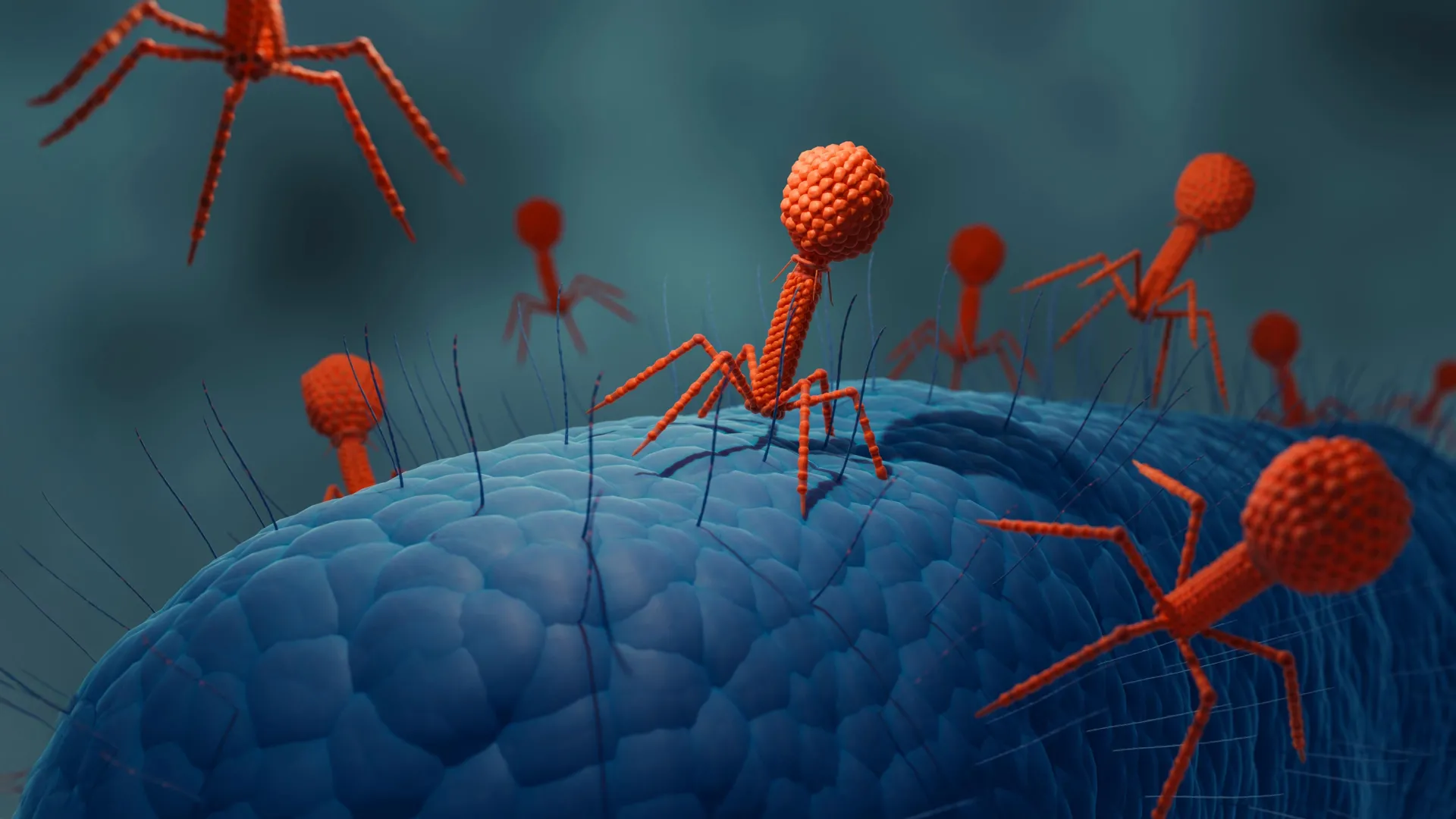
Scientists are advancing a promising new way to fight antibiotic-resistant infections by using viruses that specifically target and kill harmful bacteria. An international team has released the first coordinated guidelines for personalized phage therapy, offering a roadmap for safely bringing this experimental treatment into clinical practice. Early findings are encouraging, with one study reporting improvement in 77% of patients and the disappearance of targeted bacteria in 61%.

People living with ALS and their families in Japan are eager to help shape research on the disease, even though most have never heard of patient and public involvement (PPI), according to a study published on Oct. 30, 2026, in Research Involvement and Engagement.

In the theoretical study of proton-nucleus collisions, the colliding projectiles can be described as streams of color charges moving along their respective trajectories. These color charges couple to gluons, which then produce the particles that are observed in the final state (gluons and quarks, which eventually produce hadrons).

If you partitioned the entire Earth, from just below the surface to the top of the atmosphere, into 1-kilometer-square chunks, there would be billions of them. Now run each of those cells through a series of complex physics equations, and you can see how the entire Earth system interacts and evolves in detail, one step at a time.

New evidence from gas seeping above volcanic rifts suggests Mars is not geologically dead deep inside, but merely sleeping. Fresh fissures along the Alba Mons region hint at active spots under the surface, where gases from inside the planet may be making their way up to the surface.

Brazil's "Dirty List," a public registry that names employers found to have violated anti-slavery laws, is a key component of the country's efforts to combat forced labor. Major meatpackers in Brazil signed sustainable sourcing commitments promising to not purchase cattle directly from ranchers on the Dirty List. But new research shows that ranchers have found ways around these restrictions, rerouting cattle through intermediaries and allowing cattle linked to forced labor to remain in domestic and international beef and leather supply chains.

University of Sydney researchers have made a breakthrough by directly observing hydrogen in the tiny spaces between the atoms in metal alloys. The world-first observation of hydrogen dissolving in these 'metal crystal lattices' offers fresh insights into why hydrogen can weaken metals and how more hydrogen-resistant materials might be developed.

Previous studies have shown that upon antigen stimulation, the T cell receptor (TCR) undergoes phase separation with the kinase Lck to mediate rapid T cell activation. However, the manner in which costimulating receptors regulate this process has remained unclear.

Bournemouth University (BU) archaeological research has revealed that Iron Age British ruler "Verica," who was central to the Roman invasion of Britain in A.D. 43, was in fact a woman. This discovery rewrites the history of early Roman Britain.

A rideshare driver picks up a passenger who makes repeated unwanted sexual comments. The ride ends, but the experience doesn't.

Artificial intelligence may be making employees faster and more productive, but it could also be quietly damaging their careers. A new study led by Samuel Meyers, a Ph.D. student, together with his adviser Dr. Yochanan Bigman of the Hebrew University of Jerusalem and Dr. Roman Briker of WHU—Otto Beisheim School of Management in Germany, suggests that workers who use ChatGPT and other AI tools may pay an unexpected professional price: their managers are less likely to trust them.