Google’s quantum Willow chip may be able to grow ‘magic states’
The work could help improve quantum computers’ accuracy in complex calculations
Stay informed about scientific discoveries, research developments and new findings from around the world.
The work could help improve quantum computers’ accuracy in complex calculations
With the proliferation of fancy salts and changing dietary habits, there are signs people aren’t getting enough of the crucial mineral iodine.
In 2024, a collaborative Penn venture introduced a more objective way for people to examine how different outlets cover the same events and ultimately decide how they perceive and use information shared in the media. The Media Bias Detector, conceived in Penn's Computational Social Science (CSS) Lab, a joint venture of Penn Engineering, the Annenberg School for Communication and the Wharton School, uses artificial intelligence to analyze news articles for characteristics including topic, tone, political lean, and the facts and people included in coverage.
It was perhaps fitting, in a twisted, only-in-America way.
The year is 2050, and as the sun sets, the night's first constellations emerge in perfect rows. But these amber-glowing arrays aren't stars at all; they're satellite clusters, harvesting the day's last rays before beaming their power back to Earth.If it reads like science fiction, that's because it started that way. Called space-based solar power (SBSP), the concept featured prominently in the techno-utopian imaginations of 20th-century visionaries and writers. But for decades, it was dismissed — a pie in the sky proposal.Now, as a new space race heats up, governments and private companies in China, the U.S., the U.K. and Japan are developing several projects to reassess the idea's feasibili...
Fireworks are an integral part of many celebrations and cultural events. With their pretty colors, spectacular sights and big bangs, fireworks are a popular attraction for many people.
When light hits a tiny defect embedded in a solid material like diamond or silicon carbide, it can kick the defect's electrons into an excited state. These spin defects have the potential to be used as stable, readable qubits for quantum technologies, for example, quantum sensing. But modeling the full physics of their energetics over time—a key step in developing spin defects into new technologies—is a challenging task.
They can't fly or swim, so why do their closest relatives appear on different continents? Grey Gustafson, an associate professor in the Department of Biological Sciences, discovered through DNA sequencing that the ancestors of some of today's tiger beetles existed in South America and Africa before the two continents separated. What's more, North America's largest tiger beetles are related to these ancestral South American giant tiger beetles.
Where researchers go, their knowledge goes. And that shapes where innovation happens. "Recruiting researchers is one way institutions gain new knowledge and steer their research in particular directions," explains Vito D. P. Servedio, senior scientist at CSH.
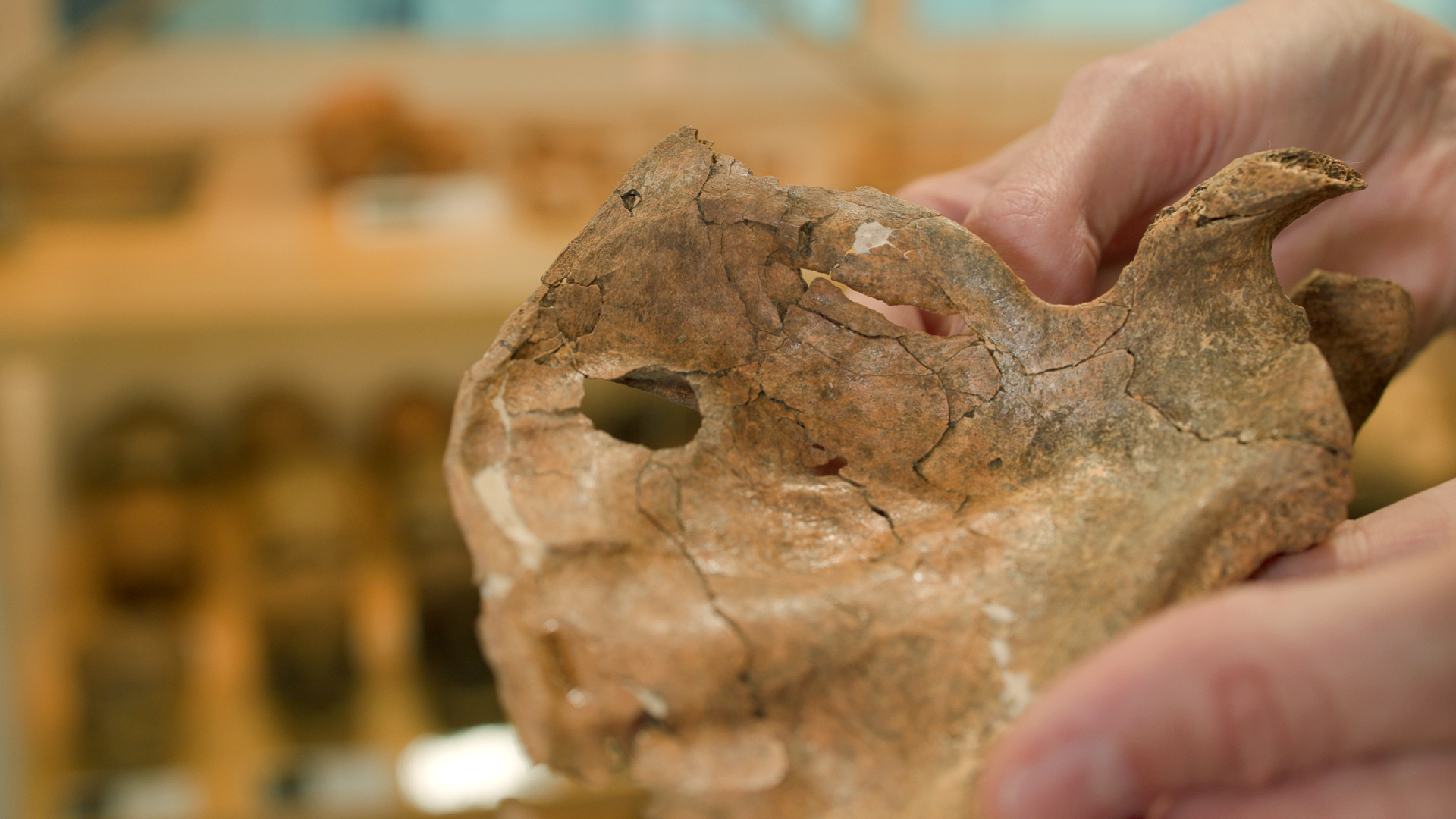
A round hole in the shoulder blade (scapula) of a Neanderthal whose partial remains were unearthed in a cave in Iraqi Kurdistan may be the earliest known example of lethal interpersonal violence with a wooden spear in the hominin fossil record.
The latest Healthy NDC Scorecard, published by the Global Climate and Health Alliance, finds that, Colombia integrates health most deeply into its national climate plan, closely followed by Nigeria and Cambodia. Conversely, the climate commitments of the governments of Japan, New Zealand and India fail to adequately consider health, while high-emitting economies, including EU members, China, Brazil and the U.K., refer to health in their national climate plans but do not match this with the ambitious emissions reduction targets required to protect health.
An excavation at an iconic Neandertal burial site uncovers evidence for one individual's potential fatal wound as well as an injury endured for years.
A Neanderthal who was buried 75,000 years ago in Shanidar Cave in Iraq died from a wooden spear straight through the chest, archaeologists have revealed. While it's impossible to know exactly what happened, the violence may have been a targeted hit. "The position of the wound and the force required to push it right through the Neanderthal's body bear the hallmarks of an intended kill shot directed towards the heart," study first author Emma Pomeroy, a paleoanthropologist at the University of Cambridge, said in a statement. In a study published Thursday (Oct. 15) in the journal Scientific Reports, Pomeroy and co-authors analyzed the bones of Shanidar A, a Neanderthal who died violently at abo...
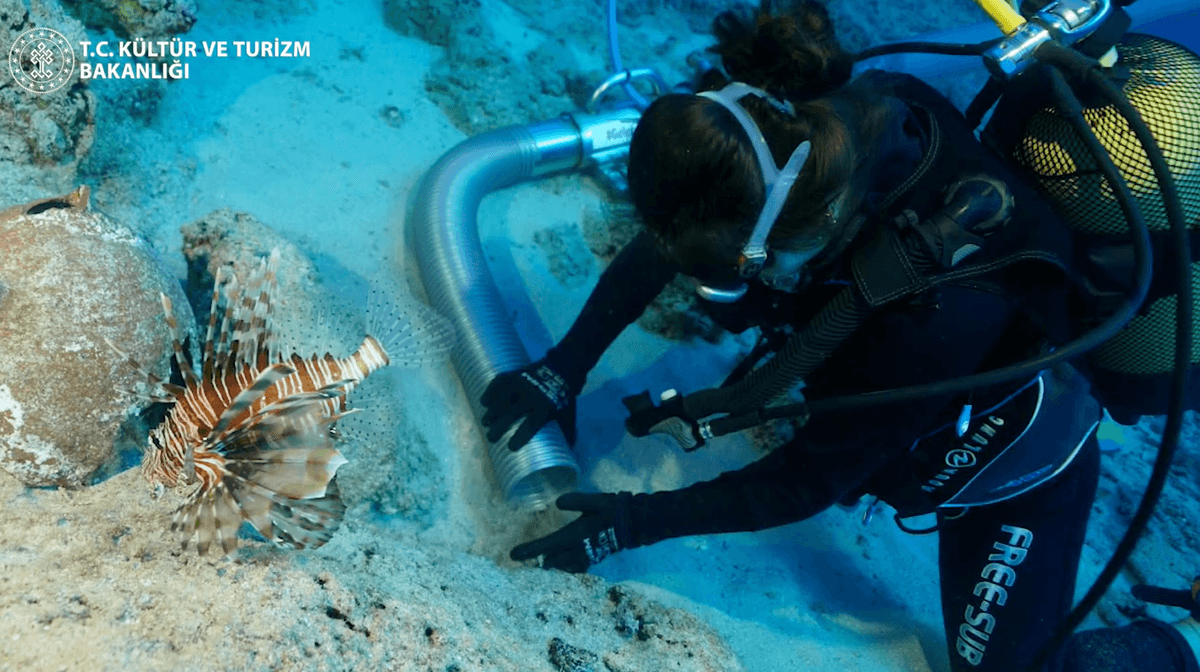
The wreck was found with relatively intact cargo on the seabed off the coast of Türkiye and is believed to be between 4,700 and 4,400 years old
A study of more than 6,000 people in the U.K. and Sweden suggests that although scientists are generally regarded as credible, their status as experts is more contested when they discuss issues such as health, education and employment.
OpenAI’s bumper crop of 722 math papers wowed and worried the research community—and cryptographers are split over whether the algorithms that protect our texts and bank log-ins are next
Blood clots that develop after spinal surgery can lead to serious complications. When blood accumulates around the spinal cord, it may increase pressure on surrounding nerves, potentially causing severe pain, muscle weakness or even paralysis. Early detection and timely treatment are therefore essential. However, continuously monitoring these complications remains challenging, and conventional treatments may require additional surgery.
A research team led by Dr. Lorenzo Marchetti of the Museum für Naturkunde Berlin described the earliest archosauriform footprints (Pachychirotherium gardenaensis) from the GEOPARC Bletterbach—UNESCO World Heritage Dolomites, Italy.
Researchers from the Bazaruto Center for Scientific Studies (BCSS) Ocean Observatory have documented ancient forests that grew on the Mozambican coast thousands of years ago and have been found beneath the sea, where they now serve as hotspots teeming with marine life similar in biodiversity to coral reefs.
Even when we are silent, we often talk to ourselves in our heads, using words to guide our thoughts and actions. This "inner speech" is thought to be involved in thinking and self-control.
Vegan honey alternatives could be engineered to have antimicrobial properties similar to those of prized mānuka honey from New Zealand, according to research at Aston University.
A major international study of the role cortisol plays in reproduction has found it may not be the villain it has been depicted as, and it may actually promote healthy reproduction.
Environmental DNA (eDNA) is increasingly being investigated by forensic scientists as a tool to help solve criminal cases that lack biological traces—and attention is also turning to collecting trace airborne eDNA left behind by intruders in residential burglaries.
How health is defined, measured and addressed by Indigenous communities doesn't match Western frameworks, leading health systems to fall short in caring for vulnerable communities, a University of Otago—Ōtākou Whakaihu Waka–led study has found.